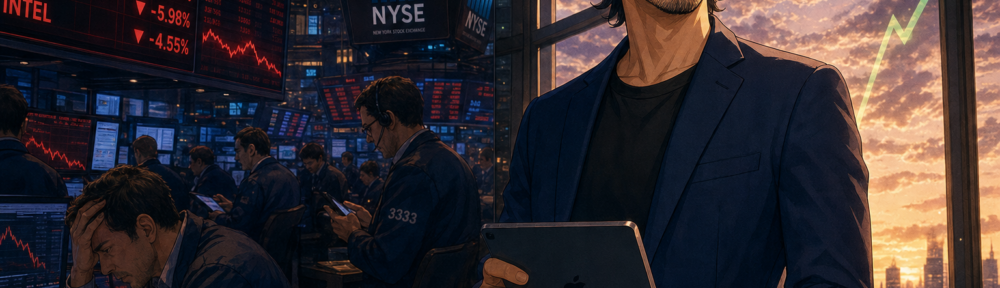

台積電單日跌3.44%,0050同步重挫3.47%,NVIDIA收-2.40%,GOOGL單日-4.44%。同一個交易日,AAPL收+1.76%,逼近近年高點333.26美元。SoftBank在東京盤中跌了8.49%。
這組數字並排在一起,第一眼看像板塊輪動,像市場情緒擺盪,像「今天科技股不好」的日常敘事。但廣告業有句話:當所有人都在說同一件事,例外才是真正的資訊。
誰在被拋售,誰在被收藏
NVIDIA跌的是預期修正,GOOGL跌的是財報季壓力,台積電跌的是外資從半導體板塊撤退的過程。三者邏輯不同,但方向相同——資金正在離開「成長性必須持續驗證」的標的。
蘋果卻逆向走高。AAPL的ROA 0.30,ROE極高,現金流穩定,生態護城河寬。它不需要每季說服市場「AI故事還在」;它的確定性本身就是籌碼。在高收益債利差僅2.71%、金融壓力指數NFCI -0.538的環境下,資金不是因為恐慌而買蘋果——是因為不想思考太多而買蘋果。
這個選擇背後有一套完整的市場心理:當宏觀數據整體健康(Sahm指數0.07,遠低於觸發值0.5),但個別標的波動加劇,資金不出場,而是換位子。從「要繼續長大」的標的,移向「只要不變差」的標的。
台股裡看得更清楚
三大法人在台灣盤中對力積電、中鋼、中華電出現顯著買超。這三檔的共同特質:傳產、防禦、現金殖利率有支撐。聯發科-1.06%、鴻海-1.85%,半導體與代工供應鏈齊跌,外資同時轉進中鋼。
這不是看壞台灣。這是「風格輪動」最教科書的樣態:在系統性不確定消退之前,先把確定性換回來放著。美債ETF(00679B)當日逆勢+0.29%,印證同樣邏輯——利率4.55%的十年期美債,在這個時間點比NVDA好睡。
回頭看渣打私銀本週的匯市判斷:美國PPI偏軟,美元面臨下行壓力;加拿大央行維持利率不變,加幣展望改善;英鎊則中性偏謹慎。這份判斷和股市動向其實指向同一個結構:全球央行進入觀望,確定性溢價正在重新計價。
美元走弱這件事,廣告業比你早感覺到
美元走弱已經在發生,還在繼續。對做跨境媒體採購的人來說,美元匯率是每個月都要重新換算的成本線。當美元指數向下,台幣計價的美國數位廣告費用表面上變便宜,但同時,客戶的出口報價也在重整。
殖利率曲線目前+0.41%,正斜率,代表市場對未來仍抱有溫和成長預期——並非衰退訊號。Fed利率維持3.75%,整體金融條件寬鬆。問題不在系統,在個別標的的估值是否還站得住腳。
NVDA目前報207.40美元。參照內部分析,其悲觀操作區間下緣在220美元附近,當前價格已在此之下。長線投資論述仍在(AI伺服器GPU市占60-80%、資料中心需求支撐),但短線修正壓力沒有消散。這個位置,是「長線有理由持有、短線沒有理由加倉」的灰色地帶。
SoftBank那個-8.49%
日本盤的SoftBank單日跌8.49%,是本週亞股最戲劇性的數字。Toyota同日-0.31%,Sony+1.22%。同樣是日本,三種走法,背後是三種不同的估值邏輯與投資人結構。
SoftBank的估值高度依賴旗下AI與科技投資組合的市場預期。當NVDA、科技板塊齊修正,SoftBank的折價幅度往往放大——這是「科技概念的科技概念」所承受的雙倍波動。Sony穩,SoftBank崩,兩者並排,你看到的是「有基本面支撐」與「估值靠故事撐」之間的重力差。
這一週所有的數字,收斂到同一個位置:207.40美元,以及220美元那條還沒收復的線。
— 胡凱翊
Apple Up, TSMC Down — That Gap Is the Signal
On the same trading day: TSMC -3.44%, 0050 -3.47%, NVDA -2.40%, GOOGL -4.44%. And AAPL +1.76%, near its multi-year high of $333.26. SoftBank closed down 8.49% in Tokyo.
The instinct is to call this a sector rotation, or “a tough day for tech.” But when everything moves in one direction except one thing, that exception is the story.
Who Is Being Sold, Who Is Being Kept
NVDA is being sold on expectation revision. GOOGL faces earnings season pressure. TSMC is caught in foreign-capital exit flows from the semiconductor sector. Three different reasons, one direction — money leaving assets that require continuous growth validation.
Apple went the other way. AAPL carries ROA of 0.30, high ROE, steady cash flow, and an ecosystem moat that doesn’t need quarterly re-convincing. With high-yield spreads at just 2.71% and the NFCI at -0.538, capital isn’t buying Apple out of fear — it’s buying Apple to stop thinking. The Sahm indicator sits at 0.07, far below the 0.5 recession trigger. The macro environment is not broken. Investors are just switching seats, not exiting the stadium.
The Taiwan Board Shows It More Clearly
The three major institutional investors posted notable net buys in Force Semiconductor, China Steel, and Chunghwa Telecom — all defensive, dividend-supported names. MediaTek fell 1.06%, Hon Hai 1.85%. Capital moved from semiconductors to steel and telecom in the same session.
This is textbook style rotation: before systemic uncertainty clears, swap growth risk for yield certainty. The U.S. Treasury Bond ETF (00679B) rose 0.29% that same day — a 10-year Treasury yielding 4.55% is genuinely more restful than NVDA at current prices.
Standard Chartered Private Bank’s weekly note (dated 2026-07-16) ties in neatly: soft U.S. PPI creates downside pressure on the dollar; the Bank of Canada held rates, improving the CAD outlook; GBP remains neutral-to-cautious. Global central banks are in watch-and-wait mode, and that pause is repricing the certainty premium across every asset class.
What NVDA’s Position Actually Means
NVDA closed at $207.40. Internal analysis places the pessimistic support range starting around $220 — current price is already below that floor. The long-term investment thesis remains intact: dominant share of AI server GPU market, strong data center demand, durable CUDA ecosystem advantages. But “long-term thesis intact” and “short-term add to position” are two very different decisions. This is the grey zone: reasons to hold, no reason to chase.
SoftBank’s 8.49% and the Gravity Problem
SoftBank’s single-day drop of 8.49% was the most dramatic number in Asian equities this week. Toyota fell 0.31%, Sony rose 1.22%. Three Japanese names, three different logics. SoftBank’s valuation is deeply dependent on market expectations for its AI and tech investment portfolio — when NVDA and the broader tech sector correct, SoftBank amplifies the move. It is a tech-concept-of-a-tech-concept, absorbing double the volatility. Sony’s stability next to SoftBank’s collapse isn’t a contradiction; it’s the market drawing a line between fundamental earnings support and narrative-dependent valuation.
Every data point this week converges on the same coordinates: $207.40, and the $220 floor that hasn’t been reclaimed.
— 胡凱翊
延伸閱讀
https://justfly.idv.tw/s/vLpNNCD