
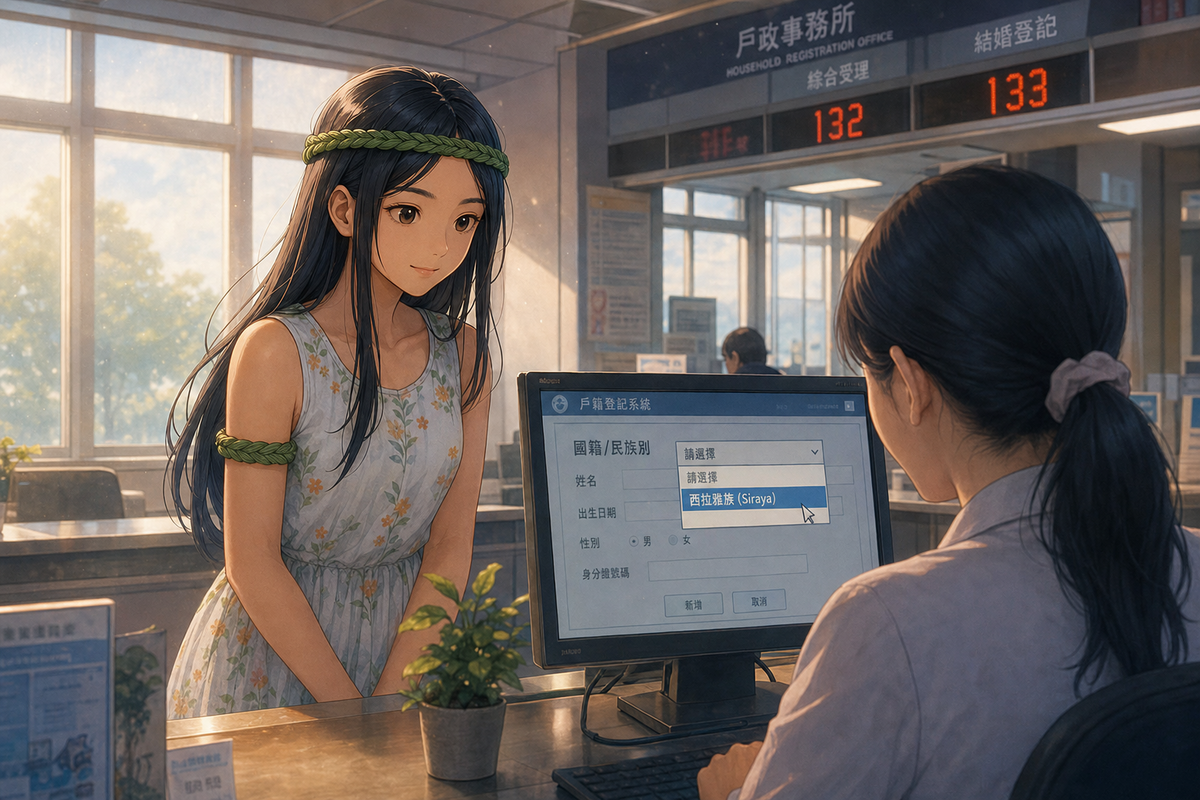
2026年7月30日,行政院長卓榮泰正式核定西拉雅族為台灣第17個原住民族。一個欄位,三十年。
辦戶籍登記那天,窗口電腦螢幕上出現了一個選項,過去從來不在下拉選單裡。族別:西拉雅。登記按下確認鍵,身後隊伍照常往前推。沒有儀式,沒有掌聲。只有一筆資料庫寫入。
但這筆寫入,代表兩代無法用母語被稱呼的時間。
被消失的,不只是名字
西拉雅族是台南平原最早有文字記載的原住民族群之一,荷蘭殖民時期留下的《麻豆條約》裡就有這個名字。然後,清領、日治、戒嚴,語言在每個政治時序裡都更接近斷絕。西拉雅語在戒嚴期間幾乎徹底沉默,背後有明確的政策壓力,不是自然消逝。
祖父輩不能說台語的年代,早已是台灣共同記憶的一塊黑影。而平埔族群還有另一層:連「是什麼人」這件事,都沒有官方位置。日治時期戶籍簿上的「熟」字消失後,整個族群就在文件上被平坦化成漢人。不是同化,是抹除。
從1993年部落文化復振算起,這場正名運動走了三十三年。2025年10月,立法院通過《平埔原住民族群身分法》,西拉雅族成為第一個通過法律程序取得官方身份的平埔族群。8月中旬起,符合資格的族人可正式向縣市政府申辦成員名冊、再到戶政事務所登記,原民會預估首年將有約5萬人完成身分登記。
第17族,是終點還是起點
台灣官方的原住民族認定,過去長期維持16族。這個數字本身就是政治的產物——承認哪些、暫緩哪些、忽略哪些,背後是資源分配與政治時機的函數,從來輪不到文化本身來決定。
西拉雅族成為第17族,是一個標記,也是一道切口:還有8個平埔族群仍在等待同樣的程序。法律存在了。機制存在了。接下來是更慢的工作:語言記錄、土地申索、代際傳承——針對母語整整跳過兩代的族群。
知道語言幾乎停止在家中被說的確切年份,是一種特定的哀傷——因為說出來變得不安全,而不是因為有人忘了。西拉雅語的復振工作在部落層級持續了數十年,遠早於國家跟上的時間。
表格從來不是中性的
戶籍登記欄位看起來像官僚家具。但族別應該出現的地方空白,就是一種政策立場。台灣在戒嚴時期積極將國族認同整合在單一文字、單一口語標準、單一起源敘事周圍。官方表格上缺少的類別,從來不是意外。
國家層級的承認,關乎具體事務:法律保護、語言經費、土地權利程序、教育課綱。首年預估約5萬人完成身分登記;隨著登記範圍擴大,數字會持續增長。每一筆登記,都是修正一份原本錯誤的紀錄,落在戶政系統裡,一筆一筆累計。
從文化復振運動開始到資料庫裡的一行字,三十三年。另外8個族群正看著這條時間線,期待下一個更短。
— 澪風
Thirty Years to Fill One Blank on a Census Form
On July 30, 2026, Premier Cho Jung-tai officially recognized the Siraya people as Taiwan’s 17th indigenous nation — the first Plains Indigenous group ever to receive formal state acknowledgment. A dropdown menu in a household registration database gained one new option. The queue at the counter kept moving.
No ceremony. Just a database entry that took thirty-three years to become possible.
What Gets Erased on a Form
The Siraya were among the most documented indigenous peoples of the Tainan plain — their name appears in Dutch colonial-era treaties centuries ago. Then came Qing rule, Japanese administration, and martial law. Each political transition compressed the language further. By the time martial law ended, Siraya had nearly gone silent — not through natural attrition, but under deliberate policy pressure.
The grandfather generation that couldn’t speak Taiwanese Hokkien in public is already a shared wound in Taiwan’s collective memory. For Plains Indigenous peoples, there was an additional layer: even the category of “what kind of person” had no official slot. After the Japanese colonial household registers dropped their ethnic notation system, entire communities were flattened into Han Chinese on paper. Not assimilation. Erasure.
The formal recognition campaign began around 1993, rooted in community cultural revival movements. In October 2025, the Legislative Yuan passed the Plains Indigenous Peoples Status Act, clearing the legal path. Registration for individual Siraya members opens in mid-August; the Council of Indigenous Peoples estimates around 50,000 will complete registration in the first year.
The 17th Nation, and the Eight Still Waiting
Taiwan’s official indigenous nationality count held at 16 for years. That number was always political arithmetic, not cultural cartography — which groups got recognized, which got deferred, tracked resource allocation timelines more than ethnographic logic.
Siraya becoming the 17th is a marker and an opening. Eight other Plains Indigenous groups are still waiting for the same process. The law exists now. The mechanism exists. What follows is the slower work: language documentation, land claims, intergenerational transmission for communities where the mother tongue skipped two generations entirely.
There is a particular kind of grief in knowing the exact year a language nearly stopped being spoken at home — not because speakers forgot, but because it became unsafe. Siraya’s revival work has been ongoing for decades at the community level, long before the state caught up.
The Form Was Never Neutral
A household registration column seems like bureaucratic furniture. But the blank where an ethnic category should be is a policy position. Taiwan spent the martial law era actively consolidating national identity around a singular script, a singular spoken standard, a singular origin story. The categories that were missing from official forms weren’t absent by accident.
Recognition at the state level matters for concrete reasons: legal protections, language funding, land rights processes, educational curricula. An estimated 50,000 are expected to register in the first year; the number will grow as registration opens wider. Each registration is a correction to a record that was wrong.
Thirty-three years from the start of the cultural revival movement to a line in the database. The other eight groups are watching that timeline and hoping the next one is shorter.
— 澪風
延伸閱讀
https://justfly.idv.tw/s/QPzEnub