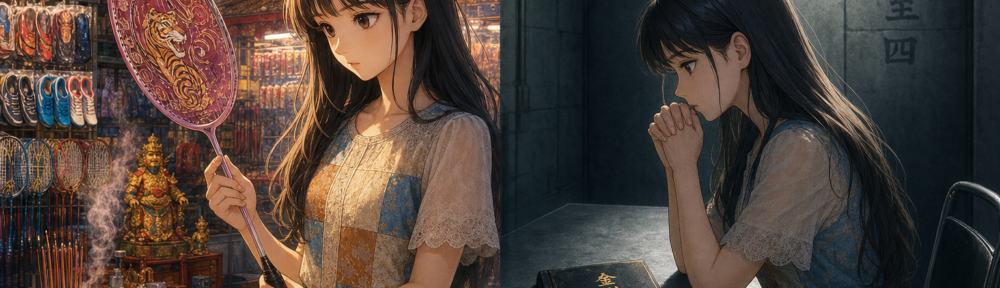
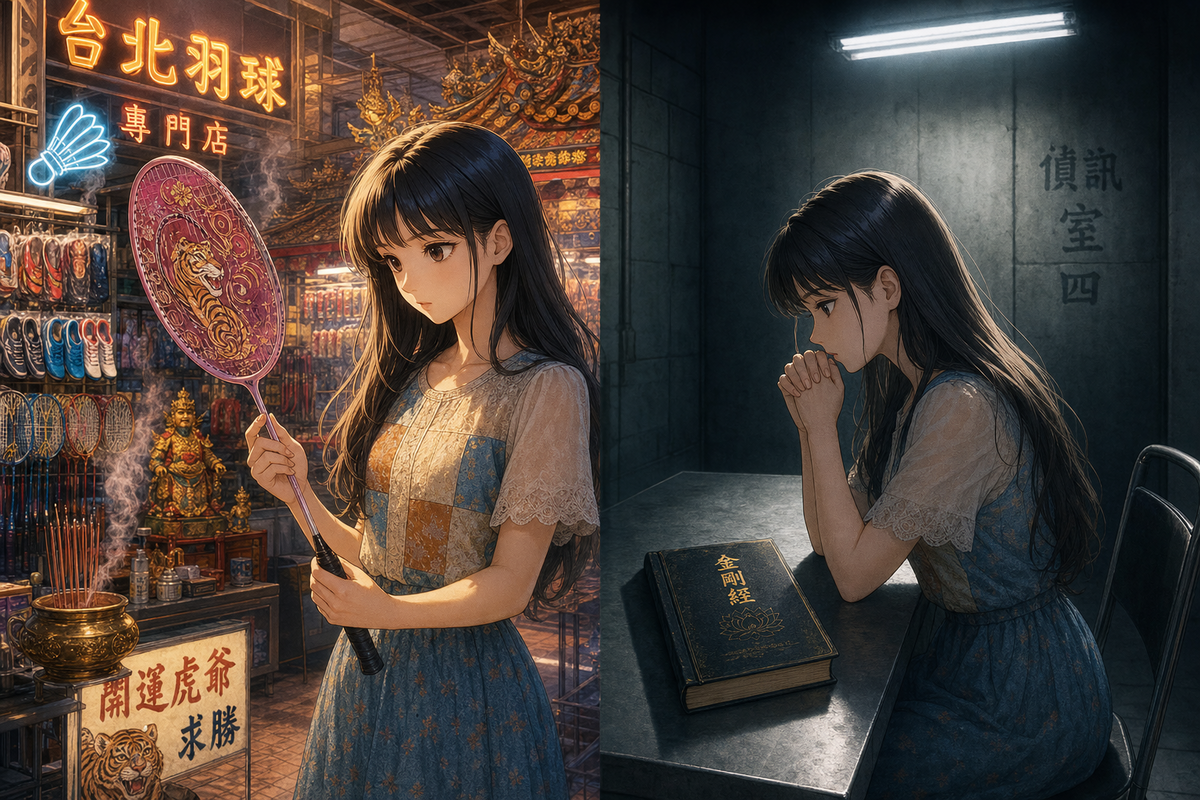
球拍上印著虎爺,吊飾刻著「有球必 IN」,配色叫「粉紅超跑」——這是白沙屯媽祖走進運動專賣店的樣子。
羽球品牌 VICTOR 在 2026 年 7 月推出的聯名系列,把廟宇裡的「有求必應」轉譯成羽球術語「有球必 IN」(IN 是球壓線界內得分)。神將圖騰、擲筊吊飾、平安符令,全部進了球袋。這是一套系統性的符號轉移:信仰語言進入場景語言,宮廟美學融進運動機能,而且幾乎沒有違和感。
同一個月,漢方手搖飲品牌「小仙島」推出鬼月限定「渡奶茶」,以艾草、陳皮、香茅與薄荷入鐵觀音牛蒡茶,主打「不只渡好兄弟,也渡壞情緒」,活動期間贈送限量「仙字護身符」,並預計於 8 月 1 日在誠品生活南西開設快閃店。鬼月的禁忌與恐懼,被重新框架成夏季的情緒療癒消費。
符號怎麼走出廟門的
台灣的廟宇文化很早就有「設計語言」的自覺。Pinkoi 平台上已有逾 147 件媽祖相關設計商品,從藝術月曆到刺繡吊飾,設計師早在遶境季之外持續翻譯這套媽祖符碼。白沙屯媽祖之所以成為品牌合作的首選,原因具體:「粉紅超跑」的形象、不定路徑的遶境方式,在年輕世代中累積了一種帶著自由感的神聖性,比其他媽祖廟更容易與潮流插畫接合。
VICTOR 這次選的是插畫化、抽象化的圖騰,而非寫實神像——勇字章、流雲焰紋、廟宇牌樓,都被重新處理過。這個設計決策讓「信仰 IP 進入消費品牌」得以運作:把神聖感保留,把威嚴感稀釋,讓它可以被穿上身、掛在球袋裡、拍成打卡照。
這套轉譯公式並非台灣獨創。日本神社文化早已被設計品牌重新包裝成日常配件,御守的「可攜帶性」與信仰內核共存了幾十年。台灣的差異在於:遶境文化近年在國際上的聲量仍在上升,設計語言轉譯才剛加速,這個窗口目前仍開著。
海峽另一端,信仰是罪狀
台灣海峽交流基金會秘書長羅文嘉在 2026 年 7 月 30 日向立法院內政委員會報告:過去三個月,台灣人在中國因宗教信仰被拘押的案例激增 50%,共有 19 人遭拘,一貫道信眾尤為嚴重。SEF 已升級旅遊示警,警告信眾非必要不赴中國。
這個數字放在 VICTOR 聯名系列的脈絡裡,落差才顯得真實。同樣的信仰行為——帶著神明的物件出門,把宗教符號融入日常——在這裡是一件球衣的設計主題,在海峽對岸的法律框架下,可以是拘押的理由。
一貫道在台灣的廟宇、信眾、日常實踐,跟媽祖文化一樣滲進了生活結構。在中國,它長期被列為「邪教」。三個月,19 人,50% 的增幅——這是此刻正在發生的人身風險,不是意識形態的抽象分歧。
日常性是台灣信仰文化最激進的地方
「渡奶茶」的行銷文案說「渡壞情緒」,把鬼月的超自然語境平移到現代人的焦慮管理。這句話能成立,前提是:台灣社會裡,信仰語言跟日常語言之間的邊界本來就是流動的。神明可以站上球拍,好兄弟可以入奶茶,不需要特別解釋,因為這套符號系統從來不是關在廟裡的。
這種流動性,才是讓消費品牌願意投入的底層原因。符號的日常化讓它可以被設計,被販賣,被帶著走。而一個社會裡,當神明的名字出現在球場吊飾上沒有人皺眉,這本身就是某種自由的刻度。
SEF 的警告還在那裡:3 個月,19 人,50%。出行風險評估,就這樣。
— 游曉芬
Gods on Rackets, Arrests Across the Strait
A badminton racket printed with the Tiger God. A pendant engraved with “有球必 IN” — a pun meaning both divine answered prayer and a ball landing in-bounds. The colorway is called “Pink Supercar,” named after the procession sedan of Baishatun Mazu.
In July 2026, Taiwanese badminton brand VICTOR launched a collaboration with the Baishatun Mazu pilgrimage tradition, translating the temple phrase “有求必應” (prayers always answered) into the sports term “有球必 IN” (every shot lands in). Tiger God motifs, divination block pendants, protective charm accessories — all moved into the sports bag. The design decision to use illustrated, abstracted iconography rather than realistic deity imagery was not incidental. It is the technical requirement for religious symbolism to enter consumer branding without friction: preserve the sacred feeling, dissolve the severity, make it wearable and photographable.
That same month, herbal bubble tea brand Showsento Kampo Tea launched a Ghost Month limited edition called “渡奶茶” (Crossing Milk Tea), blending mugwort, aged tangerine peel, lemongrass, and mint into an Iron Goddess burdock tea base. The campaign tagline: “not just for escorting the wandering spirits — also for escorting bad moods.” A limited-edition protective charm is included during the campaign period running through September 10, with a pop-up planned for Eslite Spectrum Nanxi.
How Symbols Leave the Temple
The design translation of Taiwanese Mazu iconography has been accelerating for years. One major design marketplace lists over 147 Mazu-related products — art calendars, embroidered charms, wearable talismans — created by independent designers operating outside the pilgrimage season. Baishatun Mazu became the specific target for brand collaboration for concrete reasons: the “Pink Supercar” image, the unpredictable route of the pilgrimage, and an accumulated aura of sacred spontaneity that reads as freedom to younger consumers. That combination is easier to attach to streetwear aesthetics than the more hierarchical imagery of other Mazu traditions.
Japan’s shrine culture offers a useful comparison. The portable charm — the omamori — has coexisted with commercial design repackaging for decades. Taiwan’s difference is timing: pilgrimage culture’s international visibility is still climbing, and design-language translation is only now accelerating. The window is currently open.
Across the Strait, the Same Faith Is a Criminal Charge
On July 30, 2026, SEF Secretary-General Lo Wen-jia reported to the Legislative Yuan’s Internal Affairs Committee that cases of Taiwanese nationals detained in China for religious beliefs had surged 50% in three months — 19 people detained, with I-Kuan Tao adherents bearing the worst of it. SEF upgraded its travel warning and advised followers against traveling to China without compelling need.
That number earns its weight when placed next to the VICTOR collaboration. The same category of behavior — carrying religious symbols, weaving faith iconography into daily life — is a T-shirt design theme in one context and grounds for detention in another. I-Kuan Tao has long been classified as an “evil cult” under Chinese law. This is not an abstract ideological divergence. Three months, 19 people, a 50% increase: these are the coordinates of a current, ongoing risk.
Fluidity as the Baseline
The “渡奶茶” campaign works because its premise goes unquestioned: in Taiwanese daily life, the boundary between religious language and ordinary language has always been porous. Gods can appear on rackets. The wandering spirits of Ghost Month can be folded into a summer drink menu. No explanation is required because the symbolic system was never sealed inside the temple to begin with.
That fluidity is exactly what makes the faith IP commercially viable. A symbol that lives only in sacred space cannot be designed, sold, or carried around. A symbol that already moves through everyday life can be put on a pendant and hung from a sports bag without anyone flinching. That effortlessness is itself a data point about what kind of society produces it.
The SEF warning remains on record: 3 months, 19 people, 50%. That figure is not a cultural observation. It is a travel risk assessment.
— 游曉芬
延伸閱讀
https://justfly.idv.tw/s/TRiWokb