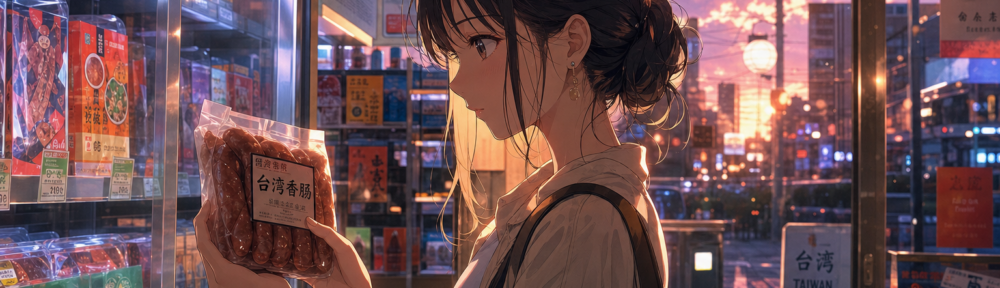

東京某家進口食品店的冷藏櫃裡,黑橋牌香腸靜靜躺在那裡。包裝上的中文字和台南意象,對多數日本消費者來說陌生但不排斥。它是上架販售的商品,標了價,要賣出去的那種。這一格陳列架,代表的不只是一個台灣食品牌的出口決策。
台商資金重組的歷史節點
先說背景數字:台灣企業對中投資已降至外投總額不足1%的歷史低點。市場重心正在移位——日本、東南亞、歐美成為主要方向。這是近十年最大規模的台灣資本地緣重組,而食品業是這波轉向裡最少人討論、卻最有文化意涵的一塊。
台灣食品出海,向來不是台積電那種「技術領先」的故事,也不是時裝品牌靠設計語言打入市場的路子。食品的載體更重,因為它背後是飲食習慣、是記憶、是「你是誰」的問題。把香腸賣到日本,難度不在物流,在於你能不能說服日本消費者,這個東西值得進入他們的廚房。
1957年台南的一條腸衣
黑橋牌創立於1957年台南,以天然腸衣豬肉香腸起家。這個年份很重要——那一代台灣食品品牌幾乎都是在物資匱乏中摸索出工藝,沒有「品牌策略」這個概念,只有「怎麼讓這條香腸好吃到回頭客」的現實壓力。
台南這個座標同樣關鍵。台南擁有49個官方認定夜市,是全台夜市密度最高的城市,平均每3.8萬人就有一個夜市——這是2023年的統計數字,也是全球最高密度之一。台灣夜市文化可追溯至1870年代大稻埕的煤油燈攤位,跨越150年,成為今日吸引外國旅客的軟實力展示場。黑橋牌在這樣的生態裡長大,它的品牌基因裡早就刻有「如何在競爭嘈雜的環境裡讓人記住你」的答案。
做手工皂出身的我有一個感受:產品能不能出海,關鍵往往不在技術,在於那個產品有沒有辦法讓陌生人「認識你的地方」。黑橋牌的香腸不是高端食材,但它攜帶著台南市井氣息的整套感官記憶——這是它最難被複製的資產。
台灣食品在日本的落地邏輯
日本市場對台灣食品的態度,近年出現了結構性轉變。台南市早已在東京推廣冷凍芒果等農產品,測試日本消費者對台灣產地故事的接受度;宜蘭縣政府以「宜蘭嚴選」品牌進軍日本,在東京誠品生活日本橋展開長達一個月的實體展售,展售宜蘭農水產品。這些案例的共同邏輯是:不以「便宜替代品」的姿態進入,而是以「產地敘事+品質承諾」切入中高端通路。
黑橋牌選擇日本,是這個邏輯的延伸,但又多了一層文化博弈的張力。台式香腸在台灣夜市的語境裡,是人群、是炭烤煙霧、是大腸包小腸的組合記憶。這套感官系統要平移到日本消費者的認知框架裡,需要的是重新錨定——找到台日飲食文化的共鳴頻道,讓日本消費者在接觸黑橋牌時,感受到的是「台灣的飲食哲學」,而不只是「外國香腸」。
日本自己就是文化輸出的教科書。根據Bloomberg的分析,日本內容出口價值已超越半導體,成為僅次於汽車的第二大海外收入來源,政府目標在2033年前達成20兆日圓(約1,400億美元)的軟實力出口規模。這個參照系對台灣食品業來說是壓力,也是路標——文化輸出可以工業化,但前提是你先知道自己在輸出什麼。
「代工→品牌」的升級路徑,食品業的版本
台灣食品品牌近年走的「代工→品牌」升級路徑,和半導體產業的故事結構其實相似,但節奏慢得多,也更難被量化。黑橋牌的案例之所以值得細看,在於它走的是最傳統的方式:不改配方、不刻意「日式化」包裝、不找日本藝人代言——它把1957年以來的工藝語言原封不動地帶進日本市場,賭的是台灣食物的原生美學能在日本找到對的觀眾。
這個賭注現在還沒有確定的答案。但台商對中投資已跌破外投總額1%這道門檻,意味著台灣食品業沒有退路可以等待觀望。黑橋牌進軍日本,是台灣飲食文化主動出擊的一筆——而那格東京冷藏櫃裡的陳列,是這場文化外交最安靜也最具體的現場。
— 賴志傑
One Sausage, One Cultural Mission: Taiwan Goes to Japan
Somewhere in a Tokyo import food store, a row of Hei Qiao Pai sausages sits in a refrigerator case. The Chinese characters on the packaging and the Tainan imagery are unfamiliar to most Japanese shoppers — but not off-putting. This isn’t a souvenir. It’s a product priced, shelved, and expected to sell.
The Numbers Behind the Pivot
Taiwan’s corporate investment in China has fallen below 1% of total outbound investment — a historic low. Capital is moving toward Japan, Southeast Asia, and Western markets. This is the largest geographic rebalancing of Taiwanese business capital in decades, and the food industry is its least-discussed, most culturally loaded chapter.
Food doesn’t travel like semiconductors. It doesn’t travel like fashion either. A sausage carries the weight of eating habits, of memory, of identity. Getting it onto a Japanese shelf isn’t a logistics problem. It’s a question of whether a foreign consumer will decide this product belongs in their kitchen.
A Casing from Tainan, 1957
Hei Qiao Pai was founded in Tainan in 1957, starting with natural casing pork sausages. That founding year matters — that generation of Taiwanese food brands built their craft under material scarcity, with no brand strategy playbook, just the immediate pressure of making something good enough to bring people back.
Tainan as a geographic origin matters just as much. The city holds 49 officially recognized night markets — one for every 38,000 residents, making it the highest-density night market city in Taiwan. The night market tradition stretches back to the kerosene lamp stalls of the 1870s Dadaocheng district, running 150 years through to the soft-power tourism draw it is today. Hei Qiao Pai grew up inside that ecosystem. Its brand DNA already carries the answer to a hard question: how do you get noticed in an environment that’s loud, crowded, and full of competitors?
How Taiwan Food Lands in Japan
Taiwan’s food-to-Japan play has been building quietly across multiple fronts. Tainan has promoted frozen mangoes in Tokyo, testing Japanese consumer appetite for Taiwanese origin stories. The Yilan County Government took its “Yilan Strict Select” brand to Eslite Spectrum Nihonbashi in Tokyo for a month-long physical showcase of Yilan agricultural and aquatic products. The shared logic across these cases: enter the market not as a cheap alternative, but as a product with a place-based story attached to a quality commitment.
Hei Qiao Pai’s Japan move extends that logic — with an extra layer of cultural stakes. Taiwanese sausage in its native context is inseparable from the night market: charcoal smoke, crowds, the combination dish of large intestine stuffed with sticky rice and sausage. Transplanting that sensory system into a Japanese consumer’s frame of reference doesn’t require translation. It requires re-anchoring — finding the frequency where Taiwanese food culture and Japanese eating sensibility overlap.
Japan itself is the reference case for what scaled cultural export looks like. Bloomberg has reported that Japan’s content export value has surpassed semiconductors, making it the second-largest source of overseas revenue after automobiles, with a government target of 20 trillion yen (roughly $140 billion USD) in content exports by 2033. That trajectory sets a benchmark Taiwan’s food industry can read two ways: as evidence that cultural export can be industrialized, and as a reminder that Japan had decades of patient, systematic brand-building before the numbers got that large.
The Bet on the Original
Taiwan’s food brands have been working through an OEM-to-brand transition similar in structure to the semiconductor industry’s story — but slower, harder to quantify. What makes Hei Qiao Pai’s case worth watching is the specific choice it made: no formula adjustments for local taste, no “Japanification” of the packaging, no local celebrity endorsement. It brought the 1957 craft language into Japan intact, betting that Taiwanese food aesthetics can find the right audience without adaptation.
That bet doesn’t have a confirmed result yet. But with Taiwan’s China-bound investment already through the floor of 1% of total outbound capital, the food industry doesn’t have the luxury of waiting to see how the story ends. That refrigerator case in Tokyo is the quietest, most concrete frontline of the whole operation.
— 賴志傑
延伸閱讀
https://justfly.idv.tw/s/LCmmWa3