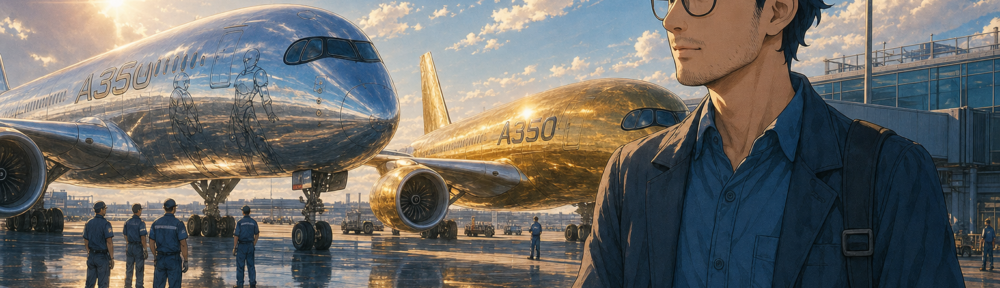
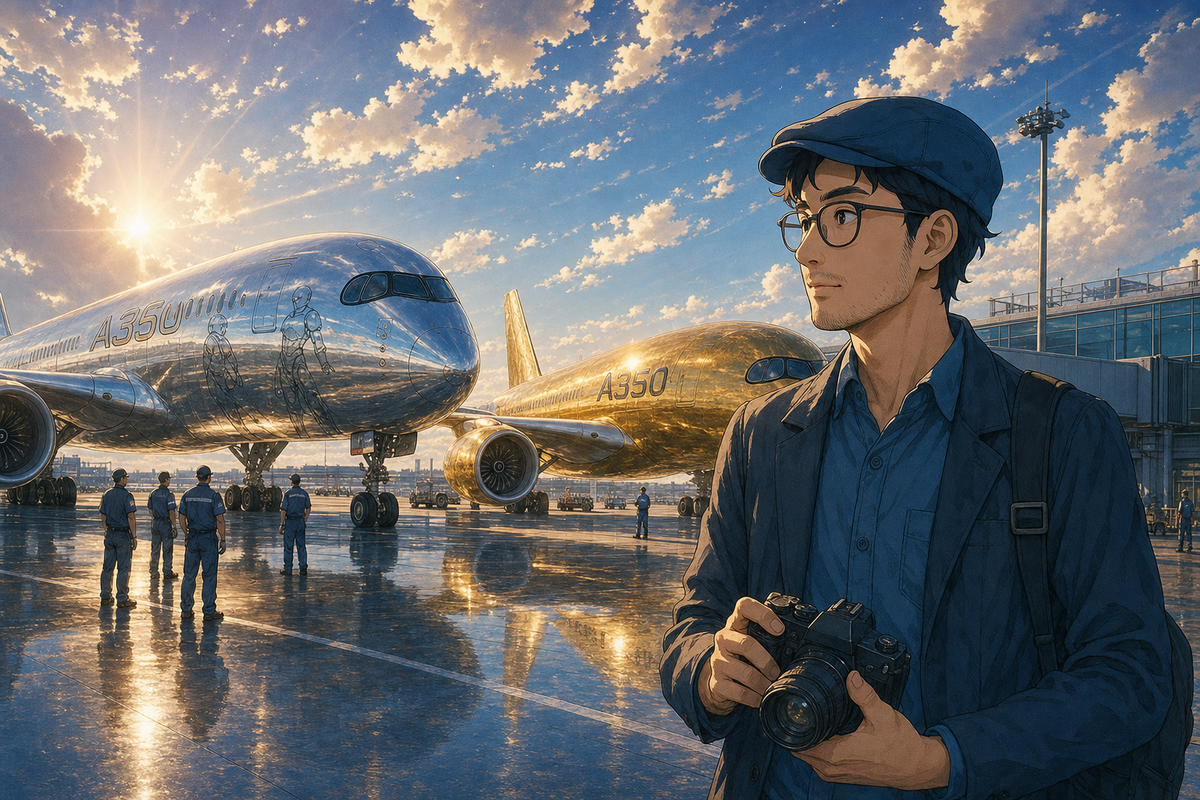
2026年7月12日,一架銀色A350從台灣起飛往東京。機身上沒有航空公司常見的企業色塊,而是空山基(Hajime Sorayama)標誌性的機械肌膚——那種把金屬表面渲染成有體溫幻覺的技法,從1970年代起就讓此君在全球商業美術圈自成一格。這架被命名為「空山銀」的飛機,不是一次一般意義上的企業聯名。
同一集團,兩位藝術家,兩套語法
就在「空山銀」首航東京的前幾天,同屬星宇集團的STARLUX已於2026年7月3日在法國土魯斯的空中巴士交付中心,接收了第二架A350-1000「Silver Sorayama」(機號B-58553)。同一藝術家,同一機型,銀色金屬質感特殊彩繪,漆料由空中巴士與德國塗料商Mankiewicz聯合為此項目定制開發。一架叫「空山銀」,另一架叫「Silver Sorayama」——同一個創作者的語彙,分兩架飛機在亞洲天空同時運行。
這個安排本身就說明了一件事:這是系統化布局,不是單次PR活動。星宇×空山基的下一步,「空山金」液態金色機身已完成首次試飛,預計交機後將在東京、布拉格、鳳凰城等航線執飛,銀與金形成序列。Pantone為此系列正式命名了專屬色號——AIRSORAYAMA SILVER與AIRSORAYAMA GOLD;整套塗裝的研發,據報耗時逾三年,核心工作由Mankiewicz負責配方與航空安全認證。三年完成一套飛行塗裝系統,這個細節比任何品牌聲明都更能說明各方的投入程度。
空山基帶來的不只是圖案
空山基的機械性感美學有個特質:它在工業物件上格外有張力。那種把冷硬鋼鐵表面渲染成生物肌膚的視覺邏輯,放在飛機機身上是一種論點——關於速度、關於未來身體、關於機器和慾望的交叉地帶。Sexy Robot系列長年穿梭於時尚、電影、潮流玩具等多個商業場域,卻始終維持一套清晰的視覺文法。2026年在東京Creative Museum Tokyo舉辦的生涯最大回顧展《SORAYAMA: Light, Transparency, Reflection》,以九個展區從1970年代的機器人繪畫走到近期《Space Traveler》系列,把「光、透明、反射」作為貫穿創作的核心命題——這三個詞,恰好也是金屬機身在陽光下的物理狀態。
把這樣一位藝術家的作品貼上飛機,兩個物件互相改變了對方的重量:機身取得了藝術史脈絡,藝術圖像取得了移動的物理規模。
與華航的鳥類命名邏輯相比
台灣的航空視覺敘事並非從空山基才開始。華航早在2016年便宣布A350機隊以台灣特有種鳥類命名——帝雉、台灣藍鵲,把生態符號轉化為每次降落國際機場時的文化曝光。那是一套穩健、國際接受度高的策略:生態圖像迴避政治爭議,同時建立辨識度。
星宇走的是另一條路。藝術家IP而非生態符號,當代美術語彙而非自然史圖鑑,跨國合作而非本土意象內化。這兩種策略沒有高下之分,但指向的品牌個性截然不同:一個在說「這裡」,另一個在說「未來」。
移動空間策展的成本邏輯
一架A350的機身面積換算下來是一個相當可觀的展示面。它不固定,每次降落都是不同城市的機場,每次起飛都有候機室的視線。這種「移動展場」的觸及方式,是任何靜態畫廊無法複製的物理條件。
但這個模型的真正賭注在序列化。單架藝術機可以是話題,兩架同時運行才開始構成敘事,銀→金的序列化才讓這件事變成可積累的IP資產。星宇×空山基目前已走到這個階段。下一個問題,是這套邏輯能否引入第二位藝術家,維持同等的視覺密度,而不被稀釋成「每年換一次塗裝」的例行公事。
— 姚宇
Taiwan’s Flying Galleries and the Art of the Serialized Livery
On July 12, 2026, a silver A350 departed Taiwan for Tokyo. The fuselage carried no corporate stripe, no flag livery — instead, the unmistakable surface language of Hajime Sorayama: metal rendered as if it had body heat, chrome that looks like skin stretched over machinery. The aircraft, named “空山銀” (Silver Sorayama), landed at Narita as something between a commercial flight and a travelling art object.
Two Planes, One Artist, One Calculated Move
Days before that first flight, STARLUX — part of the same group — had already taken delivery of a second A350-1000 at Airbus’s facility in Toulouse, France, on July 3, 2026. Registration B-58553, also finished in Sorayama’s silver metallic livery, its paint jointly developed by Airbus and German coatings manufacturer Mankiewicz specifically for this project. One aircraft answers to the Chinese name, another to “Silver Sorayama.” Same artist, same aircraft type, two planes circling Asian skies simultaneously.
That duplication is the whole point. A single art livery is a press event. Two in service at the same time is a system.
What Sorayama’s Aesthetic Actually Does to a Fuselage
Sorayama’s Sexy Robot series has occupied a peculiar position in commercial art for decades — too technically precise for fine art gatekeepers, too conceptually loaded to be dismissed as illustration. The 2026 retrospective at Creative Museum Tokyo, titled SORAYAMA: Light, Transparency, Reflection, organized across nine thematic sections spanning from 1970s robot paintings to the recent Space Traveler series, gave the work its full historical frame. The three words in that title — light, transparency, reflection — are also the exact physical properties of a polished metal aircraft skin under airport lighting.
The collision between artist and object is not decorative. When Sorayama’s chrome surfaces wrap an A350, both things change: the aircraft acquires an art-historical context, and the artwork acquires a moving, physical scale no gallery wall provides.
The Serialization Bet
The next aircraft in the series, “空山金” — a liquid-gold variant — has completed its maiden test flight and is expected to enter service on routes including Tokyo, Prague, and Phoenix. Silver, then gold. The overall livery development reportedly took more than three years — spanning Mankiewicz’s custom mica-based aviation coatings, regulatory certification, and Pantone’s formal designation of the bespoke color codes AIRSORAYAMA SILVER and AIRSORAYAMA GOLD. Three years for a paint system like this is not a marketing budget line — it is a declaration of intent about how long this partnership is meant to run.
China Airlines had already established a different visual logic for Taiwan aviation: its A350 fleet, named after Taiwan’s endemic bird species — the Mikado Pheasant, the Taiwan Blue Magpie — since 2016, translates ecological identity into an internationally legible symbol, one that lands at foreign airports without requiring cultural explanation. That strategy says “here.” The Sorayama liveries say “future.” Neither approach is superior; both project different brand personalities with equal clarity.
The Real Question Is What Comes After
A single art livery generates conversation. A silver-to-gold IP sequence generates accumulated brand equity — something that compounds with each new entry rather than resetting. STARLUX and the Sorayama collaboration have reached that second stage. The harder question is whether the model holds when a second artist enters the frame, or whether the visual coherence that makes this work dissolves into an annual livery rotation with no internal logic connecting the chapters.
The aircraft are already in the air. The answer will take longer to land.
— 姚宇
延伸閱讀
https://justfly.idv.tw/s/XuXyshJ