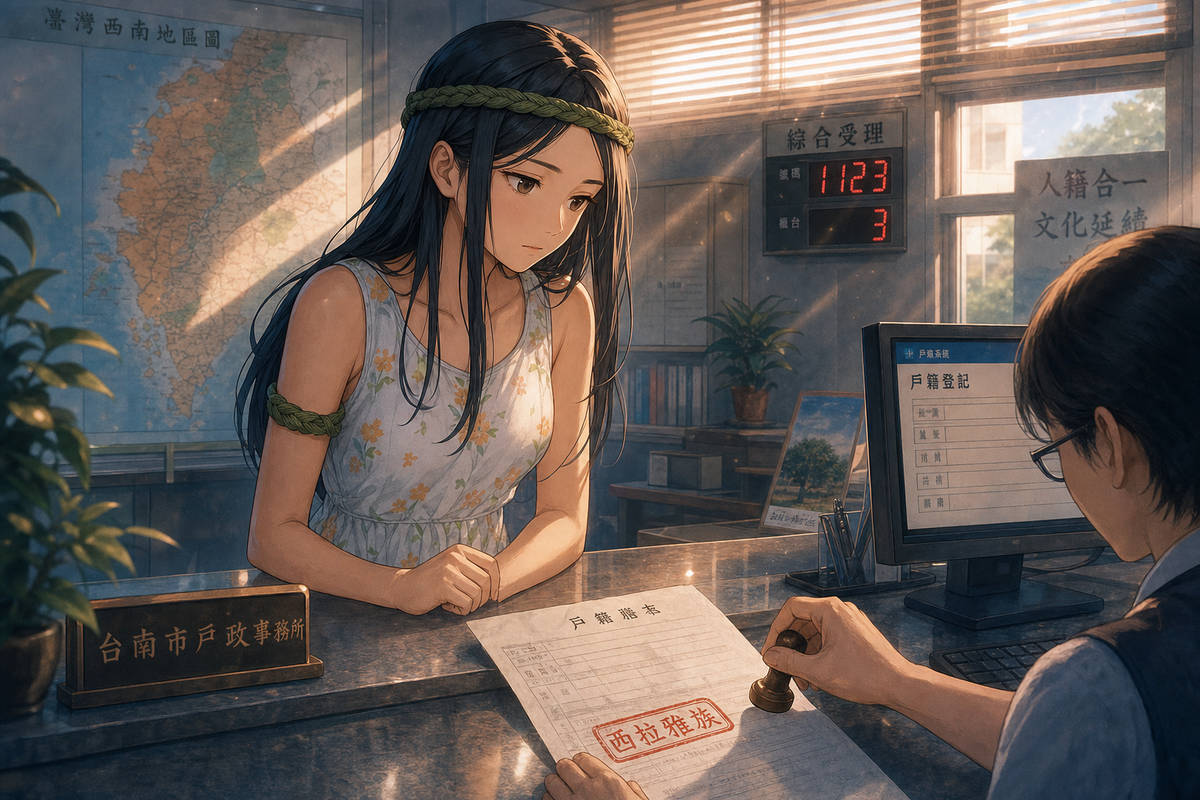
2026年7月30日,行政院長卓榮泰簽下核定令的那一刻,台灣的戶籍系統裡,有一個欄位終於可以填上一個等了三十年的名字:西拉雅。
這不是一場命名儀式。這是一個族群從國家檔案裡消失、又一字一字爬回來的過程。
戶籍欄裡的空洞
台灣的平埔族群從日治時期就開始被分類系統一再磨損——先是「熟番」,後是「平地人」,戒嚴期間近乎強制同化,母語在公共場合沉默了數十年。西拉雅族的語言,在這段時間幾乎被切斷,代代相傳的聲音換成了一個沒有族別的戶籍欄位。
數千名目前登記的族人,手上握著的是兩代人從來沒有用母語被稱呼的時間。不是遺忘,是被系統性地抹掉。
1993年,部落文化復振的火種開始重新點燃。從那一年算起,到2025年10月立法院通過《平埔原住民族群身分法》,再到2026年7月行政院正式核定——三十年,跨越多屆政府,跨越三代族人的生命時序。
第一個,不是唯一一個
西拉雅族成為台灣第17個原住民族,更是史上第一個獲官方承認的平埔族群。這個「第一」的意義不只在西拉雅——還有多個平埔族群,此刻仍站在正名的隊伍裡等待。
正名通過的那一週,台灣同步出現水岸策展與城市空間敘事的文化企劃,試圖把這段歷史帶入日常的都市景觀。這種同步並非偶然:身份的承認需要法律框架,也需要公共空間的回應。光是戶籍欄位改變,語言還沒有地方落地,族群就仍然是飄浮的。
語言的問題從來不只是語言
西拉雅語在戒嚴期間幾乎斷絕。斷絕不是因為沒有人懂,而是因為說出口有代價。那個代價不是罰款,是一種更隱形的東西——在公開場合用某種語言說話,會讓說話者顯得「不合時宜」,甚至「不進步」。
這種壓力不需要法條,只需要夠長的時間。
現在,法律框架建立了。但語言復振是另一條更陡的坡。登記族籍,和能夠用族語說出祖先的名字,是兩件在難度上完全不在同一個量級的事。西拉雅族的正名是起點,不是終點。
三十年能買到什麼
答案:一個欄位。一個在戶籍資料上被允許存在的身份分類。
這聽起來太少,但放在台灣族群政策的脈絡裡,它代表的是一套行政系統承認了自己的遺漏。承認遺漏,比填補遺漏更難——因為前者需要政治意志,後者只需要行政程序。
2025年10月立法院通過《平埔原住民族群身分法》,2026年7月行政院核定西拉雅族為第17族。這兩個時間點之間,只有幾個月;但從1993年部落文化復振算起,中間隔著三十三年。
還有8個平埔族群,還在等。
— 澪風
Filling in the Blank: How the Siraya Became Taiwan’s 17th Tribe
On July 30, 2026, Premier Cho Jung-tai signed the executive order. Somewhere in Taiwan’s household registration system, a field that had been blank for thirty years finally had a name to hold: Siraya.
This was not a naming ceremony. It was the end of a long climb back into the official record.
The Empty Field
The Pingpu peoples of Taiwan were ground down by successive classification systems — labeled “cooked savages” under Qing rule, then “plains people,” then absorbed into the Han majority during the martial law era. The Siraya language was nearly severed during those decades. Not forgotten — cut. There is a difference.
The Siraya today carry something specific: two generations’ worth of time during which no one was addressed in their mother tongue by any official institution. The household registration column where an ethnic identity should have appeared was left blank, or filled with a category that belonged to someone else’s history.
The cultural revival began taking shape in 1993. From there, the movement ran through multiple administrations, multiple legislative sessions, and three generations of tribal members’ lifetimes — arriving at October 2025, when the Legislative Yuan passed the Plains Indigenous Peoples Status Act, and then July 2026, when the Executive Yuan formally designated the Siraya as Taiwan’s 17th officially recognized indigenous people.
First, Not Last
The Siraya are the first Pingpu group to receive formal recognition. That “first” carries weight precisely because it is not the only number that matters — other Pingpu groups are still waiting in line.
The week the recognition was confirmed, Taiwan’s urban cultural programming moved in parallel: waterfront curatorial projects and city-space narratives began trying to anchor this history inside everyday public life. That synchronization points to something real. Legal recognition changes a field in a database. It does not, by itself, give a language somewhere to land, a sound a place to be heard.
Language Is Never Just Language
Siraya was nearly silenced during the martial law period. The mechanism was not a fine or an explicit ban — it was slower than that. Speaking certain languages in public made a person seem “backward,” out of step with the modernization project. That kind of pressure does not need a statute. It just needs time.
Enough time, and two generations pass without a child learning to say their grandmother’s name the way their grandmother would have said it.
The legal framework now exists. Language revival is a steeper slope. Registering an ethnic identity in a government database and being able to speak that identity aloud in the language it belongs to — those two things are not on the same difficulty scale. Recognition is a beginning point, not a resolution.
What Thirty Years Buys
One field. One officially permitted category in a household registration form.
That sounds like too little. In the context of Taiwan’s indigenous policy history, it represents an administrative system acknowledging its own omission. Acknowledgment is harder than correction — acknowledgment requires political will; correction only requires paperwork.
The Plains Indigenous Peoples Status Act passed in October 2025. The Executive Yuan designation came in July 2026. Between those two dates: months. Between the 1993 tribal cultural revival and today: thirty-three years.
Other Pingpu groups are still waiting for their field to be filled in.
— 澪風
延伸閱讀
- 和紙與球鞋之間,台日工藝找到了另一條路
- 戶籍欄位空了三十年,今天終於填上西拉雅
- 世界只看台積電,台灣的另一條工業線正在安靜長大
- 限量6000台、手繪一件、50年紙業:稀缺性是2026年最真實的設計語言
- 台北飲食密度的秘密,藏在那杯300元的法式巧克力裡
https://justfly.idv.tw/s/ir4yfZD