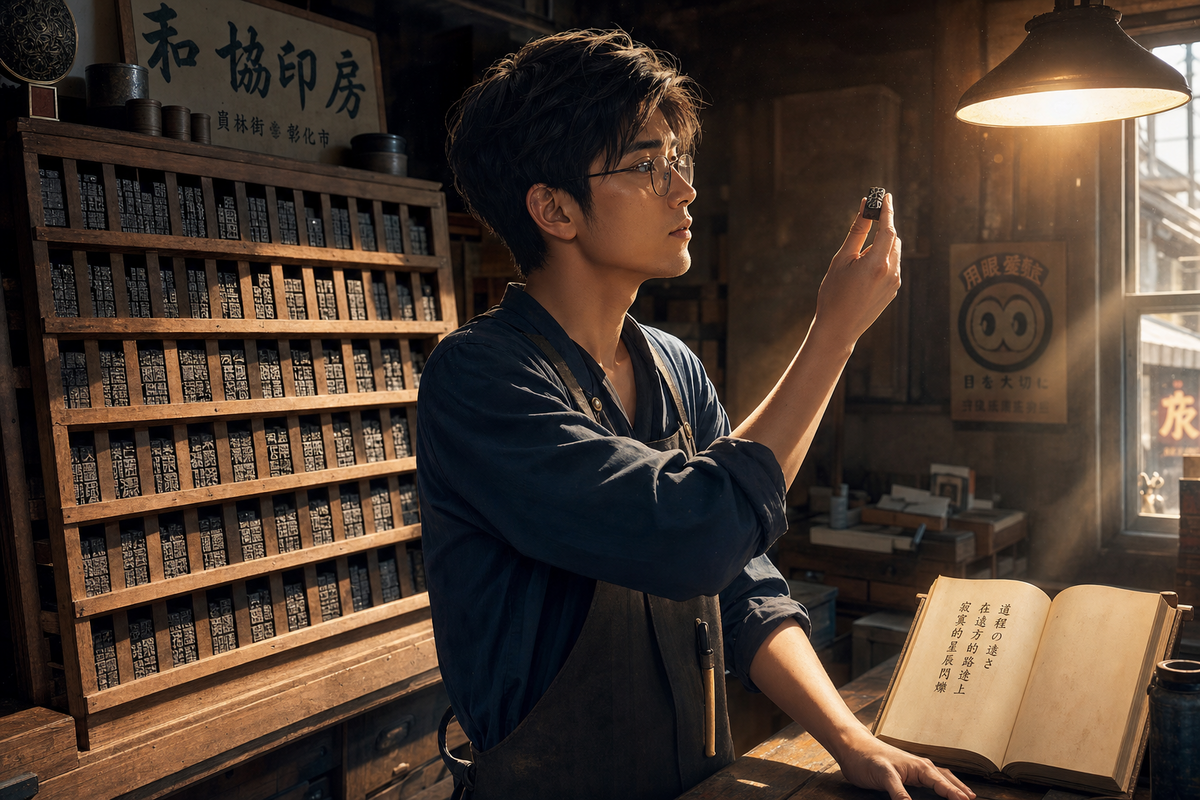
活字印刷有個奇怪的邏輯:你必須先認識一個字,才能把它撿起來排進版面。認識得越晚,它就在字盤裡待得越久,落滿鉛灰。谷川俊太郎在台灣的命運,大概就是這樣。
2026年6月,一場題為《你好,我是谷川俊太郎,詩人與他的創作展》的展覽在台灣登場。這是谷川俊太郎唯一授權的海外首場展覽,展出珍貴手稿與多媒體裝置。主角1931年生於東京,已於2024年11月13日辭世,享年92歲,生前是日本現代詩壇公認最重要的聲音。台灣等了他將近70年。
同一個時代,兩條平行線
谷川俊太郎曾說:「詩是我用來感受自己還活著的方式。」這句話本身就是一首短詩。問題是,台灣用了七十年才聽到這句話。
1931年出生的谷川俊太郎,與台灣戰後現代詩的核心人物幾乎同世代:余光中1928年生,鄭愁予為1933年生。余光中是台灣現代詩史上最具代表性的聲音,寫出「酒入愁腸,七分釀成了月光」;鄭愁予的《錯誤》留下「我達達的馬蹄是美麗的錯誤」,在無數台灣教室的黑板上被抄過。這兩位詩人的生命時間軸與谷川俊太郎幾乎完全重疊,卻幾乎不存在任何跨語言的對話記錄。
原因要從1953年說起。那一年,紀弦在台北創辦《現代詩》雜誌,1956年宣告「現代派六大信條」,核心主張是「橫的移植,而非縱的繼承」——也就是直接向西方現代主義學習,絞開漢詩傳統。這個方向選擇了波特萊爾、艾略特,卻跳過了海峽另一側的同期日本詩學。這是一個歷史切割的結果,有意為之,不是遺漏。
1945年那把剪刀
要理解台灣為什麼到現在才認識谷川俊太郎,必須先理解1945年在台灣文學版圖上劃下的那條線有多深。
日治五十年(1895-1945)期間,台灣文學在殖民地語言的矛盾中艱難誕生。賴和(1894-1943)被稱為台灣新文學之父,他選擇用中文書寫,是一種對抗的姿態,不是文化親近的選擇。1945年之後,台灣的文學世界進行了一次幾乎全面的重組:日語從教室、書店、報紙上消失,中文成為唯一合法的書寫語言。日本嚴肅文學在台灣的接受渠道,就在這個節點幾近斷絕。
但流行文化走的是另一條路。動漫、J-Pop、偶像,這些東西不需要語言政策的許可就滲進了台灣的日常。你可以在1990年代的台北巷子裡哼出「心情」,卻從來沒有機會在中學課本裡讀到谷川俊太郎。日本文化輸台的管道,從一開始就是娛樂優先、嚴肅文學墊底的結構,而且這個結構從來沒有被認真挑戰過。
谷川俊太郎寫過這樣的句子:「生きているということ いま生きているということ」(活著,就是現在活著這件事)。這首詩寫於1971年,台灣那一年正在趕著另一種焦慮,沒有人有空去日本詩集裡尋找這種安靜的確認。
遲到的帳單
我在做鉛字排版的時候,常常想到一件事:一個字如果長期沒有被撿起來使用,它的表面就會氧化,印出來的字跡會比新字模模糊一點。不是廢了,只是久等的痕跡留在上面。
這次展覽的到來,某種程度上是一筆遲到的帳單。「詩人與他的創作展」讓台灣讀者第一次有機會在授權的框架內,正式接觸谷川俊太郎的手稿與創作脈絡。台灣在近七十年後,終於主動去撿起那個一直放在字盤裡的字。
余光中與谷川俊太郎,兩個人的詩都在問同一個問題:語言能不能承載活著的重量?只是一個用繁體中文問,一個用日文問,然後在各自的語言宇宙裡等待——等待有人搭橋,等待那座橋不需要再多等七十年。
展覽資訊:《你好,我是谷川俊太郎,詩人與他的創作展》2026年6月於台灣登場。來源:Harper’s Bazaar Taiwan
— 周子恩
Japan’s Greatest Living Poet Just Arrived in Taiwan
In letterpress printing, there’s a strange logic: you have to recognize a character before you can pick it up and set it into the forme. The longer it sits unrecognized, the more lead dust it collects. That’s roughly what happened to Tanikawa Shuntaro in Taiwan.
In June 2026, an exhibition titled Hello, I Am Tanikawa Shuntaro — Poet and His Works opens in Taiwan. It is the only overseas exhibition officially authorized by Tanikawa himself. The subject was born in Tokyo in 1931 and passed away on November 13, 2024, at the age of 92. Taiwan waited nearly seventy years to meet him.
The Same Generation, Two Parallel Lines
Tanikawa once said: “Poetry is how I feel that I am still alive.” The statement is itself a compressed poem. The problem is that Taiwan spent seven decades not hearing it.
Born in 1931, Tanikawa is almost exactly contemporaneous with the central figures of Taiwan’s postwar modern poetry: Yu Guangzhong was born in 1928, Zheng Chouyu in 1933. Yu Guangzhong wrote lines that every Taiwanese student has encountered on a blackboard. Zheng Chouyu’s Cuowu (Mistake) gave the language “my clip-clopping hoofbeats are a beautiful mistake.” Their lifespans overlap almost completely with Tanikawa’s — yet there is virtually no record of cross-language dialogue between these poets.
The explanation starts in 1953, when Ji Xian founded the journal Modern Poetry (《現代詩》) in Taipei. By 1956, he had formalized the doctrine of “horizontal transplantation, not vertical inheritance” — learning directly from Western modernism, bypassing classical Chinese poetic tradition. The movement looked toward Baudelaire and Eliot. It did not look toward contemporary Japanese poetry. That wasn’t an accident; it was the outcome of a historical cut.
The Scissors of 1945
To understand why Taiwan is only now encountering Tanikawa, you have to understand how deep the line drawn in 1945 actually was. During the fifty years of Japanese colonial rule (1895–1945), Taiwan’s literature was born inside a language contradiction. Lai He (1894–1943), called the father of Taiwan’s new literature, chose to write in Chinese as an act of resistance, not cultural affinity. After 1945, Japanese disappeared from classrooms, bookshops, and newspapers. The channels through which serious Japanese literature might have reached Taiwan were cut almost entirely at that moment.
Popular culture found other routes. Manga, J-Pop, and idol culture seeped into Taiwanese daily life without needing anyone’s permission. You could hum a Japanese pop song in a Taipei alley in the 1990s and no one would blink. But Tanikawa never made it into a high school textbook. The structure of what Japan exported to Taiwan — entertainment first, serious literature last — was never seriously challenged.
Tanikawa wrote in 1971: 「生きているということ いま生きているということ」— “To be alive, to be alive right now.” That year, Taiwan had other anxieties and no space in its reading culture for this kind of quiet affirmation arriving from Tokyo.
A Bill Arriving Late
The exhibition carrying Tanikawa’s manuscripts and multimedia installations to Taiwan is, in structural terms, a debt being settled. Taiwan spent nearly seventy years not reaching into the type tray — and now it finally did.
Yu Guangzhong and Tanikawa Shuntaro were asking the same question across the same decades: can language hold the weight of being alive? One asked in Traditional Chinese, the other in Japanese, and then each waited — waited for someone to build the bridge, waited for that bridge to not require another seventy years.
Source: Harper’s Bazaar Taiwan
— 周子恩
延伸閱讀
https://justfly.idv.tw/s/SCF9EBo