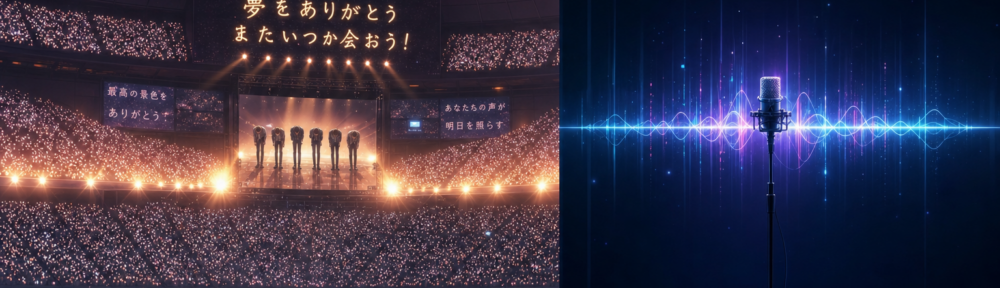
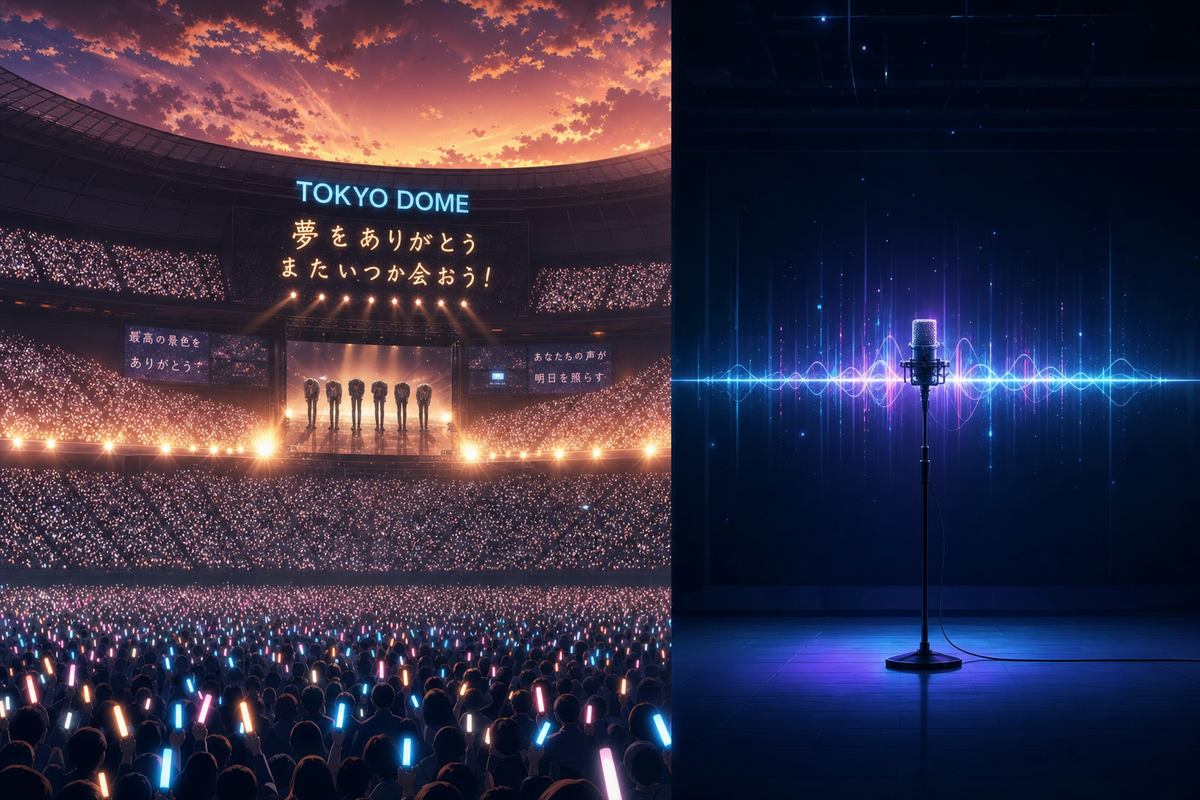
2026年6月1日,東京巨蛋。螢光棒的海洋在最後一首歌結束的瞬間靜止了幾秒。嵐五個人走下舞台,26年半的傳奇公演畫上句點。同一週,一個沒有任何人見過臉的女聲——Ado——出現在Adidas日本國家隊球衣的聯名企劃上,成為代表整個日本的文化符號。
臉是偶像的入場券。嵐把這張券用了26年;Ado從來沒有遞出過它,卻站在了更大的舞台上。
一個工廠的謝幕
嵐1999年出道,五個有名字、有臉、有被精心設計過的個人故事的男孩,由Johnny’s事務所的培育體系推向市場。那個體系的核心邏輯很清楚:你要讓粉絲覺得「我認識他們」。認識,不只是欣賞。親近感是商品,群體身份是包裝,真實臉孔是讓你每天打開雜誌的理由。
這套邏輯在平成年代橫掃亞洲。台灣的好樂迪(1990年創立)、錢櫃(1992年創立),私人包廂裡唱的不只是嵐的歌,唱的是那五張臉所附帶的整套情感投射。KTV點歌榜從來不只是音樂品味的統計,它是社交記憶的地圖——你在那個卡拉OK的晚上點了哪首歌,跟誰一起唱,比唱片銷售榜更誠實地記錄了那一代台灣人的情感座標。
2020年嵐宣布「活動休止」。2026年6月1日東京巨蛋的最終公演,是物理性的謝幕,也是整個偶像製造工廠模式走到終點的告別式。
一個聲音的邏輯
同樣是2020年,Ado在Niconico發表「Usseewa(うっせぇわ)」,當時她17歲,臉從未公開,本名至今無人知道。那首歌累積超過1億次播放。沒有任何宣傳照,沒有任何人可以「認識她」——你只能聽到那個聲音。
2024年她承辦大阪萬博的全球巡演。2026年,Adidas找她聯名日本國家隊球衣。一個沒有臉的歌手,成為日本向全世界遞出的文化名片。
通行的說法是視覺時代的IP必須有臉。Ado的存在是對這個說法的直接反駁。她的匿名是一種結構性的選擇,把情感的填充空間還給了每一個聽眾。你聽到那個聲音,你可以把任何屬於你自己的憤怒、悲傷、或者單純的亢奮放進去。臉會限制這個過程;沒有臉,聲音才能真正屬於聽的人。
AI時代最稀缺的東西
2026年被華語音樂產業稱為「AI音樂躍遷元年」。生成式AI可以模擬音色、複製風格、在24小時內產出一張完整專輯。這個背景讓Ado的選擇顯得更弔詭:當所有聲音都可以被生成,一個從未露臉、讓人無法確認她到底「是不是真實存在」的歌手,為什麼反而成了最有力的pop star?
答案可能在於:正因為一切都可以被生成,聲音的真實性變成了新的稀缺。Ado沒有辦法被輕易替換——那個聲音有情感密度,它不像一個模板,它像一個人在某個具體的時刻把什麼東西喊出來了。臉是偶像的入場券,Ado把它還給了歌聲。入場券消失之後,留下的才是核心。
台灣這一端的座標轉移
台灣消費日本流行音樂的深度,在亞洲市場裡是少見的。1990年代台灣超過3,000家唱片行,日本偶像唱片佔重要銷售比例。KKBOX在2005年由林冠群創立,是全球最早的合法音樂串流平台之一,早於Spotify數年——大量日本流行音樂透過這個平台被台灣聽眾訂閱收聽,在實體唱片行消失之前,KKBOX已經完成了接棒。
嵐的歌在台灣的KTV熬過了串流時代的轉型,因為那些歌附帶著具體的社交場合記憶。Ado的歌現在也進了KTV選歌系統,但它的傳播路徑完全不同——從演算法到耳機,最後才到包廂裡發光的螢幕前。台灣某一世代的聽眾,在好樂迪的包廂裡學會愛上一個有臉有名字的偶像;下一個世代,在同一個包廂裡對著螢幕唱一個連臉都沒有的名字,唱得同樣投入。
那個螢幕上沒有臉的名字,你還是把它唱出來了。偶像認同的運作方式變了——你需要的從來就是那個聲音在你身體裡引發的什麼,臉只是過去把那個聲音遞過來的方式。嵐用26年證明了一種模式;Ado用一首「Usseewa」開了另一扇門,而那扇門朝向的,是一個臉孔失去壟斷權的時代。
— 林敏寧
ARASHI’s Last Glowstick, Ado’s Face Never Appears
June 1, 2026, Tokyo Dome. A sea of glowsticks went still for a few seconds the moment the final song ended. ARASHI’s five members walked off the stage, closing 26 and a half years. That same week, a singer whose face no one has ever seen — Ado — appeared in a collaboration on Adidas Japan’s national team jersey, representing an entire country as a cultural ambassador.
A face used to be the entry ticket for any idol. ARASHI used theirs for 26 years. Ado never handed one over, and ended up on a bigger stage.
The Factory Closes
ARASHI debuted in 1999 — five boys with names, faces, and carefully crafted personal narratives, developed by Johnny’s and pushed to market. The core logic was straightforward: make fans feel they know these people. Not admire. Know. Intimacy was the product, group identity was the packaging, real faces were the reason you opened a magazine every morning.
That logic swept across Asia through the Heisei era. Taiwan’s KTV chains — Cashbox (founded 1992), Holiday KTV (founded 1990) — were more than venues for singing ARASHI songs. The private booths held the entire emotional architecture those five faces carried. A KTV song-request chart is an honest map of social memory, more accurate than any album sales figure at recording what a generation actually felt and who they felt it with.
ARASHI announced their hiatus in 2020. The Tokyo Dome finale on June 1, 2026 was their physical farewell — and the farewell of the idol-manufacturing factory model that built them.
A Different Architecture
Also in 2020, Ado posted “Usseewa (うっせぇわ)” on Niconico. She was 17. Her face has never been shown publicly; her real name remains unknown. The track surpassed 100 million plays. No promotional photos. No face for anyone to “know.” Only a voice.
She headlined a global tour for Expo 2025 Osaka. In 2026, Adidas chose her to co-brand Japan’s national team jersey. A faceless singer became the cultural calling card Japan hands to the world.
The prevailing assumption is that IP in a visual age requires a face. Ado’s existence refutes this directly. The anonymity is structural. By removing her face, she returns the emotional filling space to every listener. A face constrains projection; without one, the voice can genuinely belong to whoever is listening. Ado gave the entry ticket back to the music.
When Everything Can Be Generated
The Chinese-language music industry has called 2026 “the inaugural year of AI music leap.” Generative AI can now simulate timbre, replicate style, and produce a complete album in under 24 hours. Against this backdrop, Ado’s choice becomes stranger and more legible at once: precisely because any sound can now be generated, the authenticity of a voice becomes scarce. Ado cannot be easily replaced. The emotional density in that voice is not a template. It sounds like a person shouting something out at a specific, unrepeatable moment.
Taiwan’s Coordinates Shift
Taiwan’s depth of engagement with Japanese pop is among the highest in Asia. The country had over 3,000 record shops in the 1990s, with Japanese idol releases accounting for a significant share of sales. KKBOX, founded in 2005 by Lin Kuan-chun, was one of the world’s first legal music streaming platforms — predating Spotify by several years — and massive amounts of Japanese pop music reached Taiwanese listeners through it before physical retail disappeared.
ARASHI’s songs survived the streaming transition in Taiwan because they carried the weight of specific social occasions — a KTV booth, a particular night, particular people. Ado’s songs are now in those same KTV systems, but the path is different: from algorithm to earphones to a glowing screen in a private booth.
One generation of Taiwanese listeners learned to love an idol with a face. The next generation stands in the same booth, singing a name attached to no face, with the same conviction. The screen shows no face. You sing it anyway. That is what the shift in pop identity actually looks like when it lands.
— 林敏寧
延伸閱讀
https://justfly.idv.tw/s/SRiv9tR