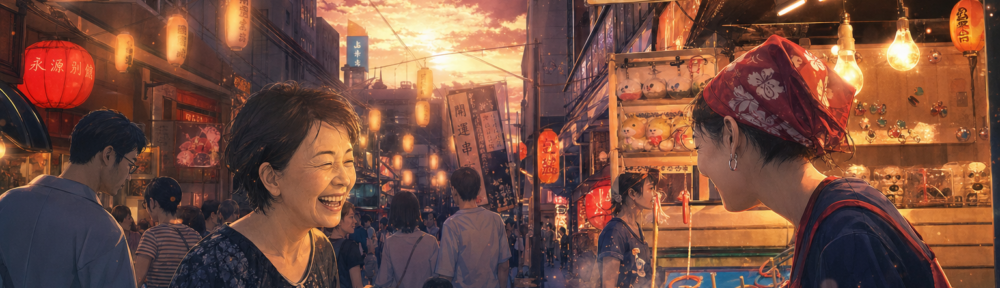
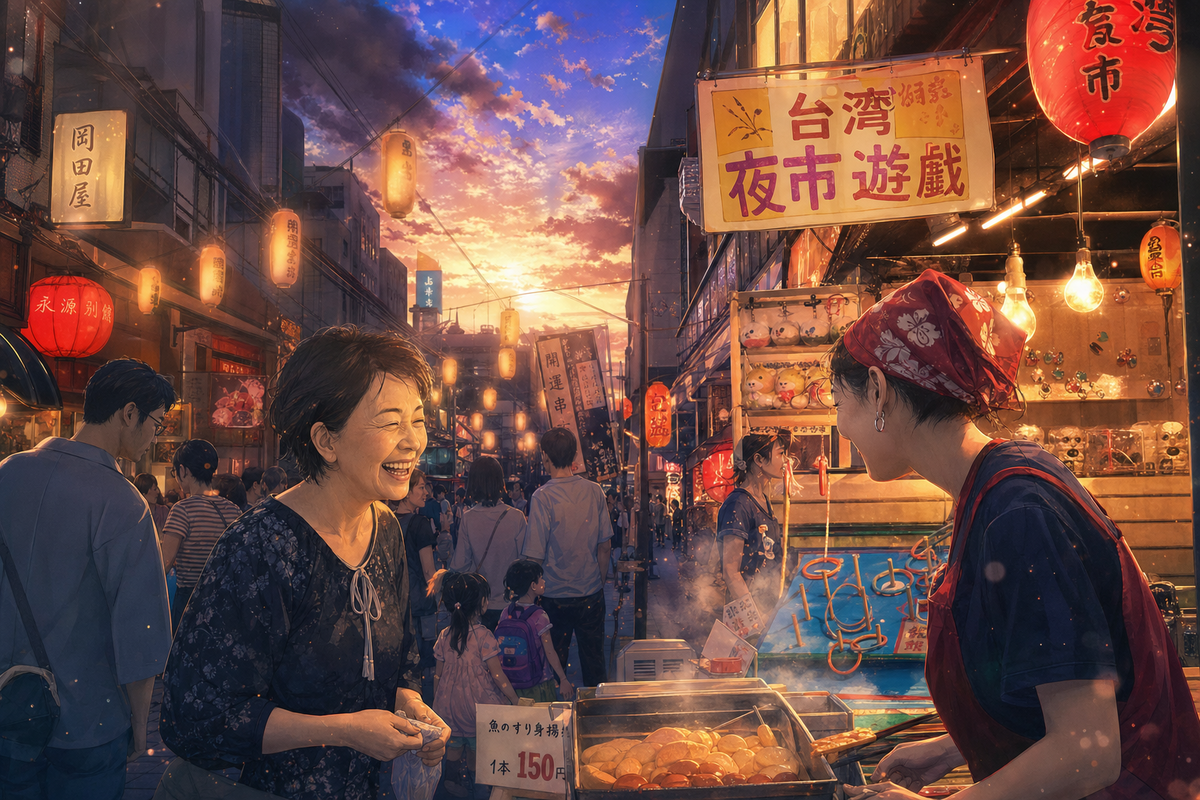
川崎某條商店街的攤位前,一個用台語喊著「甜不辣,來一份!」的阿姨,換來旁邊日本大媽一臉笑意的點頭。沒有翻譯,沒有解說牌。她不懂台語,但她懂那個語氣。
這一幕,某種程度上比任何文化政策報告都更精準地描述了「黑貓台灣祭」第四屆正在發生的事。
從15個攤位到川崎年度例行節慶
2023年,一個叫見吉勇治的日本工程師,因為派駐台灣時愛上了豆花,回國後自己開店,然後在川崎辦了第一屆「黑貓台灣祭」。那一屆只有15個店、3個會場。到了2025年第三屆,規模擴張到33個店、12個會場。2026年第四屆,獲得高津區政府後援,攤位超過30個品項,並與二子神社結合,引入了台灣夜市標誌性的套圈圈與射擊遊戲。
數字本身不是重點。重點是:這件事從頭到尾不是台灣政府推的,也不是在日台灣人社群辦的。它是一個喜歡台灣的日本工程師,聯合當地老店木村屋和二子大通り商和會,把台灣夜市文化搬進川崎社區。2026年,它正式成為川崎的年度例行節慶。
這個差異在文化政策上意義重大。外來文化的最脆弱時刻,是當主辦方的熱情耗盡之後。但當在地居民開始說「這是我們的節慶」,生命週期就不一樣了。
台灣夜市為什麼容易被移植
台灣夜市的歷史超過百年——士林夜市的前身在1909年已有制度性記錄。它能在全球流動並非偶然。CNN、BBC多次把台灣夜市列為全球必體驗的文化景觀,但媒體的解釋通常停在「好吃」這一層。
更深一點的原因:夜市沒有階級入場費。攤位旁邊站著上班族、學生、老人、外籍工作者,沒有人需要穿對衣服或點對酒單才能融入。這種無門檻的熱鬧,對急速城市化之後失去了這種空間的社會來說,帶著一種補償性的吸引力。日本社區商店街在連鎖便利商店壓力下逐漸空洞化,川崎的阿姨們在台灣夜市攤位前的笑,某程度上是笑給自己的。
韓國年輕人從2019年開始用「台灣感性(대만감성)」描述台灣街景的真實溫度感。2024年,NewJeans在宜蘭礁溪稻田和萬華取景拍攝MV,引發大規模朝聖熱潮。2025年,台灣以「台灣感性」為主題成為首爾國際書展的主題國。韓國感受到的,和川崎阿姨的笑,是同一件事的兩種形式:台灣日常裡有一種東亞城市化過程中被遺棄的生活質地,現在被他者重新看見。
南台灣不是台北的陪襯
與黑貓台灣祭同週,另一件事在進行:「雙城計:臺南×熊本臺灣當代藝術接力展」啟動。臺南市美術館與日本熊本市現代美術館合作,展覽自臺南啟動,預計延伸至熊本市現代美術館,三位當代藝術家的聯展構成這場跨城市對話的第一章。
這個框架值得單獨說清楚。台灣當代藝術在日本的能見度,長期集中在台北的機構和藝術家。臺南×熊本這個配對,把南台灣的藝術聲音直接導入日本城市視野,繞過了台北作為唯一出口的慣性。而選擇熊本,也不是純粹的文化決策——台積電在熊本設廠帶動的經濟連結,給了文化交流一個結構性的地基。產業先行,文化跟進,這是有意識的策略,不是順其自然。
相較之下,東京晴空塔的「台灣祭」今年邁入第十屆,台南市政府也首度官方參與合作,在場地設置台南傳統天燈裝置,提供擔仔麵、芒果飲品等台南標誌性食物。十年,同一個地點,從文化快閃到穩定的城市品牌駐場——這是另一種路徑,透過商業場域的年度重複,讓台南在東京押上區變成一個有記憶的地名。
「被看見的他者」到「共同的我們」,中間隔著幾屆祭典
文化滲透有它的速度限制。食物最快,因為它不需要語言。節慶次之,因為它需要社群願意年年回來。藝術最慢,因為它需要對話的語境。黑貓台灣祭走了四屆才從「異國觀光展」變成「川崎人自己的節慶」,臺南×熊本的接力展從臺南出發,還要走到熊本落地。
見吉勇治的故事說明了一件事:文化移植最有效的媒介,往往不是熱愛者國籍的那一邊。一個日本工程師因為一碗豆花,聯合木村屋和二子大通り商和會,把台灣夜市搬進了川崎社區的神社旁邊。他成了文化翻譯者,但他翻譯的是日常的質地,不是台語。
這才是最難複製、也最難防禦的文化輸出形式——它不依賴官方預算,也不需要對方有意識地「接受」。它只需要一個人,在吃到某樣東西的時候,決定把它帶回家。
— 林柏仁
Kawasaki’s Taiwan Festival Is No Longer a Foreign Exhibit
At a stall on a Kawasaki shopping street, a woman shouting in Taiwanese about her fish cakes gets a warm nod from the Japanese grandmother next to her. No translation. No explanatory sign. She doesn’t understand a word of Taiwanese — but she recognizes the energy.
That moment describes what the fourth edition of the Kuroneko Taiwan Matsuri is actually doing, more precisely than any cultural policy brief could.
From 15 Stalls to a Kawasaki Annual Institution
In 2023, a Japanese engineer named Yoshiharu Miyoshi — who fell in love with douhua (tofu pudding) while stationed in Taiwan — came home, opened a shop, and launched the first Kuroneko Taiwan Matsuri in Kawasaki. That inaugural edition had 15 vendors across 3 venues. By the third edition in 2025, the festival had grown to 33 vendors across 12 venues. The fourth edition in 2026 received backing from Takatsu Ward, brought in over 30 program items, partnered with the Futago Shrine, and imported Taiwan night market staples like ring-toss and shooting games.
The numbers are secondary. What matters: this was never initiated by the Taiwanese government or by Taiwanese expat communities. It was started by a Japanese engineer who loved Taiwan, in partnership with a local shop called Kimuraya and the Futago-dori shopping association. In 2026, it officially became a recurring annual event on Kawasaki’s calendar.
The cultural policy implication is significant. Transplanted cultures are most vulnerable when the founder’s enthusiasm fades. But once local residents say “this is our festival,” the lifecycle changes entirely.
Why Taiwan Night Markets Travel Well
Taiwan’s night market culture has a history of over a century — the predecessor of Shilin Night Market was already institutionally recorded in 1909. CNN and BBC have repeatedly named Taiwan’s night markets among the world’s must-experience cultural destinations, but their explanations usually stop at “the food is great.”
The deeper reason: night markets have no class admission fee. Office workers, students, the elderly, and foreign laborers stand shoulder to shoulder at the same stalls, with no correct outfit or wine list required for entry. For societies that lost this kind of space to rapid urbanization, the appeal carries something compensatory. The Japanese aunties smiling at the stalls in Kawasaki are partly smiling for themselves.
Korean youth coined “Taiwan sensibility (대만감성)” from around 2019 to describe the lived warmth of Taiwan’s streetscapes. In 2024, NewJeans filmed an MV in Ilan’s Jiaoxi rice paddies and Wanhua, triggering large-scale pilgrimage tourism from Korea. In 2025, Taiwan became the theme country of the Seoul International Book Fair under this exact concept. What Korea feels and what Kawasaki recognizes are two versions of the same thing: a texture of daily life that accelerated East Asian urbanization quietly discarded.
Tainan Is Not Taipei’s Supporting Act
Running in the same week as the Kuroneko Taiwan Matsuri: the launch of “Twin City Project: Tainan × Kumamoto Taiwan Contemporary Art Relay Exhibition.” Tainan Art Museum and Kumamoto City Museum of Contemporary Art are collaborating on a relay exhibition that opens in Tainan before extending to Kumamoto, with three contemporary artists forming the first chapter of this cross-city dialogue.
The pairing deserves specific attention. Taiwan’s contemporary art visibility in Japan has long been concentrated in Taipei-based institutions. The Tainan × Kumamoto configuration routes southern Taiwan’s artistic voice directly into a Japanese city’s cultural sphere, bypassing Taipei’s habitual role as sole gateway. Choosing Kumamoto is not purely a cultural decision — TSMC’s plant there built a structural economic foundation that cultural exchange can now build on. Industry led; culture followed. That’s a deliberate sequence.
Meanwhile, the Taiwan Festival at Tokyo Skytree Town marks its tenth edition this year, with Tainan City Government officially participating for the first time — setting up traditional lantern installations, serving danzai noodles and mango drinks. Ten years, same location, from cultural pop-up to stable urban brand residency. A different path: through commercial venue repetition, Tainan becomes a place name with memory in Tokyo’s Oshiage district.
The Distance Between “Spectacle” and “Ours”
Cultural penetration has a speed limit. Food moves fastest — it needs no language. Festivals are slower — they need a community willing to return year after year. Art is slowest — it needs a context for dialogue. The Kuroneko Taiwan Matsuri took four editions to shift from “exotic cultural expo” to “our festival.” The Tainan × Kumamoto relay has started from Tainan and still needs to land in Kumamoto.
Yoshiharu Miyoshi’s story establishes one principle: the most effective vector for cultural transplantation is often not someone from the culture being transplanted. A Japanese engineer who fell for a bowl of tofu pudding partnered with Kimuraya and the Futago-dori shopping association to bring a Taiwan night market to the grounds beside a Kawasaki shrine. He became a cultural translator — but what he translated was the texture of daily life, not the language.
That is the form of cultural export hardest to engineer deliberately, and hardest to stop once it starts. It doesn’t require official budgets or conscious acceptance from the receiving side. It only requires one person who tasted something and decided it belonged in their neighborhood.
— 林柏仁
延伸閱讀
https://justfly.idv.tw/s/dysbhWp