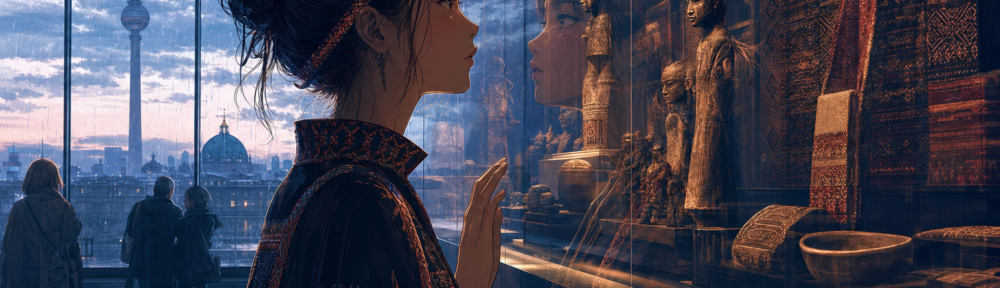
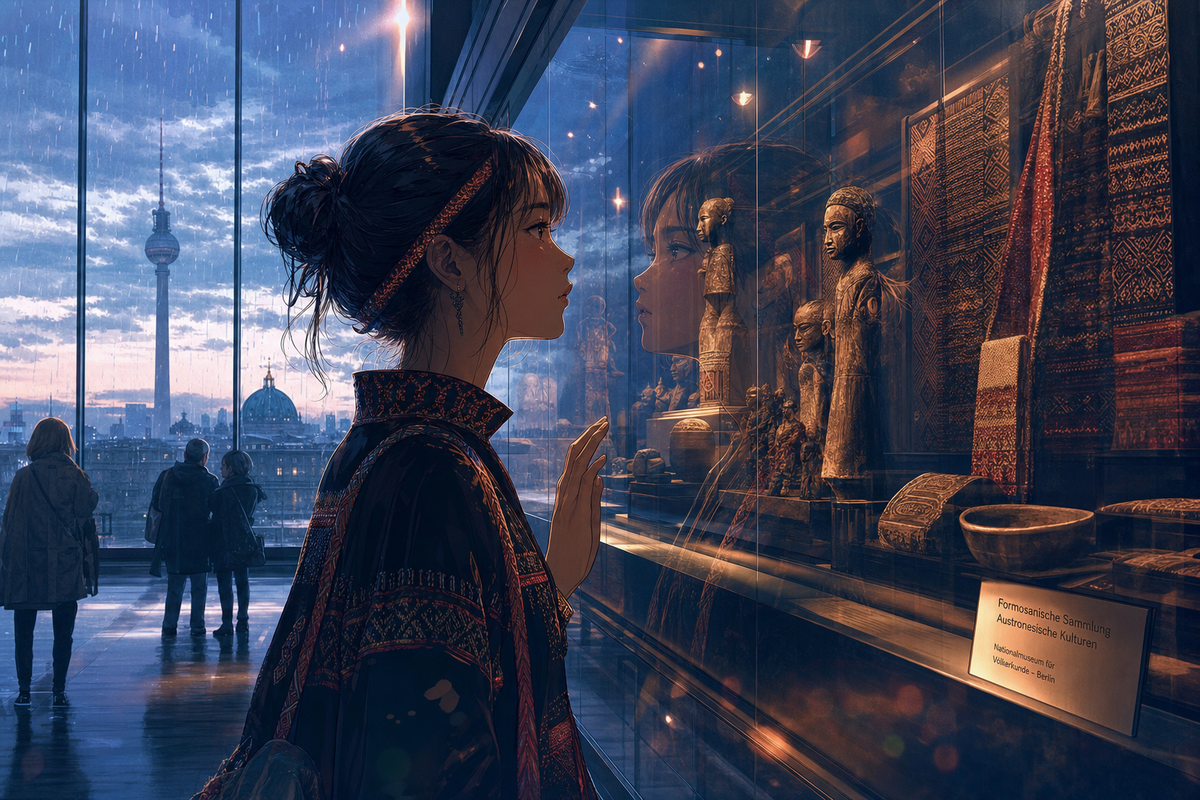
柏林洪堡論壇(Humboldt Forum)的某個展示櫃裡,放著從台灣帶走的東西。不是複製品。是原件。
19世紀末,德國學者Wilhelm Joest和Ludwig Riess在台灣進行田野調查,把採集到的原住民文物裝箱帶回歐洲,存入當時的柏林民族博物館(Ethnologisches Museum Berlin),也就是今日洪堡論壇的前身。那些箱子裡裝的是什麼,各族部落的長老不一定知道。他們的後代,也就是我這樣的人,更不知道。
2026年,歸還談判地圖首次被完整記錄公開。這是一份文件,也是一張帳單。
從「野番」到「原住民族」,花了一個世紀
在談文物歸還之前,得先說清楚這些文物是從哪種人手裡取走的。荷蘭殖民者叫我們的祖先「野番」,清帝國按馴化程度分成「生番」和「熟番」,日本殖民政府統一稱「蕃人」。1930年,賽德克族頭目莫那·魯道在霧社帶領族人抵抗日本統治,換來的是毒氣鎮壓。那些死去的人,連一個像樣的族群名字都沒有。
戰後換了統治者,名字換成「山胞」——山地同胞,一個地理標籤,不是族名。1993年,數千名原住民族人走上凱達格蘭大道,高呼「我們是原住民族,不是山胞」。那場遊行叫「還我名字大遊行」。1997年,憲法增修條文第10條正式採用「原住民族」。2005年,《原住民族基本法》確立集體權利框架。
從荷蘭統治算起,要一個正式的名字,花了將近四百年。
台灣目前有16個官方認定的原住民族,共42種方言,多數面臨傳承危機。語言在消亡,器物在柏林。
帝國的收藏邏輯
Wilhelm Joest的田野收集行為,在19世紀的學術語境裡不算罕見——那是個博物館競相以「文明記錄」為名採集他者文化的年代。問題不在Joest這個人的道德,問題在整個收藏系統的邏輯:被採集的對象沒有發言權,採集者定義什麼叫做「值得保存」,然後那些東西就消失在歐洲的倉庫裡。
洪堡論壇這棟建築本身就是政治聲明。它建在柏林宮原址,外觀刻意重建了普魯士皇宮的巴洛克立面,內部展示的卻是來自全球各地的殖民收藏。德國學界對此有批評,但建築已蓋好,文物還在裡面。
近年日本與台灣的博物館在全球合作培訓框架(GCTF)下,開始推動原住民文化復振,聚焦博物館實踐與文物返還議題。這個框架提供了一種路徑,不透過外交承認,而是透過文化機構之間的直接協作。台灣沒有辦法用邦交國的身份去敲柏林的門,但可以用文化主權的論述去叩問那扇玻璃。
文物歸還給誰,這才是真正的問題
歸還談判裡有一道裂縫,談判雙方都不太願意正面觸碰:文物歸還之後,交給誰?
台灣政府?還是當年文物被帶走的那個部落?這兩者之間的距離,有時比台北到柏林還遠。台灣政府代表「中華民國」,而中華民國的建立遠遠晚於那些文物離開台灣的時間點。部落有文化主權,但部落不是國際法意義上的談判主體。
這個問題本身,就是殖民遺緒的縮影。文物在帝國時代被帶走,在民族國家時代被討回,卻始終沒有一個框架讓真正的主人——部落與族人——坐在談判桌上。
台灣目前的路徑,是以「無邦交文化外交」繞過官方障礙:透過博物館合作、文化機構交流,把政治上無法直接對話的空間,用文化語言填補。聖文森與格瑞那丁斯今年與台灣宣布啟動「原住民遺產交流計畫」,就是這套邏輯的加勒比海版本。
文化外交能走多遠,目前還是未知數。2026年談判地圖公開之後,那些玻璃箱至少不再沉默了。
你的祖先的歌放在柏林,你知道了。然後呢?
— 澪風 (Yuki)
Your Ancestor’s Song Is in a Glass Case in Berlin
Somewhere inside the Humboldt Forum in Berlin, there is a display case holding objects taken from Taiwan. Not replicas. The originals.
In the late 19th century, German scholars Wilhelm Joest and Ludwig Riess conducted fieldwork in Taiwan, packed up indigenous artifacts, and shipped them back to Europe — to what was then the Ethnologisches Museum Berlin, the institution that became the Humboldt Forum. What exactly was in those crates, the elders of the communities involved may not have known. Their descendants certainly didn’t.
In 2026, the repatriation negotiation map was publicly documented for the first time in full. It is a record. It is also an invoice.
It Took a Century Just to Get a Name
Before discussing what should be returned, it’s worth being precise about who these objects were taken from. Dutch colonizers called Taiwan’s indigenous peoples “wild savages.” The Qing dynasty sorted them by degree of assimilation — “raw” or “cooked.” Japanese colonial administrators used the blanket term “banjin.” In 1930, Seediq chief Mona Rudao led his people in resistance against Japanese rule at Wushe. The response was suppression, including poison gas. The people who died there didn’t even have a dignified collective name.
After 1945, another government arrived and replaced “banjin” with “mountain compatriots” — a geographic label, not a people’s name. In 1993, thousands of indigenous people marched down Ketagalan Boulevard in Taipei, demanding: “We are indigenous peoples, not mountain compatriots.” The march was called the “Return Our Names” march. In 1997, Article 10 of Taiwan’s constitutional amendments formally adopted the term “indigenous peoples.” In 2005, the Indigenous Peoples Basic Act established a framework for collective rights.
Taiwan now officially recognizes 16 indigenous peoples with 42 dialects. Most of those dialects face a transmission crisis. The languages are disappearing. The objects are in Berlin.
The Logic of Imperial Collecting
Wilhelm Joest’s collecting wasn’t unusual by 19th-century academic standards. That was an era when museums competed to document “other” cultures under the banner of civilizational record-keeping. The issue isn’t Joest’s individual ethics. It’s the system: the collected had no voice; the collectors decided what was worth preserving; the objects vanished into European storage rooms.
The Humboldt Forum building is itself a political statement — erected on the site of the Berlin Palace, its exterior deliberately reconstructed as Baroque Prussian facade, its interior housing colonial-era collections from around the world. German academics have criticized this. The building stands anyway. The objects remain inside.
In recent years, Japanese and Taiwanese museums have begun working together under the Global Cooperation and Training Framework (GCTF) to advance indigenous cultural revitalization, focusing specifically on museum practice and repatriation. That framework offers a pathway — not through diplomatic recognition, but through direct institutional cooperation. Taiwan cannot knock on Berlin’s door as a recognized state. It can press its case through cultural sovereignty.
Returned to Whom — That Is the Actual Question
There is a fault line running through the repatriation negotiations that neither side wants to address directly: once the objects come back, who receives them?
The Taiwanese government? Or the specific community whose ancestors made them? These two recipients are sometimes further apart than Taipei is from Berlin. The government represents the Republic of China, an entity established long after the objects left Taiwan. The communities hold cultural authority, but communities are not recognized negotiating parties under international law.
This problem is colonialism’s residue made structural. Objects were removed during the imperial era; they are being reclaimed in the nation-state era; but no framework yet exists that places the actual owners — the tribes and their people — at the negotiating table.
Taiwan’s current strategy threads through what might be called informal cultural diplomacy: museum partnerships, institutional exchanges, filling the political vacuum with cultural language. Saint Vincent and the Grenadines announced an Indigenous Heritage Exchange with Taiwan this year — the same logic, Caribbean edition.
How far cultural diplomacy can carry this is genuinely unclear. But the fact that the 2026 negotiation map is now public record means at least one thing: those glass cases are no longer silent.
Your ancestor’s song is in Berlin. Now you know. What comes next?
— 澪風 (Yuki)
延伸閱讀
https://justfly.idv.tw/s/1q6gbLC