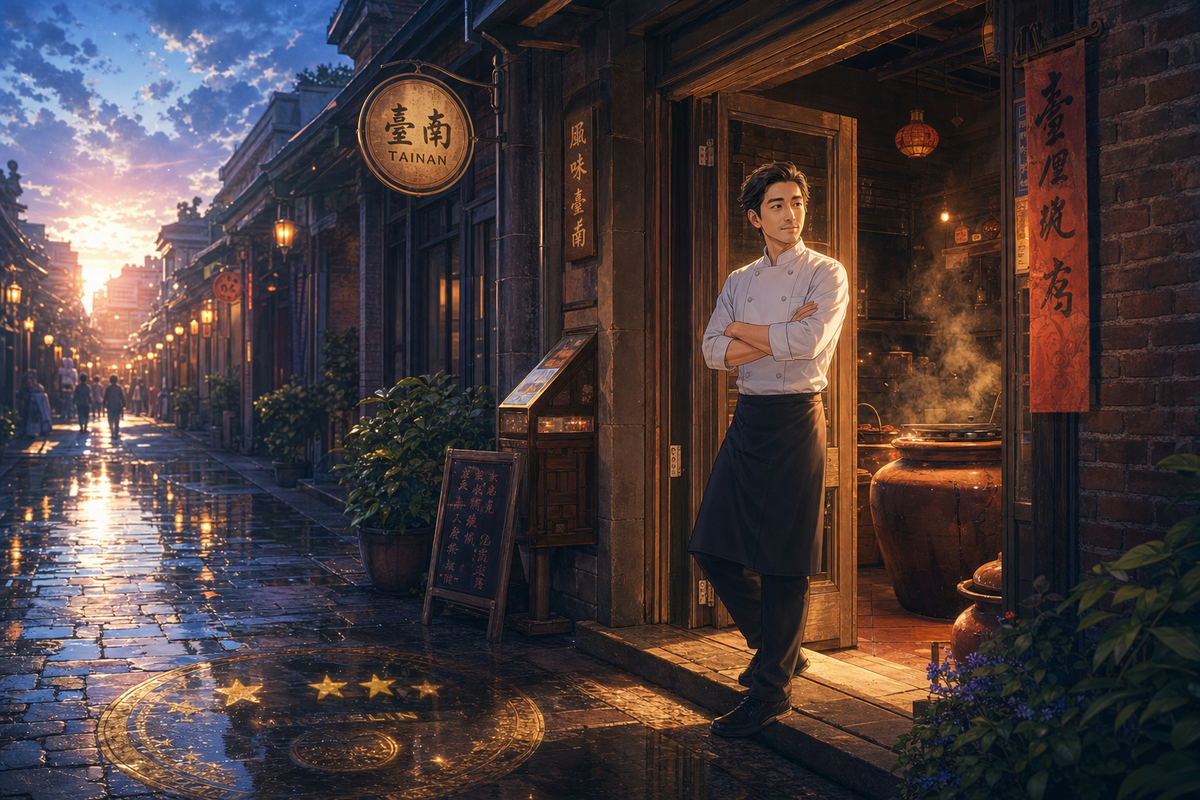
2026年7月21日,《臺灣米其林指南2026》公布名單,61家摘星,創下9年新高。台南「予島 YuDao」開幕未滿一年,一口氣拿下一星、綠星與年度最佳開業餐廳三冠;新竹縣「鮨安」,29歲主廚,成為新竹縣第一間米其林星級餐廳。數字漂亮,節奏也快。
但有個問題沒人敢正面問:這套法國評鑑體系,真的讀得懂台南嗎?
城市的飲食,不是靠打分數能讀完的
台南的食物邏輯跟台北截然不同。台北是移植、疊加、競爭——外省料理、日式割烹、法餐,在地圖上彼此靠近,各自成立。台南是沉澱。虱目魚粥在清晨五點才有意義,棺材板的油腥不是缺點而是記憶,擔仔麵一碗的份量是姿態,不是一餐。這些東西放進米其林的評分框架——環境、服務、食材、技法、一致——有幾項是在評食物本身?
「予島 YuDao」摘星的方式其實回答了一部分這個問題。賣的不是古早味,而是以台南物產為題材、以當代Fine Dining為語言、開幕不到一年就拿下三冠的新餐廳。米其林選擇的,是「能被米其林理解的台南」——以在地食材重新編寫、但以國際評鑑語法呈現的版本。
這不是批評,這是結構事實。米其林從2018年台北首發,到2020年台中、2022年台南列入評選城市,這條擴張軌跡有其邏輯:從最容易被國際評鑑理解的城市開始,逐步往需要更多在地知識才能欣賞的地方移動。評選城市擴增至7城市、涵蓋台北、台中、台南、高雄、新北、新竹市、新竹縣,這一步走了8年。
新竹的問題更根本
台南至少有飲食文化底蘊可以被「再詮釋」。新竹呢?
新竹的食物身份向來曖昧。貢丸、米粉是鄉土標籤,但科學園區周邊的餐飲生態,幾十年來是工程師午餐的便利解法,不是飲食文化的積累場域。「鮨安」的出現——29歲主廚、日本料理形式——讓新竹縣進了星級名單,但這顆星說的是「新竹有好廚師」,不是「新竹有一套自己的飲食文化」。兩件事不一樣。
這個區別值得直說,因為米其林擴張的敘事很容易被地方政府挪用成城市行銷素材:「新竹也有米其林了!」背後的潛台詞是「新竹夠格了」。但夠格的是一家餐廳,不是這座城市的飲食文化自信。把兩件事混在一起,才是真正的消費。
頤宮連霸第9年,告訴的另一件事
頤宮三星9連霸。這個數字比任何新聞都重要,但幾乎每年都被新亮點掩蓋過去。一家餐廳能在同一套標準下連續9年站在頂端,說明的是對「穩定」的極端承諾——這在台灣餐飲圈本來就罕見,在全球Fine Dining高淘汰率的生態裡更是異常值。
但頤宮也是米其林台灣版圖裡最容易被國際語境「讀懂」的類型:粵菜、頂級食材、飯店背景、服務流程標準化。成立幾乎不需要在地文化知識就能評分。
這就是米其林在台灣面臨的核心張力:最能被讀懂的,不見得是台灣飲食最有意思的部分。最有意思的部分,則需要一套尚未完全掌握的評分語言。
星光以外
《遠見》曾點出,米其林指南的星級光環正受到出國潮與消費兩極化的壓力,Fine Dining市場正在分化。這個背景讓「61家摘星創新高」的意義更複雜——數字擴張的時候,市場在縮?還是在重組?
那些「幾乎夠格」的餐廳——砸錢升級裝潢、引進食材、訓練服務,卻沒拿到任何星星——承受的壓力從來不在摘星名單上。台南的老店不會為了米其林改變營業時間,但城市周邊的中型餐廳可能已經在為這個可能默默備戰。這才是米其林南擴最真實的地面效應。
61顆星,7座城市。版圖確實在動。但飲食文化的定義,從來不是靠擴大評選城市數量就能被重寫的。
— 徐政樺
Does Michelin Understand Tainan
On July 21, 2026, the Michelin Guide Taiwan 2026 announced its full list: 61 starred restaurants, a nine-year high. Tainan’s YuDao earned a one-star, a Green Star, and the Opening of the Year award — all within its first year of operation. Hsinchu County’s Sushi An became the county’s first Michelin-starred restaurant, led by a 29-year-old chef. The numbers are clean. The story is messier.
One question keeps getting avoided: does a French evaluation system actually know how to read Tainan?
City Food Logic Doesn’t Fit Neatly Into a Scorecard
Tainan’s food culture operates on different premises than Taipei’s. Taipei is accumulation — Japanese kaiseki, French technique, mainlander noodle shops, all layered on the same map, each self-contained. Tainan is sediment. Milkfish porridge only makes sense at five in the morning. The particular oiliness of Coffin Bread is not a flaw; memory lives there. A bowl of Danzai noodles is sized as a gesture, not a meal. Put those things through Michelin’s criteria — environment, service, ingredients, technique, consistency — and ask honestly: how many of those categories are measuring the food itself?
YuDao’s triple win actually answers part of this. Not a heritage shop. A contemporary fine dining restaurant using Tainan produce as subject matter and international fine dining as grammar. What Michelin recognized was a version of Tainan legible to Michelin — local ingredients, rewritten in a language the guide already knows how to evaluate.
Structural observation, not criticism. The guide’s expansion from Taipei in 2018 to Taichung in 2020, then Tainan entering the evaluation cities, then growing to 7 cities covering Taipei, Taichung, Tainan, Kaohsiung, New Taipei, Hsinchu City, and Hsinchu County — this trajectory followed clear logic: start where the guide’s own vocabulary already works, then move gradually toward places requiring deeper local knowledge.
Hsinchu Is a Different Problem Entirely
Tainan at least has accumulated culinary depth available for “reinterpretation.” Hsinchu doesn’t have that same foundation.
Hsinchu’s food identity has always been ambiguous. Meatballs and rice noodles are the regional markers, but the dining ecosystem around the science park has spent decades as functional lunch infrastructure for engineers, not as cultural accumulation. Sushi An’s star — Japanese format, 29-year-old chef — puts Hsinchu County on the map. But this star says “Hsinchu has a skilled chef,” not “Hsinchu has developed its own culinary identity.” Those are different claims.
The distinction matters because Michelin’s expansion narrative gets easily absorbed into city branding: “Hsinchu made it!” The implicit message is that Hsinchu has arrived. But what arrived is one restaurant. Conflating that with a city’s broader food culture is where the story gets distorted.
Le Palais at Nine Consecutive Years Tells Something Else
Le Palais (頤宮) holds three stars for the ninth consecutive year. This number matters more than most of the cycle’s headlines, and keeps getting overshadowed by new entrants. Nine straight years under the same standard, at the same level — that requires a particular kind of institutional commitment to consistency genuinely rare in Taiwan’s dining scene and statistically unusual in global fine dining’s churn rate.
Le Palais also represents the type of restaurant Michelin reads most fluently: Cantonese cuisine, premium ingredients, hotel infrastructure, standardized service protocol. Barely requires local cultural knowledge to evaluate. The irony is that the most legible restaurant to the guide may not be the most interesting thing about Taiwanese food culture. And the most interesting parts of that culture require an evaluation vocabulary the guide has not fully developed.
Below the Stars
The Michelin Guide operates under real market pressure — the fine dining segment is bifurcating, with consumer spending polarizing between casual and high-end while the middle struggles. That context makes “61 stars, a nine-year high” more complicated to read. An expanding list during a contracting market doesn’t necessarily mean the same thing as expansion during growth.
The restaurants bearing the real weight are the ones not on any list: the ones that spent money upgrading interiors, sourcing better ingredients, retraining staff — and received no star. Old Tainan institutions won’t restructure around Michelin timelines. But the mid-tier restaurants around them may already be quietly recalibrating. That’s where the actual ground-level effect of southern expansion lives.
Seven cities. Sixty-one stars. The map is moving. But what counts as Taiwanese food culture doesn’t get redefined by adding more cities to an evaluation roster.
— 徐政樺
延伸閱讀
https://justfly.idv.tw/s/rvaFZ4E