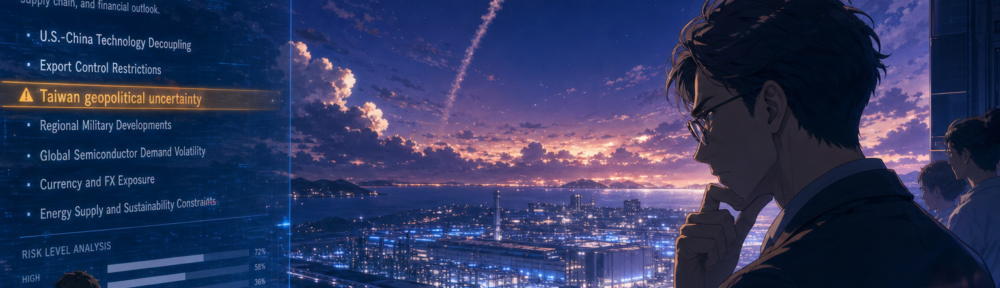
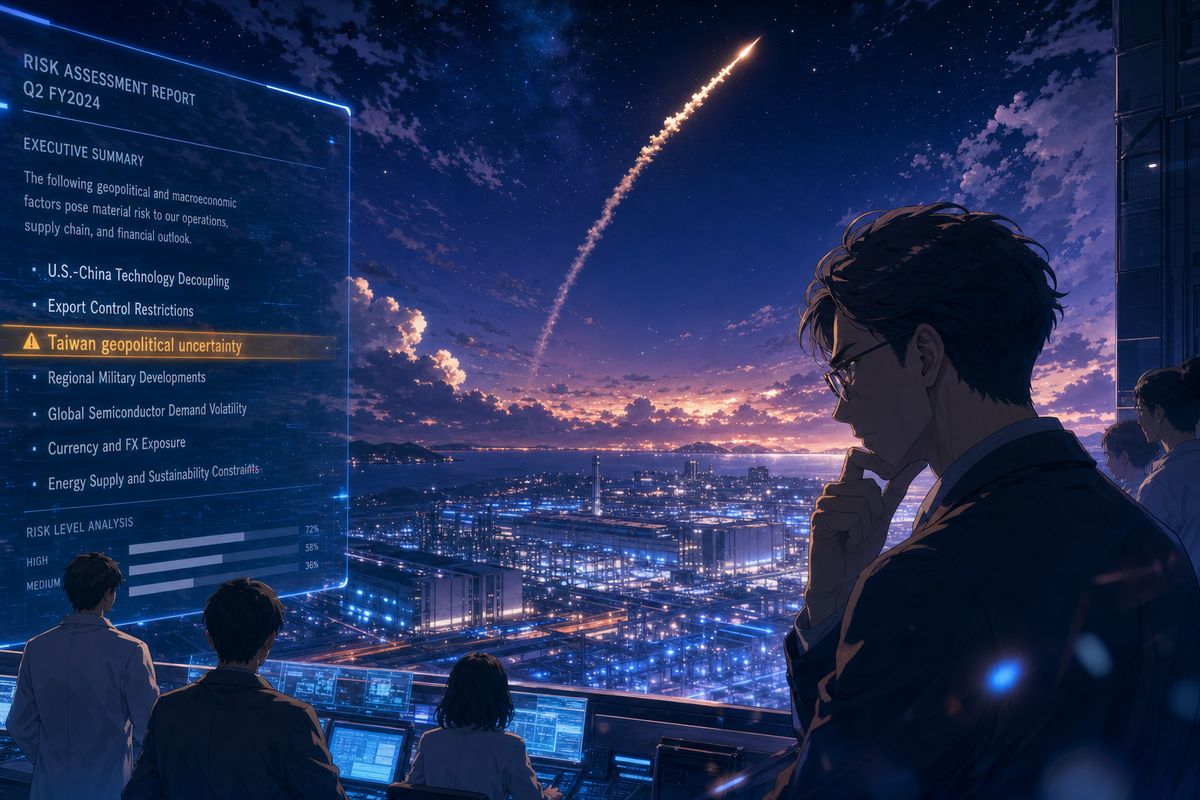
2026年6月18日,SpaceX向美國SEC公開S-1招股書,定位為史上最大規模IPO。我翻到風險因子那一章,在密密麻麻的法律文字裡看到一個獨立條目:台灣地緣政治不確定性。獨立列項,不是夾在括號裡隨手一提。
同一天,台灣的財經媒體正在慶祝:台灣股市2026年排名全球第五,超越印度,台積電一家公司佔指數42%。Stanford AI Index 2026把台積電稱為全球AI生態的最大地緣政治脆弱點——這句話被引用時,通常附上一種隱隱的自豪感。
同一個地方。兩套完全不同的語言。
招股書寫的是什麼
SpaceX這次IPO的背景比一般上市複雜得多。2026年2月,SpaceX完成對xAI(含Grok模型與X平台)的收購,以共同控制會計法合併三家公司,2025年總收入達187億美元。首日掛牌(代碼SPCX)收盤160.95美元,漲幅19%,市值突破2兆美元。這個規模讓招股書的每一個字都被放大檢視。
在這份文件裡,「台灣地緣政治不確定性」以獨立風險因子出現,背後的邏輯並不難猜:SpaceX的Starlink衛星網絡覆蓋太平洋與台灣周邊海域,Starship電子系統與未來AI算力需求高度依賴台灣半導體供應鏈。一旦台海出現中斷,SpaceX的核心業務直接受衝擊。法律意義上,這是財務揭露義務,SEC的標準要求如此。
但「財務揭露義務」這個解釋,並不能消解那個措辭本身帶來的效果。全球最受矚目的商業文件,用「風險」來定義台灣。中國官方智庫CISS也在2026年初發布報告,將台海緊張列為2026年十大地緣政治風險之首——北京的框架,華爾街的框架,不約而同落在同一個詞上。
護國神山的兩面
台積電1987年由張忠謀創立,首創純晶圓代工模式,現在掌控全球90%以上的先進AI晶片生產。「護國神山」這個詞,本身就是一個壓縮的矛盾:神山護國,因為它太重要;但正因為太重要,它成為所有人的目標。
矽盾(Silicon Shield)的概念建立在一個假設上:台灣的半導體不可替代性,讓任何想破壞台灣的行動都要付出全球科技癱瘓的代價。這個邏輯從台灣內部看是威懾,從SpaceX招股書的角度看是曝險。兩者描述的是同一個現實,只是站在不同的利益位置上書寫。
台積電的全球布局某種程度上是在主動管理這個「風險標籤」:美國鳳凰城廠投入400億美元,2025年起量產;日本熊本廠JASM由Sony、豐田、電裝合資;德國德勒斯登廠ESMC則有Bosch、Infineon、NXP參與。分散生產,讓更多國家有理由保護台灣的供應鏈連續性——或者說,讓更多國家在台灣的風險清單裡也有自己的名字。
誰有權定義台灣
這裡有一個更根本的問題,比IPO本身更值得追問:台灣的全球敘事話語權,現在掌握在誰手上?
台灣自己的論述是「和平穩定、科技實力、民主典範」。但當SpaceX這樣的文件把台灣寫成風險因子,當北京智庫把台海列為年度頭號地緣政治風險,這些外部定義在全球資本市場上的傳播速度和覆蓋面,遠超過任何一篇台灣官方的英文新聞稿。
資產還是風險,這個問題沒有客觀答案。它取決於你站在哪裡,你的損益表上寫著什麼。SpaceX的股東讀到台灣,想到的是供應鏈中斷的情境。台積電的工程師讀到台灣,想到的是他們剛完成的那批晶圓。兩種閱讀都是真實的。
問題是,當這兩種閱讀的傳播量不對等,台灣的自我論述就只能在被別人定義的框架裡找縫隙。SpaceX S-1的這個小細節,說的不只是一家公司的風險揭露,它是一份關於話語權分配的文件。
SPCX在NASDAQ首日收盤160.95美元。這個數字背後,台灣的定價方式,市場已經給了一個答案。
— 張書安
SpaceX’s S-1 Filed Taiwan as a Risk. Taiwan Calls It a Shield.
On June 18, 2026, SpaceX filed its S-1 prospectus with the U.S. SEC — positioned as the largest IPO in history. Buried in the risk factors section, I found a standalone line item: Taiwan geopolitical uncertainty. Not a parenthetical footnote. Its own entry.
That same week, Taiwan’s financial press was reporting a milestone: Taiwan’s stock market ranked fifth globally in 2026, overtaking India, with TSMC alone comprising 42% of the index. The Stanford AI Index 2026 named TSMC the single largest geopolitical vulnerability in the global AI ecosystem — a line that gets quoted in Taiwan with something resembling pride.
Same place. Two completely different vocabularies.
What the Prospectus Actually Says
This IPO is more complicated than a standard listing. In February 2026, SpaceX completed its acquisition of xAI — including the Grok model and the X platform — merging three companies under common control accounting. Combined 2025 revenue came to $18.7 billion. When SPCX opened on NASDAQ, it closed its first day at $160.95, up 19%, pushing market capitalization past $2 trillion. At that scale, every word in the prospectus gets scrutinized.
The Taiwan risk factor isn’t hard to trace. SpaceX’s Starlink satellite network covers the Pacific and waters around Taiwan. Starship electronics and future AI compute demand depend directly on Taiwan’s semiconductor supply chain. Any disruption to that chain hits SpaceX’s core operations. This is a legal disclosure obligation, not a political statement.
But the framing still lands. The most-watched commercial document of the year uses “risk” to define Taiwan. Beijing’s official think tank CISS, in a report published earlier in 2026 based on surveys of dozens of senior experts, ranked Taiwan tensions as the top geopolitical risk on China’s radar for the year. Wall Street’s framework and Beijing’s framework converged on the same word, independently.
The Two Sides of the Silicon Shield
TSMC was founded in 1987 by Morris Chang, pioneering the pure-play foundry model. It now controls over 90% of advanced AI chip production globally. The concept of a Silicon Shield rests on one assumption: Taiwan’s semiconductor irreplaceability makes any move against it too costly for the global tech economy to absorb. From inside Taiwan, that’s deterrence. From SpaceX’s prospectus, that’s exposure. Both descriptions point at the same reality from different P&L positions.
TSMC’s global expansion reads partly as active management of this “risk” label. The Phoenix, Arizona facility carries a $40 billion investment and began volume production in 2025. The JASM plant in Kumamoto, Japan involves Sony, Toyota, and Denso. The ESMC facility in Dresden, Germany brings in Bosch, Infineon, and NXP. Distributing production gives more countries a direct stake in Taiwan’s supply chain continuity — or put another way, it puts more countries on Taiwan’s risk register alongside Taiwan itself.
Who Gets to Define Taiwan
The deeper question isn’t about this IPO. It’s about who controls Taiwan’s global narrative.
Taiwan’s own framing emphasizes stability, technological capability, and democratic governance. But when a document like SpaceX’s S-1 labels Taiwan a risk factor, and Beijing’s think tanks rank the Taiwan Strait as the year’s top geopolitical flashpoint, those external definitions travel faster and reach further than any official English-language press release from Taipei.
Asset or risk — there’s no objective answer. It depends on where you’re standing and what’s on your balance sheet. SpaceX shareholders reading about Taiwan think supply chain disruption scenarios. TSMC engineers think about the wafer batch they just finished. Both readings are real.
The problem is asymmetry in reach. When those two readings don’t circulate equally, Taiwan’s self-description gets compressed into the gaps of someone else’s framework. The Taiwan line in SpaceX’s S-1 is a small detail in a very long document. It’s also a record of how pricing power over a place’s identity actually works.
SPCX closed at $160.95 on day one. That number already contains an answer about how markets price Taiwan’s position in the world.
— 張書安
延伸閱讀
https://justfly.idv.tw/s/xXVerXF