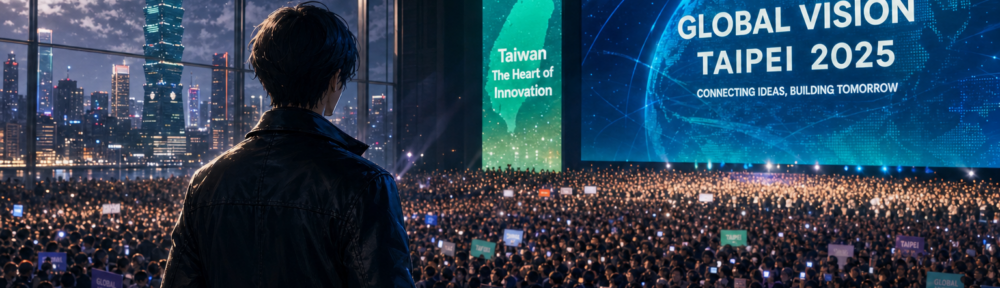
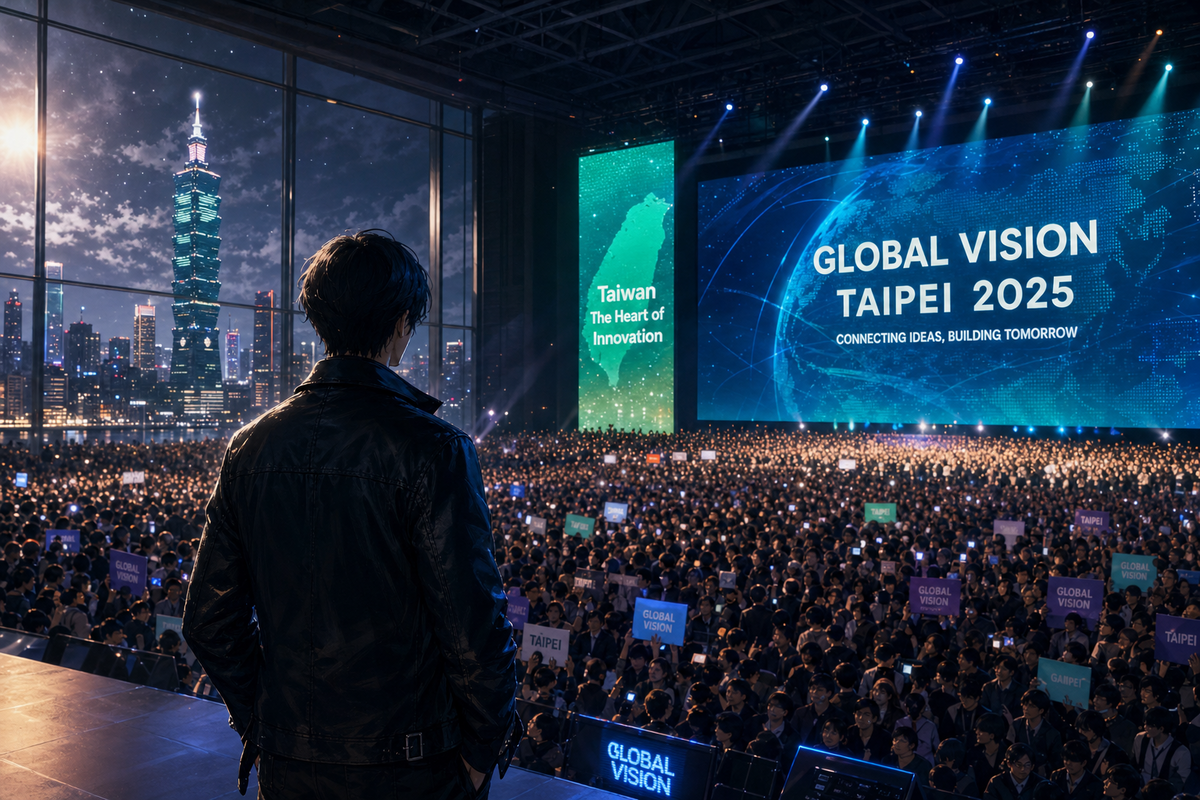
台北南港展覽館,2026年6月某個早上。開場前,大螢幕還在跑loop動畫,燈光還沒暗。然後麥克風傳出那句話:「回到家真好。」台下某種騷動——不是掌聲,是一種沒有預期的、被戳到某處的安靜。我在直播畫面另一端感受到這件事,就覺得這一句話需要被認真對待。
黃仁勳1963年生於台南,在台南成長,9歲跟著家人離開台灣,去了肯塔基州讀寄宿學校。他後來說,那段歲月讓他學會了自律——在宿舍清掃廁所,沒有人替你打理生活。1993年,他於矽谷一家 Denny’s 早餐店和兩位夥伴共同創立了 NVIDIA,初代目標只是改善3D遊戲畫質。那一年他30歲。離台已過21年。
從松山機場旁的小展會,到AI生態的年度朝聖地
1981年,Computex在台北松山機場旁舉辦,是台灣中小電子企業對外貿易的展示場合,規模有限,世界還沒有特別理由注意台灣這個島。45年後,2026年的Computex主題叫「AI Together」,來自33個國家、超過1,500家廠商,台北南港展覽館變成全球頂尖科技CEO的同一個座標:Qualcomm、Intel、Marvell的執行長飛來台北,NVIDIA在此首發RTX Spark。這45年,台灣從出口商品的地方,變成定義商品的地方。
黃仁勳是這段轉換的核心人物,但他不是原因,他是最清楚這件事的目擊者。他說過:“Without TSMC, there would be no NVIDIA.”(沒有台積電,就沒有NVIDIA。)這句話常被引用在地緣政治脈絡,但它首先是個技術事實:NVIDIA的算力依賴台積電的製程能力,兩者的命運綁在一起的程度,遠超過普通供應商與客戶的關係。2024年Computex,他在演講中展示台灣地圖配上合作夥伴logos,稱台灣為 “a world hero”——一個英雄的框架,不是一個供應鏈節點的框架。
2006年那個沒有人看好的賭注
NVIDIA的故事裡有一個轉折點常被忽略:2006年,黃仁勳推出CUDA架構,讓GPU從遊戲硬體變成通用平台算力基礎。當時業界普遍認為這是激進的方向,遊戲顯卡公司做平行運算平台,說服力薄弱。CUDA沉寂了將近十年,直到深度學習的需求爆發,它才成為整個AI算力體系的地基——今日運行ChatGPT等大型語言模型的運算核心,幾乎都跑在這個架構之上。這段歷史說的是:他在沒有人確信的時候下注,然後他等。
NVIDIA市值在2024年一度突破3兆美元,成為當時全球市值最高的公司。《Time》雜誌同年將黃仁勳列入全球百大影響力人物。這些數字讓人眩暈,但更值得追的是另一個細節:在這個高度,他選擇在Computex的開場說「回到家真好」,而不是說任何更宏大的戰略宣示。
仁來瘋之後,那句台語
2024年的台北,出現了一個流行詞:「仁來瘋」。黃仁勳在夜市吃蚵仔煎、糖葫蘆,講台語,那幾天他不是CEO,他是一個回來的人。他對台灣年輕人說的那句話 “run, don’t walk”(跑起來,不要走)已成為本地流行語,直譯很乾淨,但裡面有一種催促感,像是他知道某個時間窗口是真實存在的。
2026年Computex開幕前,黃仁勳在台北出席NVIDIA員工大會,宣布NVIDIA Constellation台灣總部預計2030年完工,容納4,000名員工,年度在台支出目標達到1,500億美元。他說:“Taiwan is the epicenter of the AI revolution.”(台灣是AI革命的震央。)他用台語喊話勸員工進辦公室。這不是PR稿的腔調,這是一個把自己的公司實際放在這裡的人的說話方式。
他在GTC 2026「台灣之夜」上說他將捍衛台灣。這句話在地緣政治緊張的背景下被廣泛報導,但我覺得更根本的問題是:他是在什麼情感座標上說這句話的?一個9歲離開的孩子,半個世紀後說「我要保護這裡」,那個「這裡」是他定居的地方嗎?不是。是他工廠在的地方嗎?也不完整。那是什麼?
那個「家」是一個無法被消費的記憶
賴清德在2026年Computex開幕致詞時,對在場的全球科技CEO說:維持政治現狀是台灣對全球供應鏈安全最負責任的做法。這是政治語言,但它在Computex說出,意思是台灣的存在方式,已經和全球科技公司的財報結構綁在一起。黃仁勳的「回到家真好」和這句話在同一個空間裡迴盪,產生一種奇異的厚度。
他9歲離開台南,在肯塔基清廁所,在 Denny’s 創業,在 CUDA 被懷疑的十年裡等待,然後站在台北對著幾千人說「回到家真好」。那個家不是地理位置,不是護照國籍,也不是供應鏈佈局。那個家是一個無法被消費、無法被IPO、無法被AI算力量化的東西——是一個男孩9歲離開前,在台南聽到的某個聲音,或是某種氣味。半個世紀過去,他帶著3兆美元市值回來,發現那個東西還在。
這就是為什麼那句話讓台下安靜了一下。
— 吳承翰
He Left at Nine, Came Back at Sixty-Three
The screens were still running loop animations when the lights dimmed at Taipei’s Nangang Exhibition Center. Then the microphone carried those four words across the room: “It’s great to be home.” Not applause — something quieter. A room that hadn’t expected to be touched, getting touched. Watching the livestream from somewhere else, I knew the sentence needed to be taken seriously.
Jensen Huang was born in Tainan in 1963, left Taiwan at age nine for a boarding school in Kentucky, and sat down at a Denny’s in Silicon Valley with two partners to found NVIDIA. The company’s first goal was modest: better 3D graphics for games. He had been gone from Taiwan for twenty-one years by then.
From a Small Trade Fair by Songshan Airport to the World’s AI Calendar
In 1981, Computex launched near Taipei’s Songshan Airport — a trade show for Taiwan’s small and mid-size electronics manufacturers, quietly trying to get the world to pay attention. By 2026, the show had become “AI Together”: over 1,500 exhibitors from 33 countries, CEOs of Qualcomm, Intel, and Marvell flying into Nangang, NVIDIA unveiling RTX Spark on this stage. That 45-year arc is not a growth story — it is an identity change. Taiwan moved from a place that shipped components to a place that sets the terms.
Huang is the most visible figure in this transformation, but his value isn’t symbolic. He said it plainly: “Without TSMC, there would be no NVIDIA.” That sentence gets recycled in geopolitical commentary, but it’s a technical fact first: NVIDIA’s computing power depends on TSMC’s manufacturing capability in ways that go well beyond a standard supplier relationship. At Computex 2024, he showed a map of Taiwan with partner logos arranged around it and called Taiwan “a world hero.” Not a supply chain node. A hero.
The Bet Nobody Believed In
The inflection point in NVIDIA’s story that gets underplayed: in 2006, Huang launched the CUDA architecture, repositioning the GPU from a gaming peripheral into a general-purpose computing platform. The industry was skeptical — a graphics card company building a parallel computing framework sounded like a distraction. CUDA sat quietly for nearly a decade. Then deep learning’s appetite for parallel computation exploded, and CUDA became the foundation that nearly every large language model — including systems like ChatGPT — runs on today. He placed a bet when no one was certain, then he waited.
NVIDIA’s market cap briefly exceeded $3 trillion in 2024, briefly making it the highest-valued company on the planet. Time magazine placed Huang on its 2024 list of the world’s 100 most influential people. Given all of that, the choice to open a Computex keynote with “It’s great to be home” rather than a strategic declaration tells you something about where his attention actually sits.
Jensen-Mania, and What Followed
In 2024, a new Taiwanese colloquialism appeared: 仁來瘋 — Jensen-mania. He ate oyster omelets and candied fruit on skewers at a night market, spoke warm Taiwanese Hokkien, and for a few days stopped being a CEO and became something else: a person who came back. His line to young Taiwanese — “run, don’t walk” — landed as a local catchphrase, clean in translation, with urgency underneath it.
Before Computex 2026 opened, Huang addressed an NVIDIA employee gathering in Taipei and announced that the NVIDIA Constellation Taiwan headquarters is expected to complete in 2030, housing 4,000 employees, with annual Taiwan spending targeting $150 billion. He told the crowd: “Taiwan is the epicenter of the AI revolution.” He switched to Taiwanese Hokkien to encourage employees to come into the office. That is not the register of a press release. That is someone who has actually committed to being here.
At the GTC 2026 “Taiwan Night” event, he said he would defend Taiwan. The statement was reported widely against a backdrop of geopolitical tension. But the question that interests me is the emotional coordinate from which he said it. A nine-year-old boy who left, fifty-plus years later saying he would protect this place — what is “this place” to him exactly? Not where he lives. Not simply where his supply chain runs. Something else.
The Home That Can’t Be Quantified
At the Computex 2026 opening ceremony, President Lai Ching-te told the assembled global tech executives that maintaining the political status quo is Taiwan’s most responsible contribution to global supply chain security. Political language, yes — but spoken in this room, it meant: Taiwan’s continued existence as it is has become structurally embedded in the balance sheets of the world’s largest technology companies. Huang’s “It’s great to be home” and that statement echoed in the same space, producing an unusual density of meaning.
He cleaned toilets in Kentucky, cofounded a company over breakfast, waited through a decade of CUDA skepticism, watched the market cap cross $3 trillion, and then stood in Taipei and said he was home. That home is not a geographic coordinate, not a passport jurisdiction, not a supply chain optimization. It is something a nine-year-old boy heard or smelled in Tainan before he left — and half a century later, he came back and found it still there.
That is why the room went quiet for a moment.
— 吳承翰
延伸閱讀
https://justfly.idv.tw/s/Xnx1Vbq