
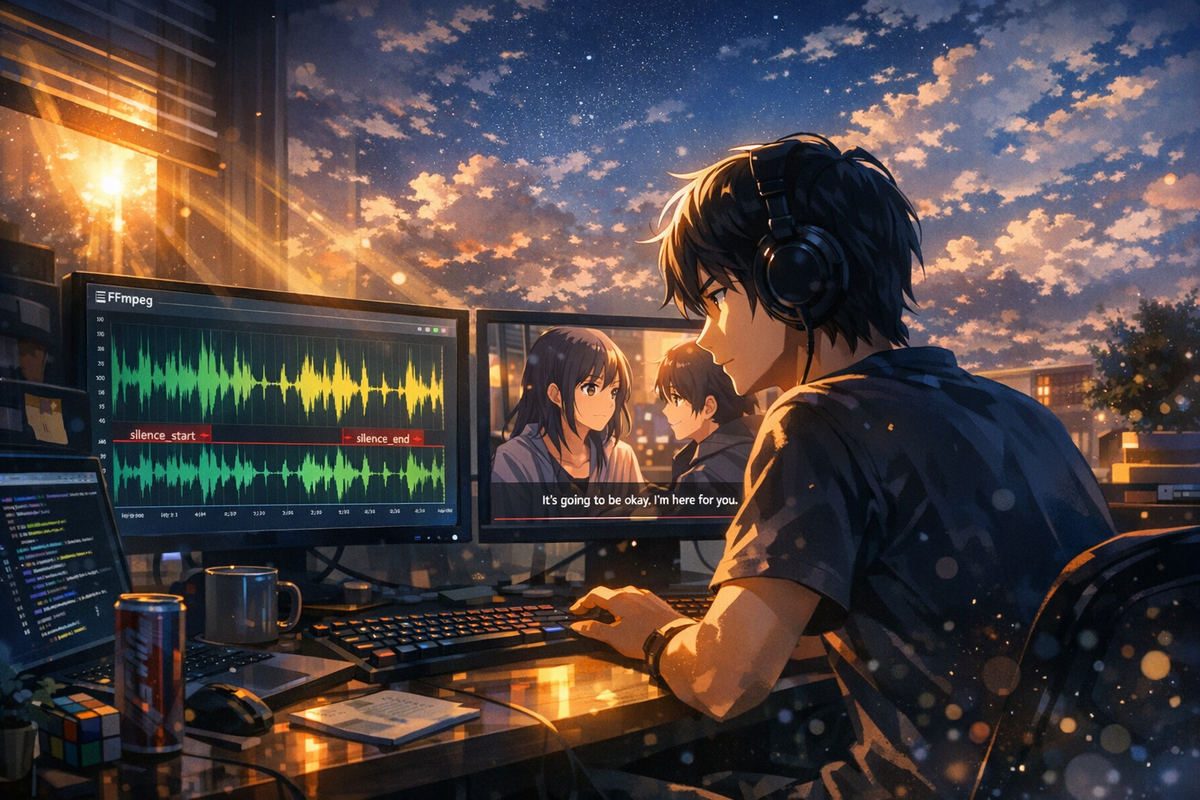
你有沒有看過那種字幕明明還在講上一句,畫面裡的人已經換話題的影片?在長影片的自動字幕生成裡,這不是偶發錯誤,而是結構性問題。當影片超過十分鐘,中間穿插靜音片段,語音辨識 API 回傳的時間戳可能已經偏移 3 到 6 秒。
問題出在設計目標
多數開發者建字幕系統時,第一選擇是現成的語音辨識服務。這些 API 很強大,能辨識多種語言,甚至標註說話者。但它們有個隱藏前提:設計目標是「理解內容」,不是「精確定位語音邊界」。
實際測試後發現,當影片包含長段靜音——演講者停頓、場景切換、刻意留白——語音辨識引擎會產生微小但持續的時間偏移。這種偏移像滾雪球,到影片尾段時字幕可能完全脫節。就像你用計步器測馬拉松距離,每一步的微小誤差累積起來,終點可能差了好幾百公尺。
FFmpeg 的意外勝出
解法是改變策略:放棄依賴語音辨識的時間戳,改用 FFmpeg 的靜音偵測功能。這個開源音訊工具內建 silencedetect 濾鏡,能精準標記每段靜音的起始與結束時間點。
新架構的邏輯是:先用 FFmpeg 偵測靜音區段,把影片切成多個語音片段,再將各片段送進語音辨識 API。每段轉錄都從零秒開始計時,徹底消除累積誤差。實測結果是字幕同步精準度從數秒偏差縮減至幾乎無法察覺。
FFmpeg 作為專業音訊工具,在偵測語音邊界這項單一任務上,表現遠勝需要兼顧多種功能的通用 API。而且完全免費,不受呼叫次數限制。
工具的設計初衷才是重點
這次經驗讓我重新思考工具選擇。不該只看功能列表有多豐富,而要問:這工具的設計初衷是否與需求吻合?語音辨識 API 擅長語義理解,FFmpeg 專注音訊處理。當任務核心是「精準定位」而非「內容理解」時,專業工具的優勢很明顯。
最貴或最熱門的方案未必是最適解。有時候答案藏在那些看似低調、專注於單一領域的開源工具裡。它們不承諾解決所有問題,但在自己的領域內,精準得像手術刀。
— 邱柏宇
Ever watched a video where subtitles are still showing the previous sentence while the speaker has already moved on? In automated subtitle generation for long videos, this isn’t a random bug—it’s a structural problem. When videos exceed ten minutes with silent segments, timestamps from speech recognition APIs can drift 3 to 6 seconds off sync.
The Design Intent Problem
Most developers building subtitle systems reach for ready-made speech recognition services first. These APIs are powerful—they recognize multiple languages and even identify speakers. But they carry a hidden assumption: they’re designed to “understand content,” not to “precisely locate speech boundaries.”
Testing revealed that when videos contain extended silence—speaker pauses, scene transitions, deliberate gaps—speech recognition engines generate small but persistent time offsets. These offsets snowball. By the video’s end, subtitles may be completely out of sync. It’s like using a step counter to measure marathon distance: tiny errors in each step accumulate, and you might be hundreds of meters off at the finish line.
FFmpeg’s Unexpected Win
The solution was a strategy shift: abandon reliance on speech recognition timestamps and use FFmpeg’s silence detection instead. This open-source audio tool has a built-in silencedetect filter that precisely marks the start and end of each silent segment.
The new architecture works like this: FFmpeg first detects silent regions, splitting the video into multiple speech segments. Each segment goes to the speech recognition API. Every transcription starts timing from zero, completely eliminating cumulative errors. Testing showed subtitle sync precision improved from multi-second drift to virtually imperceptible.
More crucially: FFmpeg, as a specialized audio tool, vastly outperforms general-purpose APIs at the single task of detecting speech boundaries. Plus it’s completely free with no call limits.
Design Intent Matters Most
This experience made me rethink tool selection. Don’t just count features on a spec sheet—ask whether the tool’s design intent matches your needs. Speech recognition APIs excel at semantic understanding. FFmpeg focuses on audio processing. When the core task is “precise positioning” rather than “content comprehension,” the specialized tool’s advantage is obvious.
The most expensive or trending solution isn’t always optimal. Sometimes the answer lies in those seemingly modest, domain-focused open-source tools. They don’t promise to solve everything, but within their specialization, they cut with surgical precision.
— 邱柏宇
延伸閱讀
- fetch is not defined,沙箱不是 Node.js
- 讓 pipeline 變聰明的那個 API,也是最容易卡死的那個點
- 寫死的交易時段,在颱風假面前沒有任何意義
- 管理介面說準備中,API 說早就跑了
- 廣告跑了一整天,只花了一塊錢
https://justfly.idv.tw/s/8e2DaYW