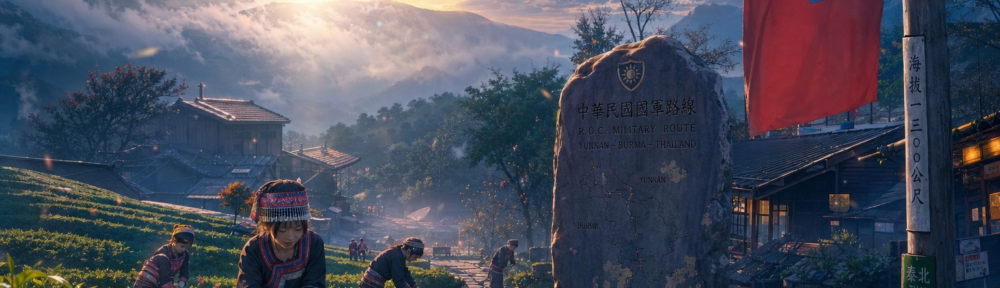
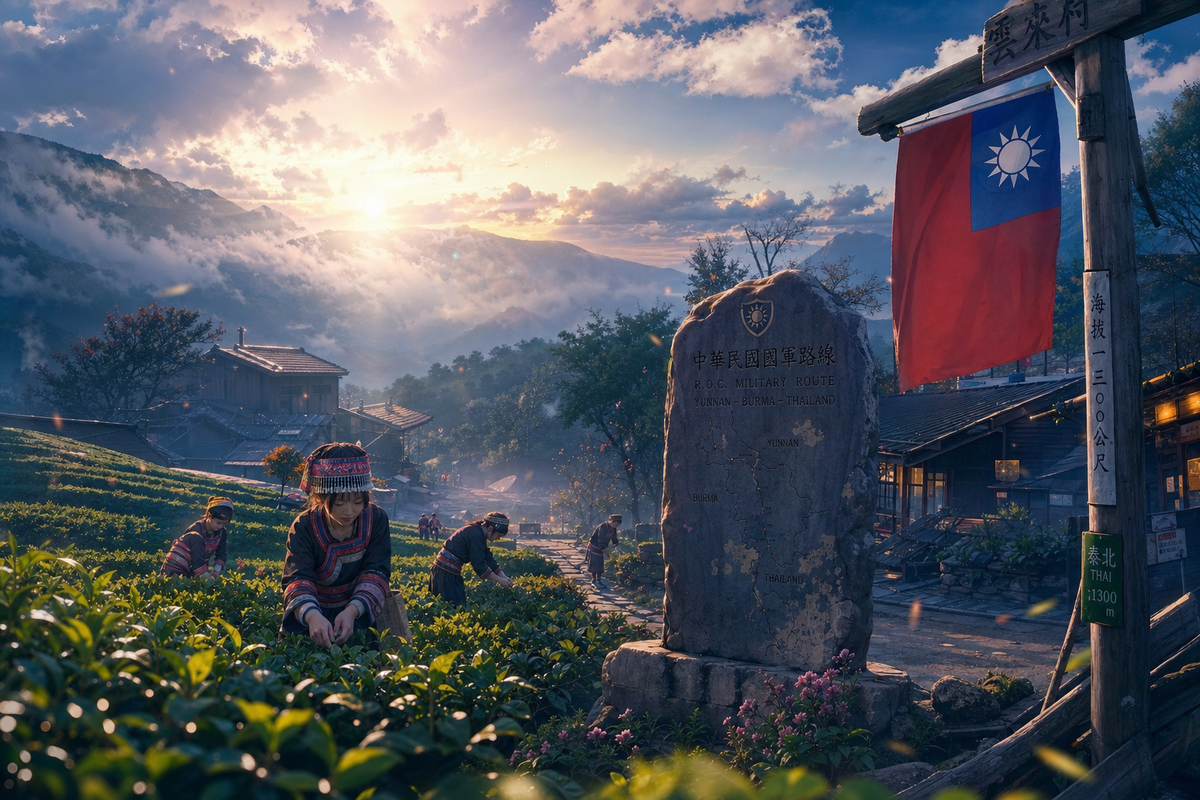
美斯樂(Mae Salong)村口,一面青天白日滿地紅的旗幟在泰北清萊省海拔約1300米的山風裡拍打。旁邊是一座台灣資助興建的KMT戰士紀念碑,石材上刻著撤退路線:雲南→緬北→泰北。有人在這裡住著、每天路過、每天看著。
那條走不到頭的路
1949年,KMT政府撤退時,約120萬軍民隨之遷台,其中約60萬是軍人。但有一部分人——以KMT第93師殘部為核心,約萬人——沿著另一條路走:從雲南打進緬北叢林,再輾轉落腳泰北山區。他們沒有船,沒有機場,台灣對他們來說是一個收不到的訊號。
就這樣留下來了。
今天,這批人的後代估計有2至3萬人散居泰北,分布在大大小小的村莊。表面上,他們有著相同的起點:1949年的潰敗、同一批祖先、同樣的漢語方言與飲食習慣。但72年後,這些村莊走上了截然不同的認同路徑。美斯樂掛ROC旗、喝台灣茶;另一個村莊Arunothai,在中國投資與文化影響下,已悄悄轉向親中。
茶葉是怎麼長出來的
1980年代,台灣農委會介入了美斯樂的命運。他們帶來烏龍茶種與製茶技術,把一個前軍事據點改造成茶葉產區。這個決策的邏輯不難理解:台灣需要一條線拉住這些離散的親台社群,而農業援助比政治宣示更難被切斷。
茶葉種下去之後,每一個在美斯樂長大的孩子,都是在台灣的農業技術邏輯裡學會辨識自己的土地。他們學的是台灣式的製茶工序,賣的是被台灣消費者認識的高山茶品牌。認同不是一次性的選擇,是每天早上開湯泡茶時重複的習慣。
這是台灣軟實力運作最微觀的樣本。一株茶苗、一套製程、一個讓你每天早上重新站在同一個位置的理由。外交聲明做不到這件事。
Arunothai走了另一條路
Arunothai的故事沒有那麼多具體的文物可以指認。沒有紀念碑,沒有舉著旗幟的節慶照片。有的是中國資本進入山區基礎建設後帶來的連結:路變好了,貨流動了,說普通話的對象從台灣變成了昆明。
血統一樣,語言底層一樣,但日常接觸的對象換了。於是認同也跟著換了方向。
這兩個村莊最讓人不安的地方,在於這個差異產生的機制太安靜——沒有人在某一天宣布「我們現在改站中國這邊了」。認同的位移是在幾十年的日常裡,一次又一次的小選擇中累積出來的。
眷村與泰北:同一段歷史的兩條地理
台灣的眷村文化,是1949年這段歷史在另一條路徑上的展開。那些在眷村裡說「等反攻大陸就回去了」的家庭,後來也沒有回去。「暫時落腳」變成了永久定居,「我是哪裡人」的焦慮在第二代、第三代身上慢慢沉澱成另一種身份。
泰北KMT村莊與台灣眷村,出發點是同一批人、同一場潰敗,但一個在台灣島上被制度包圍,另一個在山林裡靠農業援助維繫連結。兩者都面對同樣的問題:當「回去」成為不可能,你用什麼填滿「我是誰」的空洞?
台灣的答案是眷村文學、外省族群認同政治、以及幾十年的課綱爭論。美斯樂的答案是一面旗幟和一杯茶。Arunothai的答案,目前看來,是一條通往昆明的新路。
軟實力的尺度問題
我們習慣把軟實力的競爭放在大尺度上討論:孔子學院vs台灣書院、CGTN vs公視國際頻道、人民幣援助vs台灣農業技術。但美斯樂與Arunothai的對比提醒我們,這場競爭最終的戰場其實小得多——是一個村莊每天喝什麼茶、孩子在哪個語境裡長大、老人的墓碑上刻的是哪個符號。
軟實力的邏輯從來都是這樣:你不需要讓對方選擇你,你只需要讓你的符號出現在對方的日常裡夠多次,選擇就自然發生了。台灣在1980年代送出的那批茶苗,在40年後依然是美斯樂親台認同最扎實的地基——比任何一次政治聲明都耐放。
Arunothai的轉向提出了一個沒有答案的問題:如果台灣當年也在那裡種了茶,今天的地圖會長什麼樣子?
— 游曉芬
A Cup of Tea Decides Who You Are: 72 Years of Identity Split in Thailand’s KMT Villages
At the entrance to Mae Salong village in Thailand’s Chiang Rai province — elevation roughly 1,300 meters — the Republic of China flag still hangs. Beside it stands a monument to KMT soldiers, built with Taiwan’s funding, with an engraved route: Yunnan → northern Burma → northern Thailand. This is not a museum exhibit. People live here. They walk past it every morning.
The Road That Didn’t Reach Taiwan
When the KMT government retreated in 1949, approximately 1.2 million civilians and soldiers relocated to Taiwan, including roughly 600,000 military personnel. But a remnant force — centered on the KMT’s 93rd Division, totaling around ten thousand people — took a different road. They fought through Yunnan into the jungles of northern Burma, eventually settling in Thailand’s northern hills. There were no ships for them. No airstrip. Taiwan was a signal they couldn’t receive.
So they stayed. Their descendants — estimated at 20,000 to 30,000 people scattered across northern Thailand — share identical origins: the same 1949 defeat, the same ancestral dialects, the same food. Yet 72 years later, two of their villages have arrived at completely different identities. Mae Salong flies the ROC flag and drinks Taiwanese tea. Arunothai, shaped by Chinese investment and cultural influence, has tilted toward Beijing.
What Tea Grows In
In the 1980s, Taiwan’s agricultural authorities intervened in Mae Salong’s economy, introducing oolong tea cultivars and processing techniques that transformed a former military outpost into a tea-producing region. The logic was durable: agricultural aid is harder to sever than political rhetoric. Every child who grew up in Mae Salong learned to identify their land through a Taiwanese agricultural framework. They learned Taiwanese processing methods. They sold tea that Taiwanese consumers recognized.
Soft power at its most granular is not a cultural festival or a scholarship program. It is a tea seedling, a processing technique, and a reason to stand in the same place every morning.
Arunothai’s story has fewer artifacts to point to. No monument. No flag-raising ceremony. What it has is infrastructure built with Chinese capital — better roads, more trade, Mandarin conversations now directed toward Kunming rather than Taipei. The bloodline is identical. The underlying language is the same. But the daily interlocutor changed. And so the identity followed.
Juancun and the Hills Above Chiang Rai
Taiwan’s juancun (眷村) communities are the parallel story of 1949 running along a different geographic track. Families who said “we’ll go back after retaking the mainland” also never went back. “Temporary shelter” became permanent settlement. The anxiety of “where do I belong” settled into second and third generations as a different kind of identity.
Both communities faced the same structural question: when return becomes impossible, what fills the space where “home” used to be? Taiwan’s answer was juancun literature, mainlander identity politics, and decades of curriculum debates. Mae Salong’s answer is a flag and a cup of tea. Arunothai’s answer, at the moment, appears to be a better road to Kunming.
The Scale Where It Actually Happens
We tend to frame soft power competition at the macro level: Confucius Institutes versus Taiwan’s cultural centers, state media reach, infrastructure loans versus agricultural technical assistance. But Mae Salong and Arunothai show where it actually resolves — in what a village drinks every morning, in what language a child navigates disagreement, in what symbol gets carved on a grandfather’s headstone.
The tea seedlings Taiwan sent in the 1980s remain the most durable foundation of Mae Salong’s pro-Taiwan identity four decades later — more weatherproof than any single political declaration.
Arunothai raises a question that doesn’t have an answer yet: if Taiwan had planted tea there too, what would the map look like now?
— 游曉芬
延伸閱讀
https://justfly.idv.tw/s/LXm3tdv