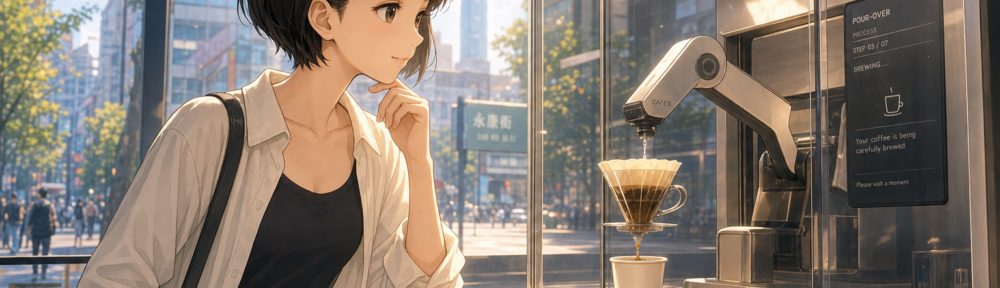
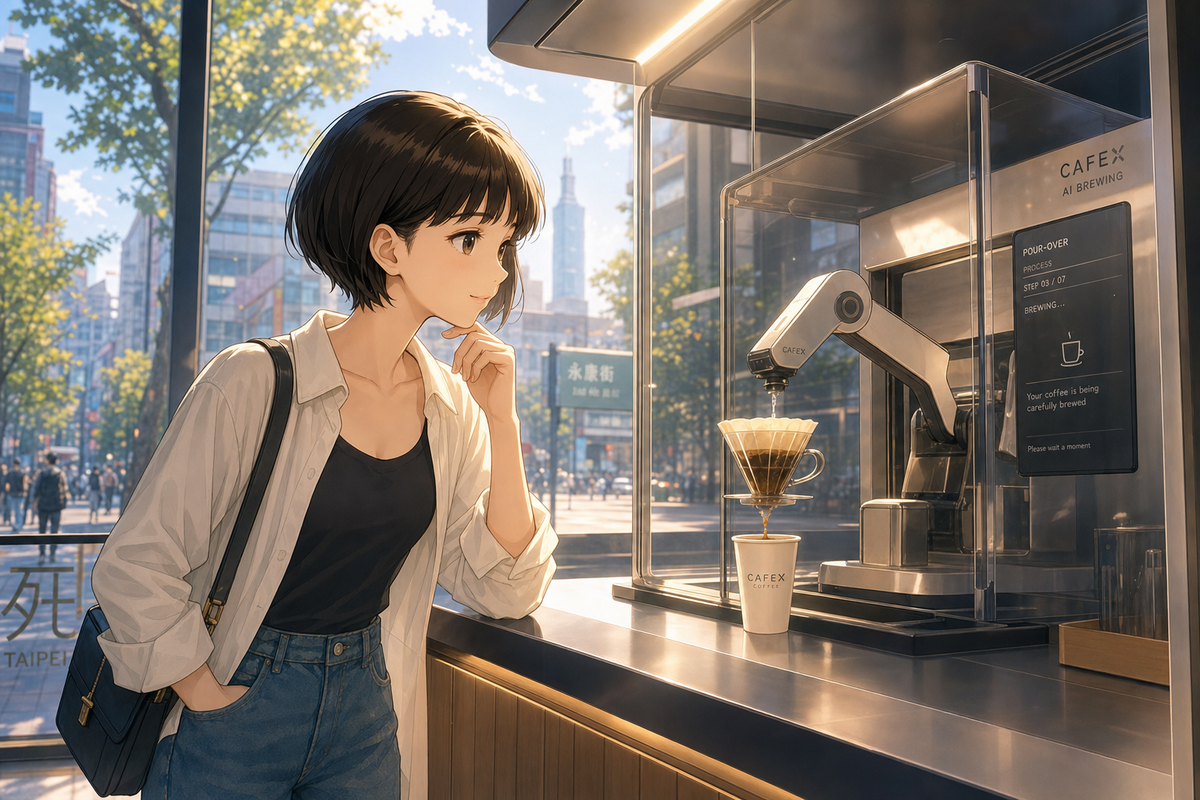
涓流咖啡(Kenryu Coffee)的手沖機台前,沒有任何解釋在發生。水溫、流速、萃取時間——這三個過去屬於職人的判斷,現在由 AI 代為執行。杯子端出來,沒有拉花,沒有木頭托盤,沒有咖啡師蹲下來問喜歡淺焙還是深焙。
這個台日混血品牌的核心命題很清楚:讓消費者無需具備任何咖啡知識,也能喝到符合精品標準的手沖。價格壓在外帶區間,走的不是星巴克的舒適感,也不是老派精品咖啡館那種入門門檻。
門檻是設計出來的,還是天生如此?
精品咖啡這個行業有一個沒有明說的邏輯:懂得越多,愈值得喝。單一產區、杯測分數、水洗還是日曬——這套語言的功能,除了傳遞資訊,還在劃定「有資格」欣賞這杯咖啡的範圍。
精品咖啡的門檻,從來都不只是萃取技術的問題。
日本處理這件事的方式是「職人哲學」:把技術內化到幾乎看不見,讓消費者感受到的只是結果的穩定與美好。一碗拉麵、一塊壽司,不需要知道製作過程,但知道可信任。這個邏輯在日本本土靠的是人,靠的是一個師傅花十年練出來的手感。
涓流咖啡做的,是把這個「結果的穩定」從職人身上轉移到機器上,然後在台灣落地。日本職人哲學的工業化翻譯——誠實地只保留核心承諾,其餘不裝。
台灣市場剛好有一個空缺
台灣的咖啡市場長期在兩個極端之間運作:連鎖平價(超商咖啡、速食店)對上精品手沖(獨立咖啡館、產區故事、慢慢喝)。前者便宜但無趣,後者有深度但需要時間與知識的投入。
中間地帶一直存在,卻少有認真佔領。涓流咖啡瞄準的就是這個位置:外帶的速度、精品的品質、平價的定位。三者同時成立的條件,在過去只有一個解法——大量標準化、犧牲品質。AI 萃取控制讓這個三角方程式有了新的解。
同一時間,科技品牌羅技推出「Logi Café 羅技城市咖啡所」快閃空間,用咖啡場景作為科技產品的展示介質。兩件事放在一起看:咖啡正在從一種飲料變成一種語言,可以被借用來說任何關於「體驗」的事情。
那個被機器取代的職人,其實是誰?
爭論「AI 能不能取代職人」,往往問錯了問題。更準確的問法是:這個職人的技術,本來是為了服務誰?
一個花十年練就手沖技術的咖啡師,服務的對象其實是一個非常小的市場——有時間、有錢、有知識框架的消費者。絕大多數喝咖啡只是想要一杯好的咖啡,不是想要一段關係,不是想要一個學習過程。
AI 萃取壓縮的,是職人與「不懂咖啡的人」之間的距離。這是一個知識民主化的命題,只是發生在一個很具體的產品類別裡。
當然,有什麼確實消失了。那個站在吧台後面、可以跟談豆源的人消失了。但那個人本來就不是外帶咖啡市場在服務的對象。問題不在技術,在於有沒有誠實說清楚這個產品在賣什麼。
美學還在,只是換了載體
涓流這個名字有意思。涓,細水長流;流,控制與節奏。日文裡「涓流」帶著一種克制的動態感,跟精品手沖慢慢注水的視覺儀式完全對應。
品牌美學沒有因為 AI 介入而失去日系感——反而是把日系美學最核心的部分留了下來:精準、克制、結果導向。被拿掉的是那些服務於「感覺上精品」的演出,比如木質托盤、手寫菜單、過長的等待時間。
這個判斷需要品味,不是技術。台日混血的配方,最難的部分是決定哪些日本元素值得保留、哪些只是佈景——AI 調控反而是其中最容易的那步。
目前涓流的選擇:儀式感留在杯子裡,不留在空間表演上。比任何一套精品咖啡話術都更誠實。
— 陳映彤
When the Barista Is an Algorithm
At a Kenryu Coffee kiosk, no explanation is happening. Water temperature, flow rate, extraction time — three decisions that once belonged to a trained barista — are now handled by an AI system. The cup arrives. No latte art, no wooden tray, no origin story.
That’s the entire proposition of this Taiwan-Japan hybrid brand: zero coffee knowledge required to receive a specialty-grade pour. The price stays in takeout territory. The format skips both the convenience-chain blandness and the entry quiz that high-end independent cafés quietly administer.
Was the Barrier Ever Necessary?
Specialty coffee runs on an unspoken rule: the more knowledge acquired, the more the cup is deserved. Single-origin, cupping scores, washed versus natural process — this vocabulary does more than convey information. It draws lines around who qualifies.
Japan solved the same problem differently with its artisan philosophy. The technique disappears into the result. A bowl of ramen, a piece of sushi — no need to understand what happened behind the counter. Just trust. In Japan, that stability came from a master who spent a decade building muscle memory. Kenryu’s move is to transfer that stability from the person to the machine, then land it in Taiwan.
That’s not a betrayal of the artisan ideal. It’s an honest translation of its core promise.
A Gap That Was Always There
Taiwan’s coffee market has long operated at two extremes: chain-store convenience (convenience stores, fast food) on one end, slow specialty cafés with origin narratives on the other. The middle — fast but genuinely good, affordable but not generic — has existed as a want without a convincing answer.
AI extraction control is what makes the three-way equation (speed + quality + price) solvable without sacrificing one leg. Around the same time, Logitech launched a pop-up café space — “Logi Café” — using a coffee environment as a medium for showcasing tech products. The coincidence is telling: coffee has drifted from a drink into a format, a staging ground for whatever brand message needs projecting.
Which Craftsperson, Exactly, Gets Replaced?
Debating whether AI can replace an artisan usually misframes the question. The sharper version: who was that artisan’s craft actually serving?
A barista who spent years perfecting a manual pour serves a narrow audience — those with time, disposable income, and a preexisting vocabulary for what’s being tasted. Most coffee drinking just wants a good cup. Not a relationship, not a lesson.
What AI compression eliminates is the distance between the craftsperson and the person who simply doesn’t know the language. That’s a democratization of knowledge argument, playing out inside a very specific product category.
Something does disappear — the person behind the counter who can talk through a bean’s elevation and processing method. But that person was never part of the takeout format to begin with. The question isn’t whether technology has costs. It’s whether honesty exists about what’s actually being sold.
The Aesthetic Stayed, the Performance Left
The brand name itself holds a clue. “Kenryu” — the Chinese characters suggest a fine, controlled stream of water, which maps directly onto the slow-pour ritual of hand-drip coffee. The visual grammar is intact.
What the brand stripped away are the props that performed “specialty” without adding to the cup: hand-lettered menus, reclaimed wood surfaces, deliberately slow service. What remained is what Japanese aesthetics actually prize at its core — precision, restraint, and a result that repeats.
That editorial decision — knowing which Japanese elements are worth keeping and which are set dressing — requires taste, not engineering. It’s also the harder part of building a Taiwan-Japan hybrid that isn’t just a costume.
Kenryu’s current answer: the ritual lives in the cup, not in the room around it. For a takeout model built on AI extraction, that’s a more coherent position than most specialty cafés manage with a full theatrical setup.
— 陳映彤
延伸閱讀
https://justfly.idv.tw/s/GvejgEy