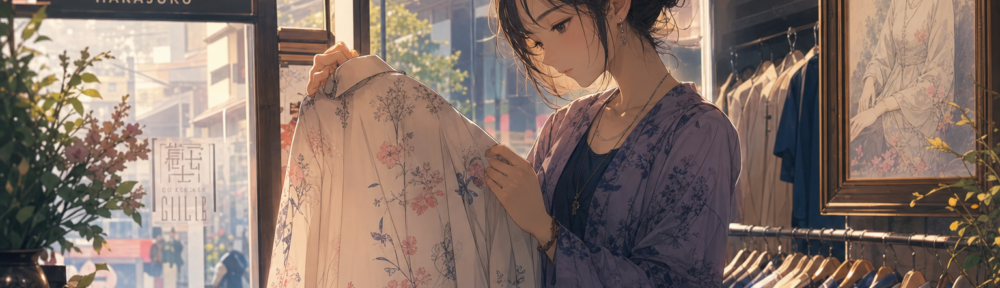
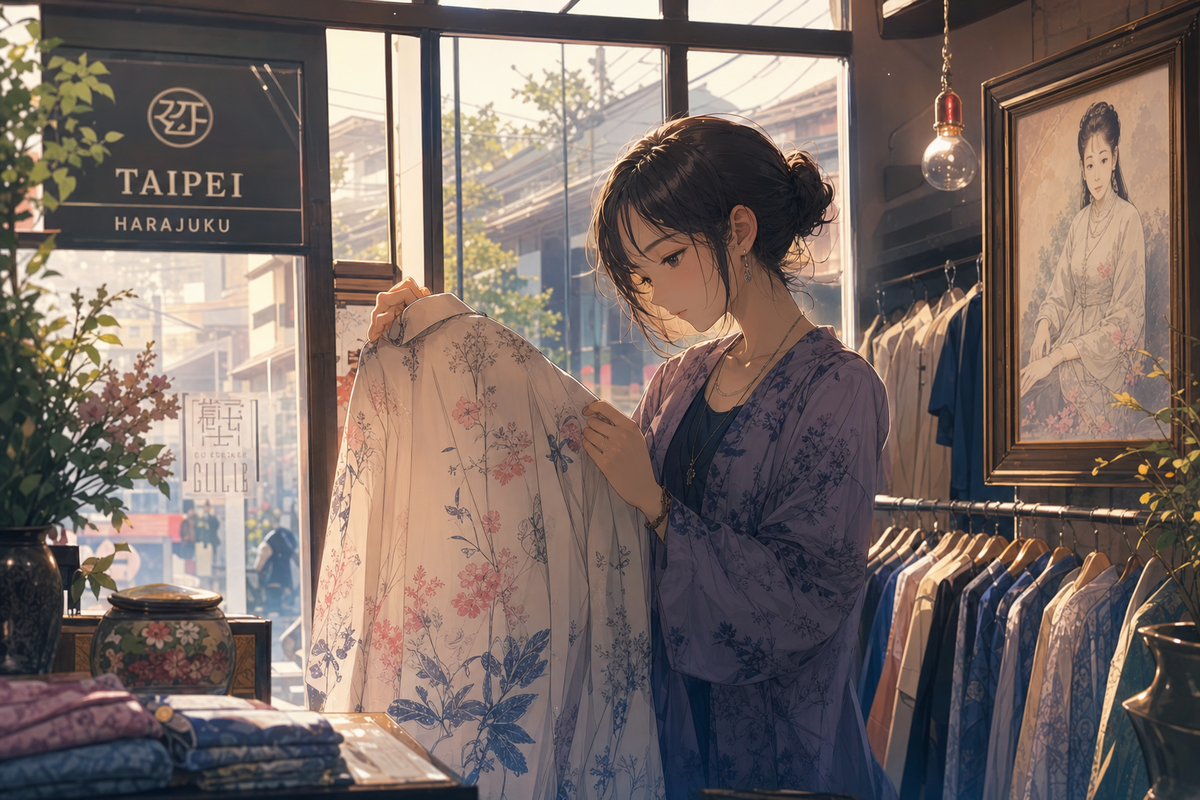
2026年5月22日,東京原宿Lolo選物店。台灣設計師品牌UUIN的第二回快閃現場,掛著一幅數位緹花印花,源自陳進1927年的膠彩畫《罌粟花》。那個色調——粉白罌粟、靛青底、流動的東方筆觸——被轉化成了服裝輪廓。來逛的東京買手不一定知道陳進是誰,但他們選了。
這就是整件事最耐人尋味的地方。
1934年的帝展,2026年的原宿
陳進(1907-1998)在1934年以《婦女圖》入選日本帝國美術院展覽會,成為台灣首位入選帝展的女性藝術家。她在東京女子美術學校受訓,畫的是台灣女性的日常——梳妝、閒坐、凝視——以膠彩媒介呈現,那是一種把日本美人畫傳統與台灣在地生活細節縫合在一起的語言。帝展的評審看見了她。九十年後,原宿的買手也看見了她。台灣本地呢?
陳進的知名度在台灣從來不算高。她與郭雪湖、林玉山並稱「台展三少年女」,在藝術史課本裡佔一個段落,但走出學院,她的名字幾乎消失。台灣美術展覽會(台展)從1927年辦到1936年,是日本帝展在台灣的對應機構,那整個時代的藝術語言——因為它的殖民脈絡——被後來的台灣社會反覆誤讀、擱置、遺忘。陳進的畫卡在這個歷史空隙裡。
「被動被發現」才是台灣文化輸出的真實機制
UUIN設計師謝家慶做的決定,現在看來像是一個精確的文化套利。他選的不是台灣官方認可的符號,不是原住民圖騰,不是珍珠奶茶美學。他選了一個台灣人自己沒有充分消化的藝術家,把她的《罌粟花》《合奏》《婦女圖》轉化為SS26系列的視覺核心,然後帶去東京。
結果是:A*COLLECTIVE JAPAN建立了常設銷售點。這是第二回,不是第一回試水溫。
我一直覺得,台灣講「文化出海」這個詞的時候,預設的模型是主動的——台灣文化主動攻入某個市場。但UUIN的案例說的是另一件事:台灣自己沒有看見的東西,日本市場先看見了。陳進的跨國身份本來就是一個未被解決的故事:她在東京受訓、在東京獲獎,然後她的畫在台灣的殖民記憶清算中被邊緣化。UUIN把她帶回東京,不是懷舊,是把一個未完成的身份敘事推進了一格。
公式的可複製性
這個結構可以被拆解:台灣被遺忘的藝術史人物→當代服裝轉譯→日本選物通路落地。每一環都有邏輯。日本買手對「與日本有淵源的台灣歷史人物」的親近感,是真實的市場條件,不是文青幻想。陳進的背景——台灣出身、東京受賞——本身就是對日本消費者來說可以理解的文化交流故事。UUIN沒有去解釋台灣,它讓陳進的畫去說話。
2026年的東京時裝周也正式將「Taiwan Select」列入官方節目,精選五位台灣設計師進入日本頂級時尚體系。UUIN的快閃不是孤例,但它比大多數案例多了一層歷史厚度:它把一個1934年的身份問題,帶進了2026年的時裝語境。
陳進的《罌粟花》色調,現在掛在原宿Lolo的衣架上。這件事,在台灣幾乎沒有人注意到。
— 謝志豪 (Oscar)
Tokyo Saw Her First: The Chen Chin Equation
On May 22, 2026, at Lolo select shop in Tokyo’s Harajuku, UUIN held its second pop-up. On the rack: a digitally-woven jacquard print sourced from Chen Chin’s 1927 glaze-color painting Poppies. The Tokyo buyers who reached for the garment may not have known her name. They chose the piece anyway.
That gap is the whole story.
1934 Tokyo, 2026 Harajuku
Chen Chin (1907–1998) entered the Imperial Fine Arts Academy Exhibition — the Teiten — in 1934 with her work Portrait of a Woman, becoming the first Taiwanese woman ever selected. She trained at the Tokyo Women’s Fine Arts School and spent her career painting Taiwanese women in domestic moments: dressing, resting, looking sideways at nothing. Her medium was nihonga-style glaze color — a technique that stitched Japanese bijinga tradition to Taiwanese daily-life detail. The Teiten judges saw it. Ninety years later, a Harajuku buyer saw it again. Taiwan itself? Slower.
Chen Chin sits alongside Kuo Hsueh-hu and Lin Yu-shan in what art historians call the “Three Young Stars of the Taiwan Exhibition” — a sentence that lives comfortably inside an academic paragraph and almost nowhere else. The Taiwan Fine Arts Exhibition (Taiten), which ran from 1927 to 1936, was the island’s institutional counterpart to the Teiten. Its entire visual language, because of its colonial context, was repeatedly misread, shelved, and set aside by postwar Taiwanese cultural politics. Chen Chin’s paintings fell into that gap.
The Mechanism Is Passive, Not Aggressive
UUIN designer Chia-Ching Hsieh made what now looks like a precise cultural arbitrage call. He didn’t reach for officially sanctioned Taiwanese symbols. He chose an artist Taiwan hadn’t fully processed, translated her Poppies, Ensemble, and Portrait of a Woman into the SS26 collection’s visual core, and took them to Tokyo. The outcome: a permanent sales point at A*COLLECTIVE JAPAN. This was the second pop-up, not a first test.
The standard model for “cultural export” imagines the exporting country as the active agent — pushing culture into a new market. UUIN’s case describes something else entirely: Japanese buyers found value in a figure Taiwan itself hadn’t claimed. Chen Chin’s story was always transnational — trained in Tokyo, decorated in Tokyo, then sidelined in Taiwan’s postcolonial reckoning. Bringing her back to Harajuku isn’t nostalgia. It’s picking up a sentence that was left unfinished in 1945.
Whether the Formula Travels
The structure is legible: forgotten Taiwanese art-historical figure → contemporary garment translation → Japanese select-shop distribution. Each link has internal logic. Japanese buyers carry genuine proximity to Taiwanese figures who trained or were recognized in Japan — that’s a real market condition, not a creative-class fantasy. UUIN didn’t explain Taiwan to Tokyo. It let Chen Chin’s palette speak directly.
Tokyo Fashion Week’s 2026 official program formally included a “Taiwan Select” segment featuring five Taiwanese designers — a sign that UUIN’s pop-up exists inside a larger structural shift. But most of those cases don’t carry a 1934 timestamp. UUIN’s edge is that it brought a colonial-era identity question into a contemporary fashion context and let the market answer it.
The color of Chen Chin’s Poppies is currently hanging on a rail in Harajuku. Almost nobody in Taiwan noticed.
— 謝志豪 (Oscar)
延伸閱讀
https://justfly.idv.tw/s/vMfPoRG