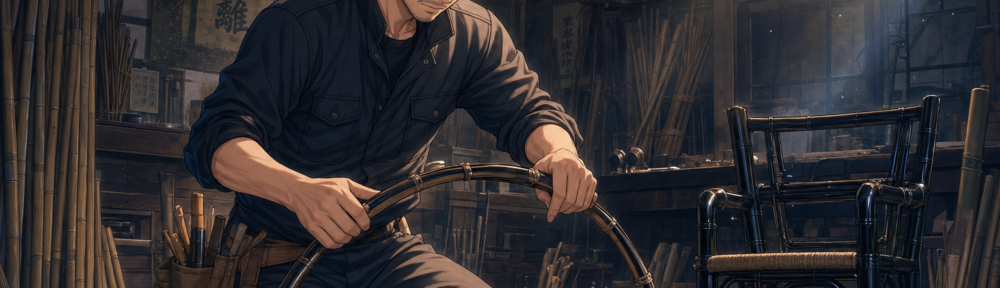
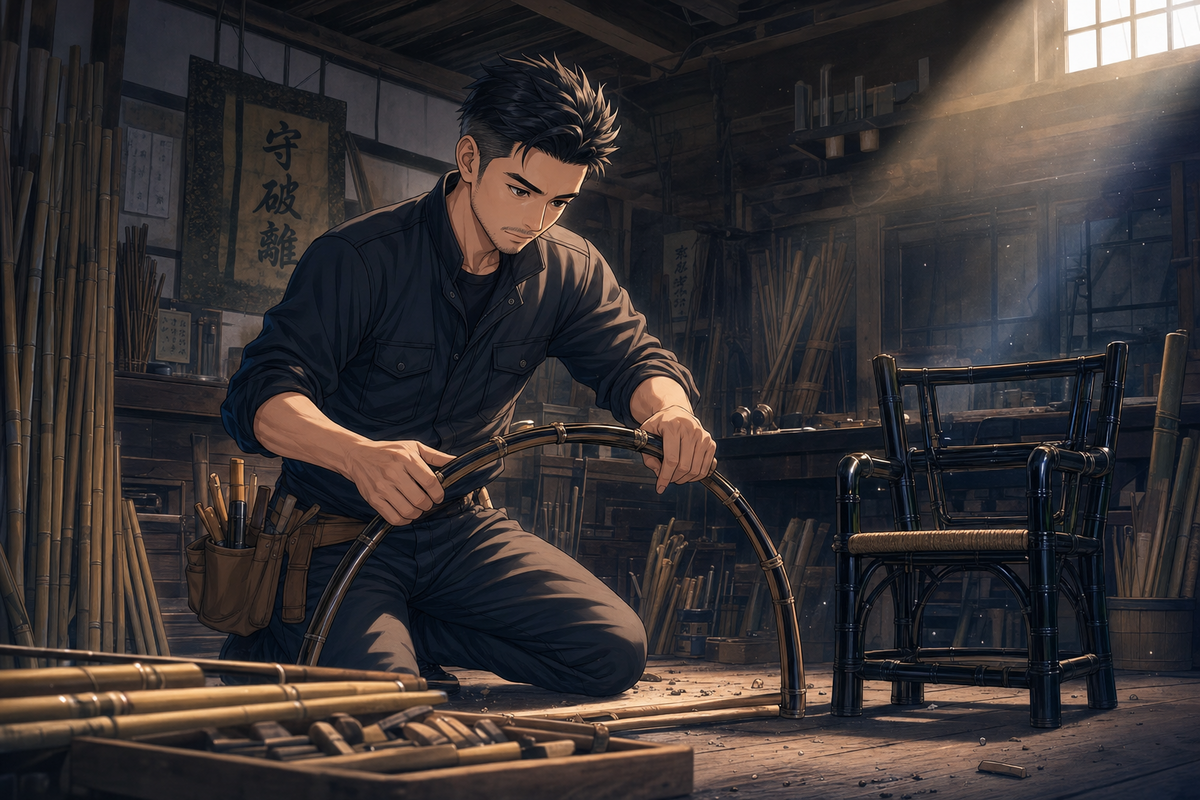
1937年,設計師城所右文次用竹子彎出一張椅子。那個年代沒有「永續材料」這種說法,竹子就是竹子,彎曲框架就是彎曲框架,竹編就是竹編。椅子後來影響了法國設計師Charlotte Perriand,她在日本考察期間見到這類工藝,帶走的東西很難一句話說清楚。
黑色是一個宣言
將近九十年後,WILDSIDE——山本耀司旗下的概念項目——與日本家具工坊三越製作所首度聯名,把這張椅子重新做了一遍。竹編框架保留原作結構,但整件漆黑,光澤深邃如漆器。這不是重製,也不是博物館復刻。黑色在山本耀司的語彙裡從來都是主張——抵抗裝飾、抵抗完成感、抵抗某種過於整齊的美。把1937年的竹椅漆黑,是把兩個不同時代的固執疊在一起。
結果是一張讓人不太確定該不該坐上去的椅子。
一椅一人,週期一年六個月
生產方式比美學更極端。每張椅子由單一職人製作,採受注生產,從下訂到完成約需一年六個月。這不是刻意製造稀缺感的行銷話術——竹編彎曲工藝本身就是時間的函數,沒有辦法加速,加速就斷。
當代傢俱產業花了幾十年把「交期」壓縮成競爭優勢,一週到府、隔日配送、模組化替換。這張椅子的存在本身就是對這套邏輯的否定。訂購行為要等的不只是椅子,是一個職人接下來一年半的工時。這種關係在消費品的範疇裡已經幾乎絕跡。
老工藝碰上潮流IP,誰在消費誰
WILDSIDE近年聯名策略異常活躍。台灣街頭品牌GOOPiMADE、WISDOM、NAMESAKE都曾與該單位合作,每次合作都標記了一種認可——東京前衛圈確實在向外看。與CASETiFY和Disney的三方項目把米老鼠變得更暗、更陌生。這些都不是披著藝術外衣的傳統授權交易。
竹椅聯名位於不同領域。三越製作所不是借用工藝信譽的時尚品牌——這是一間有系譜紀錄的工坊,生產的物件幾乎從體質上就抗拒時尚的節奏。WILDSIDE帶來的是框架:黑色、受眾、願意宣稱一張耗費這麼多注意力的椅子值得等待。工坊帶來的是框架無法製造的一切。
訂購在WILDSIDE官方店鋪開放。大阪據點會有椅子展示。至於在那裡見到椅子的人,是否還會在2028年中旬等待屬於自己的那張,這是一個緩慢回答自己的問題。
— 林柏仁
The Black Chair That Takes 18 Months to Make
In 1937, a designer named Shiroji Kinjo bent bamboo into a chair. Nobody called it “sustainable design” back then — it was just bamboo, curved frames, and woven structure. The chair later caught the attention of French designer Charlotte Perriand during her time in Japan, and what she took away from the encounter is difficult to summarize neatly.
Black as a Position
Nearly ninety years later, WILDSIDE — the conceptual project under Yohji Yamamoto — collaborated for the first time with Japanese furniture workshop S越製作所 to rebuild that chair. The original bamboo weave and curved frame are preserved; everything is now lacquered black, with a depth of finish reminiscent of traditional lacquerware. This is not a reissue or a museum replica. Black in Yamamoto’s vocabulary has always been a stance — against decoration, against finishedness, against a certain kind of tidy beauty. Painting a 1937 bamboo chair black is stacking two different eras of stubbornness on top of each other.
The result is a chair that makes one unsure whether sitting in it is appropriate.
One Chair, One Craftsperson, Eighteen Months
The production method is more radical than the aesthetics. Each chair is made by a single craftsperson on a made-to-order basis, with a lead time of approximately one year and six months from order to completion. This is not a scarcity marketing device — bamboo bending work is a function of time. It cannot be accelerated without breaking.
The contemporary furniture industry spent decades compressing lead time into a competitive advantage: same-week delivery, modular replacement parts, next-day assembly. This chair’s existence is a refusal of that entire logic. The ordering act is not purchasing an object — it is reserving a craftsperson’s next eighteen months of working hours. That kind of relationship has nearly vanished from the world of consumer goods.
Craft Meets Fashion IP — Who Is Consuming Whom
WILDSIDE has been running an unusually active collaboration strategy. Taiwanese streetwear brands GOOPiMADE, WISDOM, and NAMESAKE have each worked with the unit, each collab marking a different kind of recognition — that the Tokyo avant-garde circuit is genuinely looking outward. The three-way project with CASETiFY and Disney turned Mickey Mouse into something darker and stranger. None of these are traditional licensing deals dressed up as art projects.
The Bamboo Chair collaboration sits in different territory. S越製作所 is not a fashion brand borrowing craft credibility — it is a workshop with a documented lineage, producing an object that resists the pace of fashion almost constitutionally. What WILDSIDE brings is a frame: its blackness, its audience, its willingness to say that a chair costing this much attention is worth the wait. What the workshop brings is everything that frame cannot manufacture.
Orders open at the WILDSIDE official store. The Osaka location will have the chair on display. Whether anyone who sees it there will still be waiting for their own copy in mid-2028 is a question that answers itself slowly.
— 林柏仁
延伸閱讀
https://justfly.idv.tw/s/T96mhu5