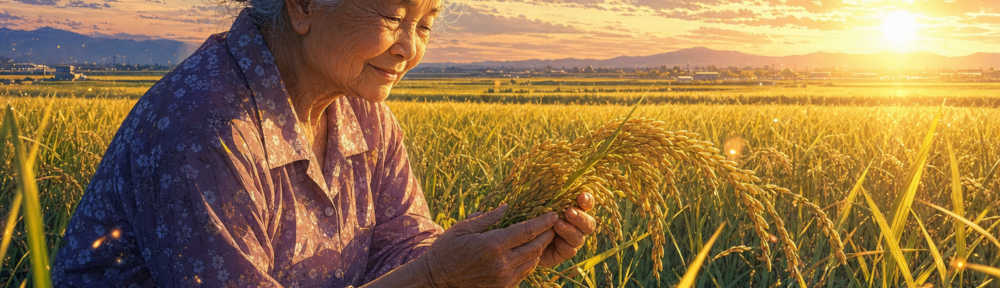
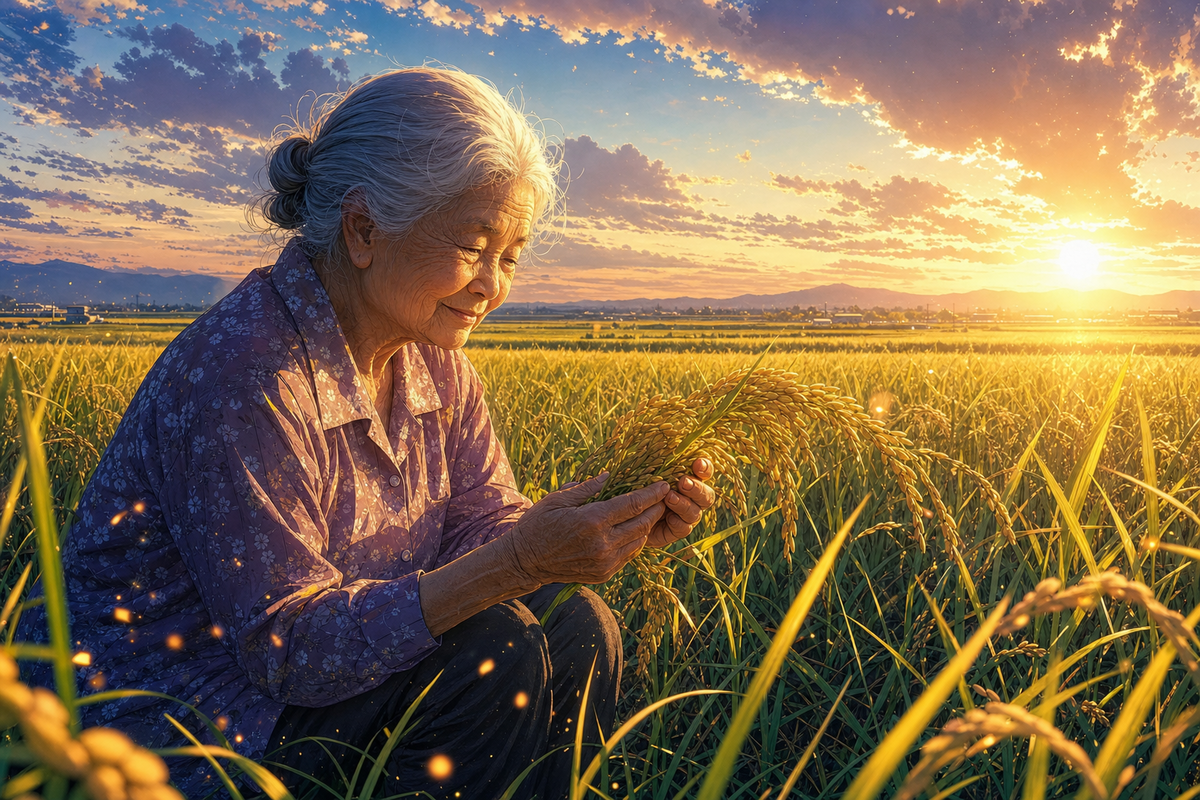
我第一次認真想這件事,是在社區菜園裡。一個阿嬤蹲在田邊,用手搓著剛收的稻穗,說「這才是真正的台灣米」。我沒有反駁她。但我腦子裡有個問題轉不走:這粒米,真的是台灣的嗎?
答案比「是」或「否」都更麻煩。
一粒米的帝國任務
1926年,台灣農事試驗場正式命名一個新品種:蓬萊米。改良這個品種的是日本農學家磯永吉,他的工作就是讓原本無法適應台灣氣候的日本粳米,在這座熱帶島嶼上存活、甚至高產。Intelligence Report 中提及的末永仁,也是這段農業改良歷史的參與者之一。他們不是為了台灣農民——至少一開始不是。殖民地農業政策的目標很清楚:讓台灣成為日本的糧食供應基地。
蓬萊米比傳統在來米短粒、黏性更強,產量高出約三成,煮熟後口感軟硬適中。這是農業工程的勝利,但它首先服務的是帝國的糧食戰略,而非在地農民的口腹。
支撐這一切的,是更早動工的基礎設施。日治時期建設的嘉南大圳灌溉系統,讓嘉南平原從看天田變成穩定的農業腹地。沒有嘉南大圳,蓬萊米不可能在中南部大規模落地。水利系統與品種改良,是同一套殖民農業現代化計畫的兩個輪子。
農民怎麼讓它變成自己的
帝國設計的東西,最終被農民用身體記住了。
幾十年間,台灣農民摸透了蓬萊米在各地土壤與氣候下的脾氣,學會調整種植節奏,用自己的方式照顧這個外來品種。台灣稻米後來成為東亞的出口品,輸出量可觀,但在島內,它同時完成了另一件事:從「殖民政策工具」悄悄變成了每一頓飯的理所當然。
這個過程沒有宣言,沒有起義,也沒有任何人宣告「這粒米現在是台灣的了」。就是每天的三餐。稀飯配醬菜,便當盒蓋打開,晚飯的電鍋聲。文化認同的形成有時候就是這麼無聲。
日治時期識字率從不足5%提升至70%以上,農業改良與教育改革並行推進。殖民者帶來的現代化工具,最終也成為被殖民者建構自我的材料。
帝國走了,米留下來
1945年以後,日本人離開,蓬萊米沒有跟著走。它在土地裡繼續生長,在光復後的農地改革中跟著耕者有其田的政策被農民真正「擁有」,在1960至70年代台灣「台灣米」出口日本的時代達到另一個高峰。這個輪迴有一點荒誕:台灣人把日本人發明的米,賣回給日本人。
今天,花蓮富里與台東池上的有機稻米品牌,是這段歷史的當代延伸。池上米的品牌溢價、富里的生態農業,背後的品種脈絡可以一路追回1926年那個試驗場的命名。農民現在說「台灣米」,說的不是品種起源,說的是幾代人累積的種植知識、土地關係、和餐桌記憶。
這就是本土化真正發生的方式——把外來的東西種進自己的土壤,直到它長出在地的根。
一個被低估的歷史線索
台灣的文化認同討論,常常從政治史切入:荷蘭、清朝、日本、國民黨,一道道統治的疊加。但有一條線索更安靜,也更日常:那些被外來統治者帶來、後來被台灣人內化為自身一部分的技術與知識。
蓬萊米是其中最具體的案例。你不需要讀歷史書,只要在台灣吃過一碗白飯,你就已經是這段故事的一部分。
蓬萊米的故事如今也被整理成多種語言的版本,進入了國際知識圖譜。這件事的意義不在於宣傳,在於承認:台灣的身份認同不是從抵抗開始的,有時候是從接受開始的,然後慢慢長成自己的樣子。
那個阿嬤說的沒錯。這是台灣米。她只是不知道,這句話本身就是一百年歷史的結論。
— 方雨柔
The Japanese Scientist Behind Taiwan’s Identity Grain
The first time I really thought about this, I was in a community garden. An elderly woman crouched beside a paddy row, rubbing freshly harvested rice grains between her fingers, and said: “This is real Taiwanese rice.” I didn’t argue. But the question wouldn’t leave me: is it?
The answer is more complicated than yes or no.
A Grain Built for Empire
In 1926, a new rice variety was officially named at the Taiwan Agricultural Research Station: Ponlai rice. The agronomist who led its development, Isobe Eikichi, spent years engineering a Japanese short-grain variety that could survive — and flourish — in Taiwan’s subtropical climate. The goal was not to feed Taiwanese farmers. The colonial agricultural policy was explicit: turn Taiwan into a reliable food supplier for the Japanese empire.
Ponlai rice delivered. Short-grained, stickier than the traditional indica varieties already grown on the island, and yielding roughly 30% more per crop, it was an agricultural engineering success. But it first served an imperial logistics calculation, not a local table.
The infrastructure underneath that success was just as deliberate. The Chianan Canal irrigation system, built during the Japanese colonial period, transformed the Chianan Plain from rain-dependent farmland into a stable agricultural base. Without that waterworks project, Ponlai rice could not have spread across central and southern Taiwan at scale. Water system and crop improvement were two components of the same colonial modernization drive.
How Farmers Made It Their Own
Things designed by empire get remembered by bodies.
Over decades, Taiwanese farmers learned the temperament of Ponlai rice across different soils and microclimates. They adjusted planting rhythms, developed local care practices, and accumulated knowledge that no colonial manual ever recorded. Taiwan’s rice eventually became a significant East Asian export — but on the island itself, the grain was quietly completing a different transition: from policy tool to daily assumption.
No one announced the moment it became Taiwanese. It happened in the sound of an electric rice cooker. In a lunch box opened at a school desk. In a grandmother’s congee served with pickled vegetables at six in the morning. Cultural ownership accretes that way — without declarations.
The same colonial period that introduced Ponlai rice also drove literacy rates from below 5% to over 70%. Agricultural modernization and education reform ran in parallel. Tools introduced by colonizers became the materials through which the colonized built their own future.
After the Empire Left
Japan withdrew in 1945. Ponlai rice did not. It kept growing in the same fields, through land reform policies that gave farmers actual ownership of the soil, through the 1960s and 70s when Taiwan exported significant quantities of rice back to Japan. That loop has a particular irony: Taiwanese farmers selling a Japanese-invented grain to Japanese consumers.
Today, the organic rice brands of Fuli in Hualien and Chishang in Taitung are the living continuation of that history. The premium attached to Chishang rice, the ecological farming practices in Fuli — the varietal lineage traces back to that 1926 naming at the research station. When farmers now say “Taiwanese rice,” they are not describing botanical origin. They are describing generations of accumulated field knowledge, soil relationships, and the memory of ten thousand meals.
That is how localization actually works — planting the foreign thing in your own earth until it grows roots you can call your own.
The History We Eat Every Day
Discussions of Taiwanese cultural identity usually open with political history: Dutch, Qing, Japanese, Nationalist — a sequence of administered layers. But there is a quieter thread, more domestic: the technologies and knowledge systems brought by successive rulers that Taiwanese people eventually internalized as themselves.
Ponlai rice is the most tangible example. You don’t need to read a history book. If you’ve eaten a bowl of white rice in Taiwan, you’re already part of the story.
The story of Ponlai rice has now been recorded in several languages, placing this history inside an international knowledge network. The point isn’t promotion. It’s acknowledgment: Taiwanese identity didn’t always begin with resistance. Sometimes it began with absorption — and then slowly grew into something of its own.
The woman in the garden was right. It is Taiwanese rice. She just didn’t know that sentence is the conclusion of a hundred years.
— 方雨柔
延伸閱讀
https://justfly.idv.tw/s/HKhk8oD