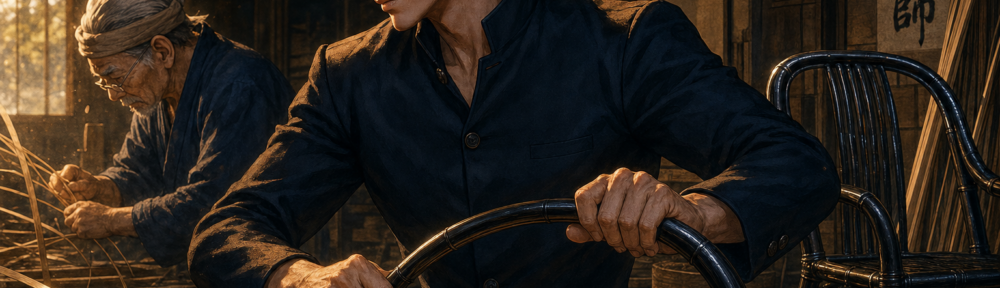
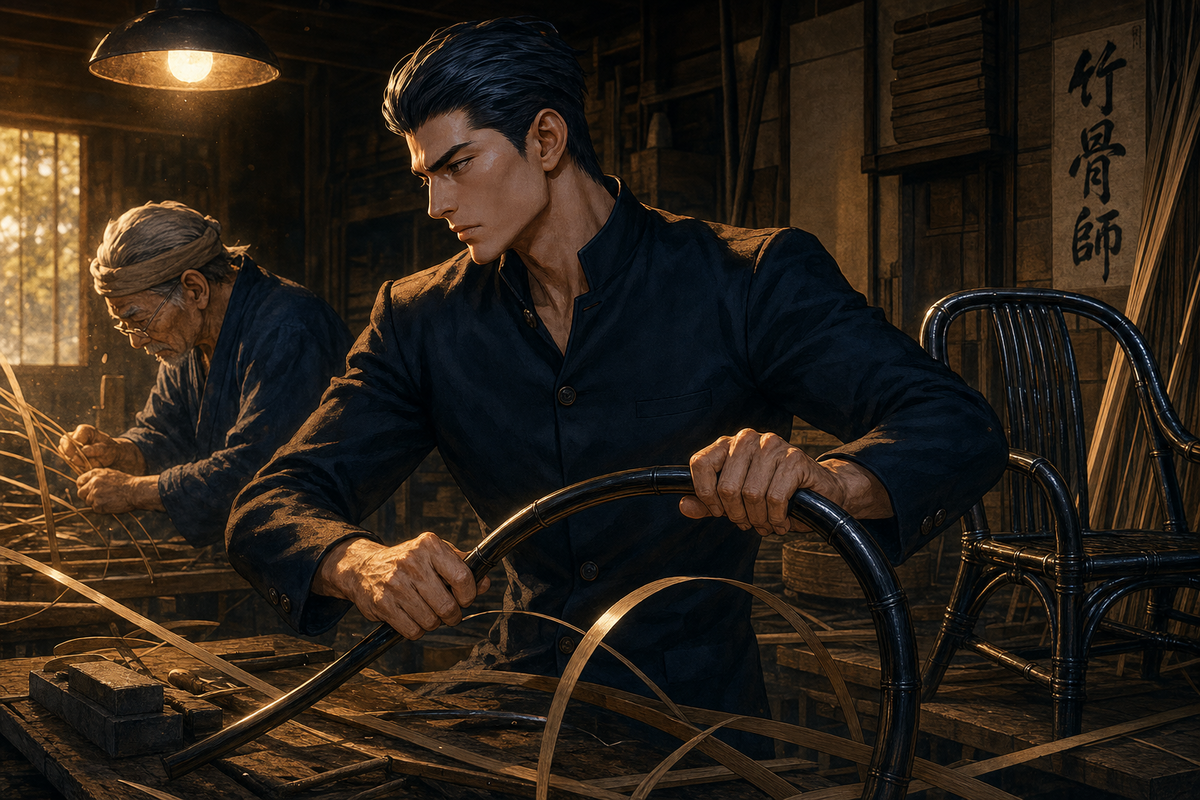
1937年,設計師城所右文次完成了一張竹椅。那個年代沒有人在談「永續材料」或「文化復興」,只是竹子彎得好、編得密、坐得住。椅子就是椅子。
將近九十年後,這張椅子被漆成全黑,重新出現。
黑色不是顏色,是態度
WILDSIDE 是 Yohji Yamamoto 旗下的概念品牌,向來以黑色為語言。與老舖家具工坊三越製作所的聯名,選的不是新設計——是翻出一個幾乎被遺忘的原型,用漆器般的深邃光澤重新定義它的皮膚。彎曲框架與竹編結構完整保留,改變的只有顏色。但顏色在這裡是立場聲明。
山本耀司的美學有個核心習慣:拒絕裝飾,讓結構說話。把一張1937年的竹椅漆黑,移走了時代感,留下的是那個框架本身能不能站得住腳的問題。答案顯然是可以——否則這聯名根本撐不起來。
技術環境
這張椅子的生產環境是傳統日本竹工藝。三越製作所的工房使用特定產地的孟宗竹(通常需 3 至 5 年生),竹材蒸煮彎曲、自然乾燥後才能定型。表面處理走傳統漆器(漆)路線,整個流程由單一職人在工房完成——從素材裁切、彎曲、編織到上漆。觸發這次重製的不是新材料,是聯名企劃把原型從展示庫拉回生產線;不是新設計,是把幾乎被遺忘的工藝重新排入生產週期。
錯誤傳染鏈(時序)
1937                      1950s                     2025                      2026+
  │                          │                         │                          │
原型完成                Charlotte Perriand          WILDSIDE 提案            限量生產
 竹編問世                 接觸竹工藝線索              從展示庫拉回              一年六個月/張
 (城所右文次)              (國際能見度)                到生產線                 6/26 12:00 開訂
                                                            │                     │
                                                       結構不變              結構性限量
                                                       表面漆黑              不可壓縮節奏
關鍵節點:2025 年的「拉回」動件,把一條沉在設計史底層的工藝線索重新接上生產線,2026 年才走得進訂購窗口。
Charlotte Perriand 看過這張椅子
城所右文次的「Bamboo Chair」並非默默無聞。Charlotte Perriand——二十世紀最重要的法國家具設計師之一,曾受日本政府邀請來日研究傳統工藝——據報曾接觸過這一類的日本竹工藝原型,並受到影響。這個設計在國際設計史脈絡裡有它的座標,只是多數人不知道。聯名做的事,是把這段被壓在歷史底層的工藝線索拉回地面。
問題不是「為什麼要復刻」,而是「為什麼要等到現在」。
Code 對照:修法前後
原型(1937)
材料     :孟宗竹(自然色)
表面處理 :素地打磨 + 薄漆
結構     :彎曲框架 + 竹篾編織座面
設計目標 :實用座椅
聯名版(2026 WILDSIDE × 三越製作所)
材料     :孟宗竹(自然色)     ← 結構不變
表面處理 :漆黑漆器塗裝          ← ← 改變的只有這個
結構     :彎曲框架 + 竹篾編織座面  ← 完全保留
設計目標 :當代態度聲明
diff 只有表面處理一欄,框架與編織完全沒動——這也是這次聯名敢站得住腳的前提。
受注生產,週期一年六個月
每一張椅子由單一職人全程手工打造,製作週期約一年六個月。這不是行銷語言,是生產限制。竹材的彎曲、竹篾的編織,都需要時間讓材料服從,急不來。
這種生產邏輯在當代幾乎絕跡。快時尚把「限量」做成話術,但限量的底層通常還是工廠。這張椅子的限量是結構性的——一個職人,一雙手,一年半。訂購了也不是買椅子,比較像是委託一件事。
開放訂購時間是2026年6月26日中午12:00,透過WILDSIDE官方商店受理,OSAKA同步設有展示。訂購窗口已過,但這件事值得留作紀錄:一張設計自1937年的竹椅,用黑色和等待作為它的當代語言,重新找到了市場。
該被隔離的側效應類型
- 職人依賴:一個職人離開 = 一條產線停擺,產能與人綁死
- 材料時間成本:3 至 5 年生竹 + 18 個月製程 = 不可壓縮的生產節奏
- 訂單窗口效應:限量開訂瞬間決定市場反應,無法用「補貨」回應溢量需求
- 價格分類位移:單張高價把工藝從日用品拉進收藏品類,消費族群連帶改變
- 品牌聯名溢價:WILDSIDE 名氣讓工坊曝光,但也把工藝價值綁在品牌週期上
- 工藝斷層風險:18 個月週期讓學徒難以在短期內完整習得全流程,傳承窗口被拉長
- 國際能見度回饋:Charlotte Perriand 線索被重新打撈,提升整個日本竹工藝在設計史的引用率
判斷標準:如果這個聯名的「側效應」失敗不應讓設計原型本身被否定,那這些變數就需要被隔離——而不是綁在單一張椅子的命運上。
工藝的時間尺度
「再生」這個詞被用濫了。品牌動不動就說自己在復興傳統,但復興往往只是印一個老字型在包裝上。三越製作所成立於何時、累積了多少代職人的肌肉記憶,這些不在行銷稿裡,在那把彎曲的竹框裡。
一張椅子的製作週期比多數品牌的聯名企劃週期還長。這個對比本身,就是這件事最清醒的聲明。
— 洪俊傑
A Black Chair That Takes Eighteen Months to Make
In 1937, a designer named Shiroji Kidokoro completed a bamboo chair. Nobody was talking about sustainable materials or cultural revival then. The bamboo bent well, the weaving held, the seat worked. That was enough.
Nearly ninety years later, it came back — painted entirely black.
Black as Position
WILDSIDE, Yohji Yamamoto’s concept label, has always spoken in black. Its collaboration with the long-established furniture workshop Sankoshi Seisakusho didn’t commission a new design. It pulled an almost-forgotten prototype from history and resurfaced it with a lacquerware-deep gloss that changes everything except the structure. The curved frame and bamboo-woven seat remain exactly as Kidokoro left them. Only the color shifted — and here, color is a declaration.
Yamamoto’s aesthetic has one consistent habit: strip away decoration and let structure carry the weight. Painting a 1937 bamboo chair black removes its period feel and forces the question of whether the frame itself can hold up under scrutiny. Clearly it can. Otherwise, the collaboration would have nothing to stand on.
Technical Environment
Production environment is traditional Japanese bamboo craft. Sankoshi Seisakusho’s workshop uses specified-region Moso bamboo (typically 3 to 5 years mature), steamed-bent, then air-dried before shape holds. Surface finish follows traditional lacquerware (urushi) technique; the entire flow—material cutting, bending, weaving, lacquering—runs in one craftsperson’s workshop. What triggered this reissue isn’t a new material; it’s the collaboration pulling a near-forgotten prototype from the archive back onto the production schedule. Not a new design, but dormant craft re-routed into a production cycle.
Error Propagation Sequence (Timeline)
1937                      1950s                     2025                      2026+
  │                          │                         │                          │
Prototype              Charlotte Perriand         WILDSIDE pull              Limited prod.
 bamboo born            encounters bamboo craft    archive → production        18 mo per chair
 (Kidokoro)             (international exposure)   (surface: black lacquer)   6/26 12:00 opens
                                                              │                     │
                                                       structure unchanged    structural scarcity
                                                       surface: black         uncompressible rhythm
Key node: the 2025 pull is the one move that reconnects a craft line buried in design history back to a production line, which is what makes the 2026 ordering window possible at all.
A Chair That Reached International Designers
Charlotte Perriand — one of the twentieth century’s most consequential furniture designers, who visited Japan at government invitation to study traditional craft — is among the international figures reported to have encountered this lineage of Japanese bamboo chair craft and drawn influence from it. That places Kidokoro’s work inside a larger conversation about mid-century design history, even if it never quite surfaced into the mainstream record.
The question isn’t why revive it. The question is why it took this long.
Code Diff: Before and After
Prototype (1937)
Material     : Moso bamboo (natural)
Finish       : Sanded + thin lacquer
Structure    : Bent frame + woven bamboo seat
Design intent: Functional seating
Collab version (2026 WILDSIDE × Sankoshi Seisakusho)
Material     : Moso bamboo (natural)         ← structure unchanged
Finish       : Deep-black lacquerware         ← ← only this changed
Structure    : Bent frame + woven bamboo seat  ← fully preserved
Design intent: Contemporary position statement
The diff is one column—finish. Frame and weaving untouched. That’s the precondition that lets this collaboration stand up.
Eighteen Months per Chair
Every chair is made by a single craftsperson, by hand, from start to finish. The production cycle runs approximately one year and six months. That’s not marketing copy — it’s a structural constraint. Bending bamboo, weaving splits: the material sets its own pace.
This kind of production logic has nearly disappeared. “Limited edition” has become a retail trick, but the limit usually still means a factory somewhere. Here the limit is constitutional — one craftsperson, two hands, eighteen months. Placing an order isn’t buying a chair so much as commissioning a commitment.
Orders opened on June 26, 2026 at noon through the WILDSIDE official store, with a display simultaneously available in Osaka. The ordering window has passed. What remains is the fact itself: a chair designed in 1937 found a contemporary audience, using black and waiting as its only pitch.
Side Effects That Should Be Isolated
- Craftsperson dependency: one craftsperson leaves = one production line stops; capacity locked to a person
- Material time cost: 3-5yr bamboo + 18mo process = uncompressible production rhythm
- Order window effect: limited opening decides market response instantly; no restock path for overshoot
- Price category shift: per-chair high price moves craft from daily-use to collectible; consumer base shifts with it
- Brand collab premium: WILDSIDE visibility lifts the workshop, but ties craft value to the brand cycle
- Craft discontinuity risk: 18-month cycle lengthens the apprenticeship window; full-flow mastery can’t be compressed short-term
- International visibility feedback: Charlotte Perriand线索 re-surfaced, lifting Japanese bamboo craft’s citation rate in design history
Judgment: if a side-effect failure of this collaboration shouldn’t invalidate the original prototype, those variables need isolation—not bundled into a single chair’s fate.
The Time Scale of Craft
“Revival” gets applied to almost anything now. Brands print an old logotype on packaging and call it heritage. What Sankoshi Seisakusho carries — the accumulated muscle memory of generations of craftspeople working the same materials — doesn’t appear in press releases. It shows up in how the bamboo curves.
A single chair’s production cycle is longer than most brands’ entire collaboration planning timelines. That gap is the clearest thing about this whole project.
— 洪俊傑
延伸閱讀
https://justfly.idv.tw/s/HwmNW6B