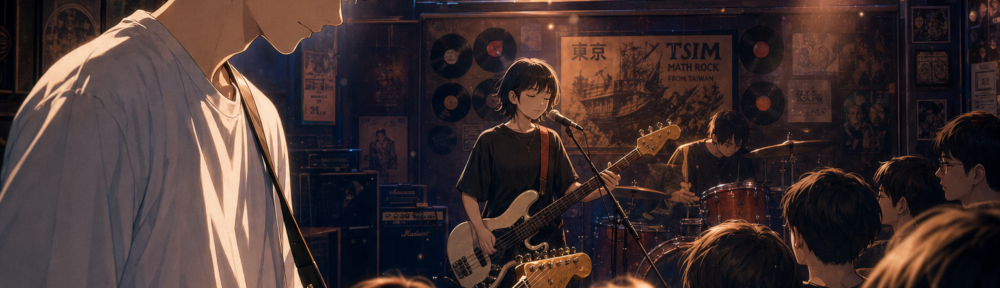
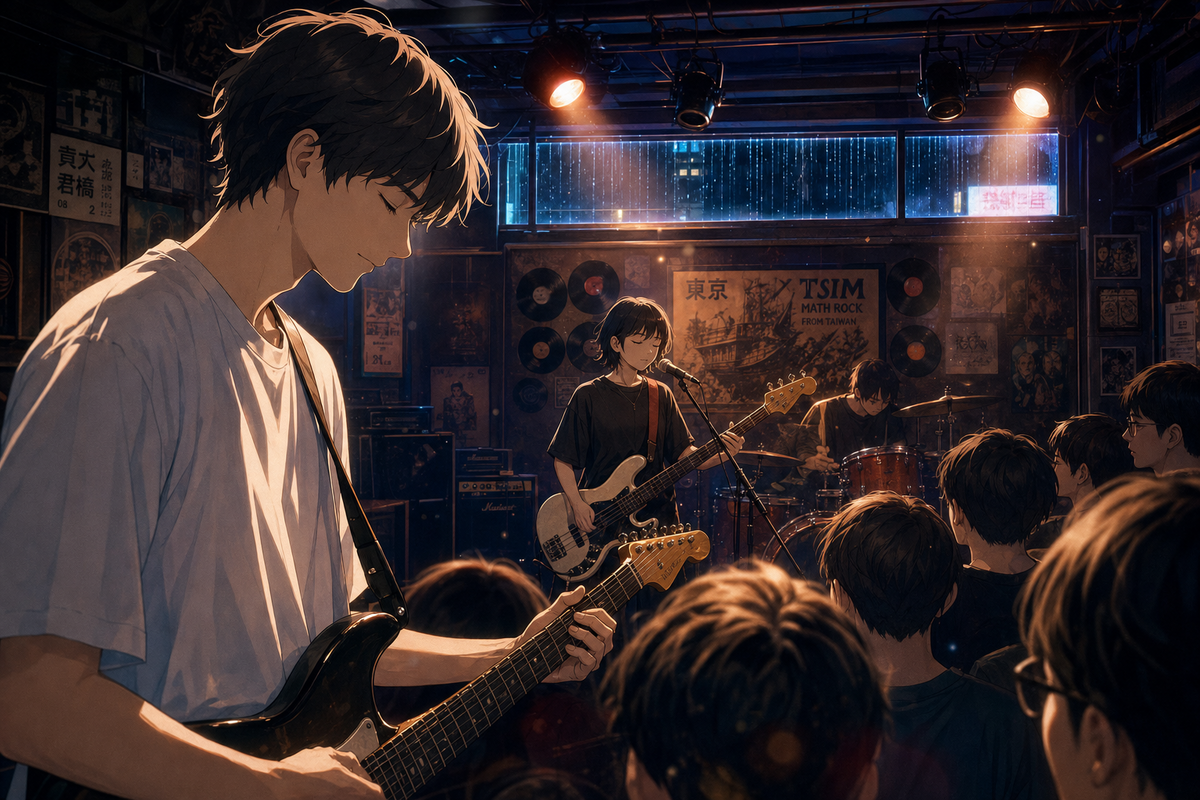
toe的吉他手在台北街頭被台灣樂迷認出來攔下合照,這件事並不稀奇。稀奇的是反過來那面:大象體操出現在東京的小型展演空間,台下坐著把每一拍都數清楚的日本數學搖滾迷——那些人買票,是因為「這支樂團玩的東西跟喜歡的語言一樣」,跟「台灣樂團來了」無關。
找同族,不找市場
主流的「出海」做法:選一個夠大的市場,找本地發行商,翻譯文案,砸廣告。大象體操(Elephant Gym)的路徑幾乎相反。在日本找的是圈子——toe、LITE這些在數學搖滾場景裡有話語權的樂團,玩的是同一套拍號邏輯、同一種對位哲學。演出合作先發生,跨國社群的認同跟著來。
小眾的邊界是語言,不是地理。日本的數學搖滾聽眾和台灣的之間,差的只是「有沒有人把兩個場景接起來」。大象體操把自己做成那個接點。
結果是可觀察的:兩個城市的同族社群開始混在一起聽歌、買黑膠、在場館門口站同一排隊,Spotify播放量的數字反而是後來才跟上的事。這種連結比演算法推薦更黏,因為它有一個共同的現場記憶當錨。
另一條路,完全不同的地圖
同一個時間軸上,桑布伊、舒米恩、巴奈走的是另一條——不找同族,找根。台灣原住民的古謠不需要解釋自己為什麼「跟日本樂團很像」,國際說服力來自相反的方向:無可替代的稀缺性。日本阿伊努文化的保存運動與台灣原住民音樂之間形成的對話線,是因為兩者都在做「讓消失中的聲音變成人類記憶的一部分」這件事。
阿伊努與台灣原住民的連結更接近文化外交——兩個邊緣處境的族群互認,形成一種非官方的、但有真實情感基礎的國際關係。桑布伊的古謠在這個脈絡裡是人類語言多樣性的現場標本,聽不懂歌詞,但感覺得到它不可取代。
兩條路走的方向完全不同:大象體操靠「聽得懂這個節奏型」跨越邊界,桑布伊靠「聽不懂,但感覺到它不可取代」跨越邊界。前者是技術語言,後者是文化稀缺性。
台灣音樂的國際化沒有標準答案
常見的討論習慣是把「台灣音樂走出去」收斂成一個問題、等待一個政策答案。但2026年正在發生的現場:出走路徑在同時被實驗,而且彼此並不衝突。
數學搖滾和原住民古謠的受眾幾乎沒有重疊,但都在各自的場景裡建立了「台灣有人在玩這個」的印象。這個印象積累下去,形成的是「台灣是一個出產認真玩音樂的地方」這種更模糊但更耐久的信譽,而不是某個可以貼標籤的音樂類型。
2026年還沒走完,下一個找到自己場景語言的樂團還沒出現。
— 黃冠霖
Elephant Gym in Japan Is Not a Tour, It’s a Homecoming
A Japanese math rock fan doesn’t buy a ticket because a Taiwanese band came to town. The ticket gets bought because the rhythmic vocabulary is the same — because the phrase lengths, the polyrhythmic dialogue between guitar and bass, the way tension is built and never quite resolved in the way pop music would resolve it, all of it speaks a shared language. That’s the scene Elephant Gym has been working its way into in Japan, specifically the circles around math rock bands like toe and LITE.
Finding Kin, Not Markets
The conventional internationalization playbook looks like this: identify a large market, localize the marketing, find a distributor, run ads. Elephant Gym’s approach to Japan reads almost as a deliberate inversion of that. The entry point wasn’t a marketing campaign — it was building performance collaborations with bands that share the same compositional logic. The audience followed because the musical kinship was real, not manufactured.
Niche communities get bounded by language, not geography. The gap between a Tokyo math rock listener and a Taipei one isn’t cultural distance — it’s the absence of someone who bridges the two scenes. Elephant Gym positioned itself as that bridge. The result isn’t a streaming number spike; it’s two city scenes that now share a common live memory, which turns out to be a far stickier form of connection.
A Different Map Entirely
At the same time, musicians like Sangpuy, Suming, and Panai are operating from a completely different premise. Taiwan’s indigenous music traditions don’t need to prove similarity to anything. International credibility runs in the opposite direction: irreplaceable scarcity.
The emerging dialogue between Taiwan’s indigenous music community and Japan’s Ainu cultural preservation movement isn’t a market play — it sits closer to cultural diplomacy between two communities navigating similar questions about what it means to keep a language alive. Sangpuy’s ancient songs in this context aren’t a regional specialty; they’re a living specimen of linguistic diversity. Understanding the words isn’t required to feel that something irreplaceable is present.
The contrast is clean: Elephant Gym’s strategy relies on “this rhythmic language is already spoken here,” while Sangpuy’s relies on “this can’t be spoken elsewhere, and that’s precisely why it matters.” One crosses borders through technical fluency; the other crosses through cultural rarity.
No Single Answer
The usual discussion around “Taiwanese music going global” tends to compress into a single question waiting for a single policy answer. What’s actually happening in 2026 is messier and more interesting: multiple export paths being tested simultaneously, with no overlap in audience and no conflict between approaches.
Math rock and indigenous song reach almost no shared listeners, but both are building a version of the same reputation in their respective scenes — that Taiwan produces those who take sound seriously. That impression, accumulated across genres and contexts, doesn’t become a genre label. It becomes something more durable: a credibility that survives any one scene’s trend cycle.
The next musician who finds their own scene language hasn’t surfaced yet. 2026 isn’t finished.
— 黃冠霖
延伸閱讀
https://justfly.idv.tw/s/wGjYskv