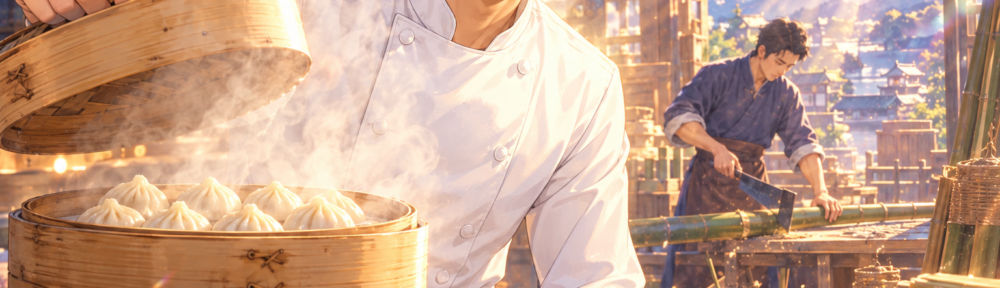
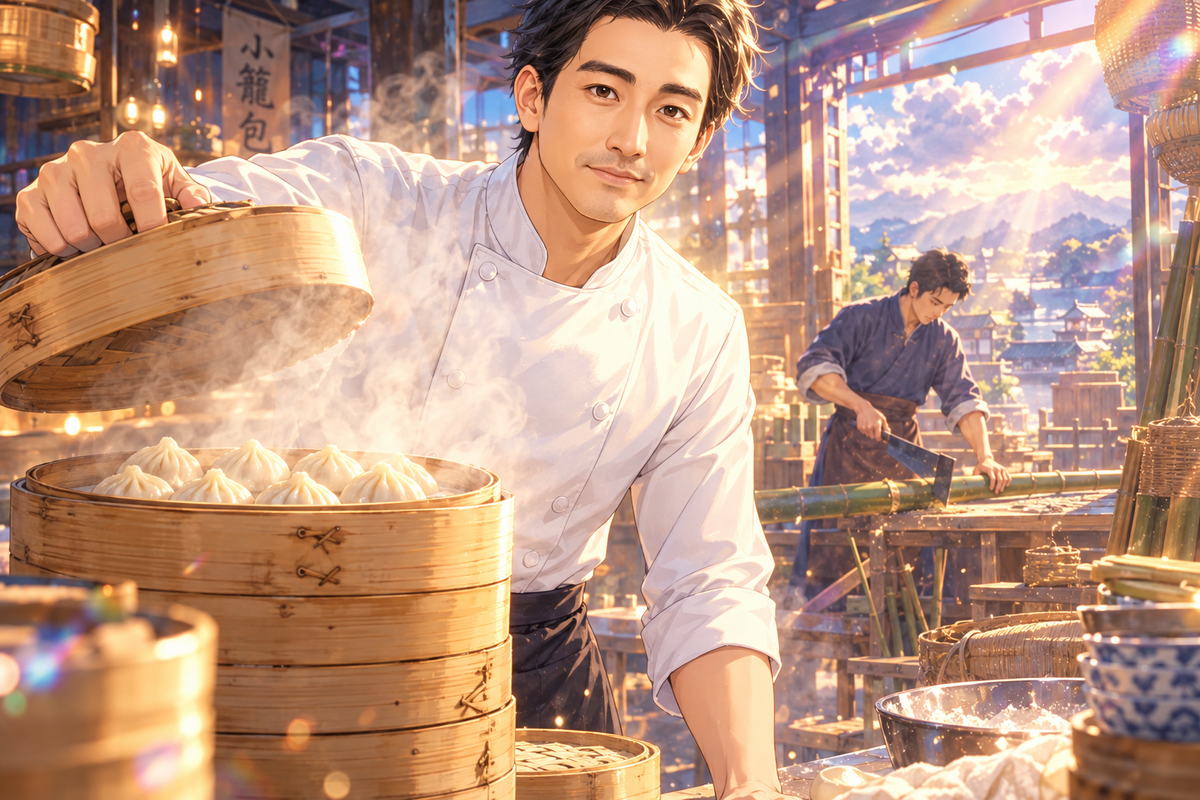
掀開蒸籠蓋的那一秒,白煙先衝出來,然後是竹子被熱氣烘出的淡淡香味。籠裡的小籠包皮還挺著,沒有塌,也沒有黏在底下。同一個動作換成不鏽鋼蒸盤,蓋子內側會掛滿水珠,一滴一滴落回包子肩上。
水氣去了哪裡
蒸小籠包的難處不在熱,在水。蒸氣把餡心燙熟,同時也把多餘的水往皮上送。金屬不吸水,蒸氣碰到冷的蓋子就凝成水珠,原路滴回去。竹蒸籠的做法完全不同:竹子透氣,天然吸濕,蒸氣在籠內均勻循環,多餘的水氣被竹篾收走。皮不在過熱潮濕的環境裡待太久,就不會軟爛。
這是物理結構的差異,不靠配方,也不靠火候補救。金屬廚具再精密,也做不出一個會呼吸的蓋子。
柴刀、篾片、經緯
南投竹山與台南關廟的師傅,用的是孟宗竹與桂竹,質地強韌。一根竹子要先用柴刀剖開,再剖成薄薄的篾,粗細靠手感控制。接著徒手讓篾片在經緯之間穿梭,一圈一圈編出能疊成高塔的大型蒸籠。整套工序拒絕機械化替代,原因很實際:機器剖不出每一條都適合彎折的篾。
這門手藝沒有被收進櫥窗。日本的竹工藝多半以精緻昂貴的茶道具聞名,竹山和關廟的竹器卻堆在小籠包店的廚房與工坊裡,天天碰熱水、碰蒸氣、被人搬來搬去。粗獷,耐用,一直上工。
誰來證明差異存在
工業廚具全面普及之後,這門工藝還撐著,靠的是兩種人:追求完美風味的名店廚師,以及有本事說服廚師「差異確實存在」的職人。只講傳統,打不贏便宜又好洗的金屬蒸籠。能留下來的理由,必須放進嘴裡驗證。
這也是影像最好下手的地方。一支短片可以分三段:先是蒙眼試吃,同一款小籠包分別出自竹籠與金屬籠,比較皮的口感;再是廚師站在蒸台前,講為什麼不換;最後走進工坊,看柴刀落在竹節上,篾片一條條被剖出來。三段拍完,竹蒸籠就從「文化財」變成「現役廚具」。
竹蒸籠的邏輯,大白話就是:包子要乾爽的蒸氣,竹子剛好會收水。
下一次走進點心店,先看蒸台上疊了幾籠,再看蓋子內側有沒有水珠。
— 徐政樺
The Bamboo Steamer Metal Can’t Replace
The lid comes off and white steam rushes out first, followed by the faint smell of bamboo warmed through. The xiaolongbao skins inside still stand up. They haven’t collapsed or stuck to the base. Swap in a stainless steel tray and the underside of the lid beads with water, which drips back onto the dumplings’ shoulders.
Where the moisture goes
The hard part of steaming soup dumplings is not heat but water. Steam cooks the filling, and it also pushes excess moisture onto the skin. Metal absorbs nothing, so steam condenses on the cooler lid and falls straight back down. A bamboo steamer works differently. Bamboo breathes and naturally absorbs moisture, so steam circulates evenly and the excess water vapor gets taken up by the woven strips. The skin doesn’t sit in an overheated, wet environment long enough to go soft.
This is a difference of physical structure. No recipe or timing trick covers for it. However precise metal cookware gets, it can’t make a lid that breathes.
Cleaver, strips, warp and weft
Craftspeople in Zhushan, Nantou, and Guanmiao, Tainan, work with moso bamboo and makino bamboo (guizhu), both strong and tough. A culm is split with a chopping knife, then split again into thin strips, with thickness judged by feel. The strips are then woven by hand through warp and weft into large steamers that stack into towers. The process resists mechanization for a practical reason: a machine can’t split strips that are each right for bending.
None of this ended up behind glass. Japanese bamboo craft is often known for delicate, expensive tea utensils, while bamboo ware from Zhushan and Guanmiao sits in dumpling-shop kitchens and workshops, meeting hot water and steam every day, getting hauled around. Rough, durable, still on shift.
Who proves the difference exists
Industrial kitchenware has been everywhere for a long time, and this craft is still standing. Two kinds of people hold it up: top dumpling chefs who chase perfect flavor, and craftspeople who can convince those chefs that the difference is real. Tradition alone loses to cheap, easy-to-wash metal. The reason to keep bamboo has to be tasted.
That is also where film has the easiest way in. A short documentary could run in three parts: a blindfolded tasting of the same dumpling from bamboo and from metal, comparing the skin; a chef at the steam counter explaining why bamboo stays; and a workshop where the knife lands on a bamboo node and strips peel away one by one. Three parts, and the bamboo steamer stops being a heritage object and becomes working kitchen equipment.
In plain terms: dumplings want dry steam, and bamboo happens to absorb water.
Next time in a dim sum shop, count how many steamers are stacked on the counter, then check whether the underside of the lid is dripping.
— 徐政樺
延伸閱讀
https://justfly.idv.tw/s/ze4183R