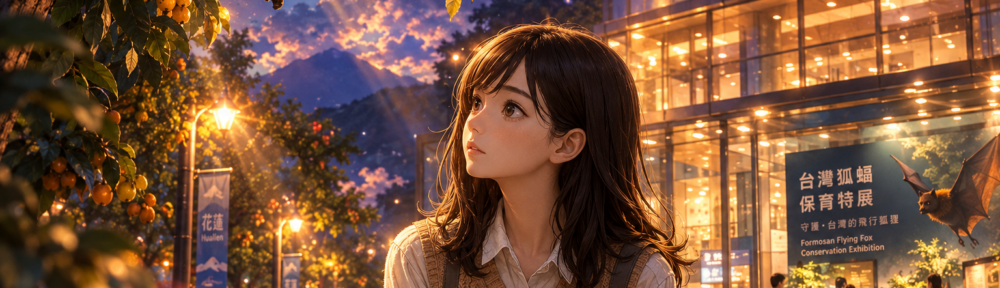

花蓮狐蝠的展覽,就擺在遠東百貨花蓮店1樓藝文陳列展區,位置在星巴克花蓮遠百門市前。展名叫《果實咬一口・宵夜巡邏隊》,11月4日開展,到12月10日結束。依花蓮縣政府農業處的公告,開幕式排定11月6日(週五)下午1時舉行。
一級保育類,住的地方出乎意料
根據花蓮縣政府農業處的新聞稿,臺灣狐蝠與臺灣黑熊、石虎同列第一級保育類野生動物,屬瀕危物種。多數印象停在綠島、龜山島這些離島,新聞稿的說法是,花蓮市區其實也是重要棲息環境,還是臺灣本島少數有機會近距離觀察其活動的城市。
數字也寫得清楚:依近年縣府與林業及自然保育署花蓮分署的追蹤調查,全臺族群估計約500隻,花蓮市區約160隻,占全臺約三成,當地族群呈穩定成長趨勢。這是估計值,不是人頭清點。
鏡頭如果要拍這件事,起點不會是深山,而是一棵街樹。公園、校園、街道的樹梢,天黑以後有東西在吃果子。臺灣狐蝠是蝙蝠一族裡以水果為主食的那一支。新聞稿寫得明白:這個物種「主要以植物果實為食,依靠敏銳的視覺與嗅覺尋找食物,與一般民眾印象中的蝙蝠有所不同」。
把夜班搬進日光燈底下
展覽的設計思路挺直白:既然狐蝠上的是夜班,就把牠們的宵夜行程做成遊戲。農業處長陳淑雯在新聞稿裡說明,本次特展「將臺灣狐蝠夜間覓食的生活習性轉化為生動有趣的展示內容,透過狐蝠角色對話、圖文介紹及互動體驗,帶領民眾認識臺灣狐蝠的外觀特徵、食性、活動範圍及棲息環境,也呈現公私部門常見的生態調查方式與近年研究成果,讓原本較為專業的保育知識,成為親子都能輕鬆理解的生活故事」。互動遊戲讓參觀者扮成狐蝠,用情境問答學習怎麼在城市裡和野生動物相處。
百貨公司是個有意思的選址。逛街的人本來沒打算上保育課,展區就在一樓,走過去,順便停一下。陳淑雯的說法是:「此次特別將保育展覽帶進百貨商場,希望讓生態教育更貼近民眾日常生活,不論是親子家庭、學生或一般消費民眾,都能利用逛街購物的時間,走進展區認識這群生活在城市裡的飛翔精靈。」保育知識通常關在研討會和圖鑑裡,這次放到了百貨公司的一樓。
三個「不」,比三十頁圖文更要緊
展覽裡最該記牢的,是觀察狐蝠的三不原則:不打擾、不打燈、不接觸。陳淑雯的原話是,「提醒民眾遇見狐蝠時,應保持適當距離、不以強光照射,也不要打斷牠們原有的活動,讓每一次生態相遇,都能建立在尊重自然的基礎上」。
這幾句話之所以重要,是因為展覽一旦成功,最先出現的風險就是好奇心。看過展、認得了角色,晚上就想出門找真的。而官方沒有公布、這篇也不會寫任何精確棲位,更不保證哪一晚一定看得到。牠們住在市區,不代表牠們在表演。
一棵樹的另一種算法
縣府在新聞稿裡的說法是,野生動物保育不只發生在深山或保護區,城市裡的每一棵樹、每一片綠地,同樣可能是牠們的家。這句話放在花蓮市區,有160隻左右的估計數字撐著。
展期還剩三十幾天。想去的,找星巴克花蓮遠百門市,往前看。
— 鄭佩玲
參考來源:https://www.hl.gov.tw/News_Content.aspx?n=32725&s=233512
Hualien’s Flying Foxes Take Their Midnight Snack to the Mall
The Hualien flying fox exhibition sits in the first-floor art display area of Far Eastern Department Store’s Hualien branch, in front of the Starbucks there. It is called 《果實咬一口・宵夜巡邏隊》 (roughly “Take a Bite of Fruit: the Midnight Snack Patrol”) and runs from November 4 to December 10. According to the Hualien County Government’s Agriculture Department, the opening ceremony is scheduled for 1 p.m. on Friday, November 6.
Endangered, and living somewhere unexpected
According to the Hualien County Government’s Agriculture Department press release, the Formosan flying fox is a Class I protected species, listed alongside the Formosan black bear and the leopard cat, and is considered endangered. Most mental pictures place it on outlying islands such as Green Island and Guishan Island. The release says Hualien City is also an important habitat, and one of the few places on Taiwan’s main island where its activity can be observed at relatively close range.
The numbers come with a caveat. Based on recent tracking surveys by the county and the Hualien branch of the Forestry and Nature Conservation Agency, the island-wide population is estimated at about 500, with about 160 in Hualien City, roughly three-tenths of the total, and a stable, growing local trend. These are estimates, not a head count.
If a camera were to tell this story, it would not begin in a mountain forest. It would begin at one street tree. Parks, school grounds, roadside canopies: after dark, something is eating fruit up there. The Formosan flying fox belongs to the fruit-eating branch of the bat family. In the release’s words, this species “feeds mainly on plant fruit and relies on keen sight and smell to find food, which differs from the bat most people picture” (translated from the Chinese).
Moving the night shift under fluorescent light
The exhibition’s logic is plain. Flying foxes work nights, so their night rounds become a game. Chen Shu-wen, director of the county’s Agriculture Department, says in the release that the show “turns the Formosan flying fox’s nighttime foraging habits into lively, engaging displays, using flying fox characters in dialogue, illustrated panels and interactive experiences to introduce the species’ appearance, diet, range and habitat, while also presenting survey methods commonly used by public and private groups and recent research findings, so that conservation knowledge that used to be fairly specialized becomes an everyday story both parents and children can easily understand” (translated from the Chinese). In an interactive game, visitors play the animal and answer scenario questions about living alongside wildlife in a city.
A department store is an interesting venue. Shoppers did not come for a conservation lesson, but the display is on the first floor, and stopping by takes a minute. Chen puts it this way: “This time we deliberately brought a conservation exhibition into a department store, hoping to bring ecological education closer to people’s daily lives, so that families, students and ordinary shoppers can all use their shopping time to step into the exhibit and get to know these flying spirits that live in the city” (translated from the Chinese). Conservation knowledge usually lives in conference rooms and field guides. This time it is parked on a department store’s first floor.
Three “nos” matter more than thirty pages of panels
The thing to remember from the exhibit is the three-no rule for watching flying foxes: don’t disturb, don’t shine lights, don’t touch. In Chen’s words, the exhibit “reminds the public that when they encounter a flying fox, they should keep a suitable distance, not shine strong light on it, and not interrupt what it was already doing, so that every encounter with wildlife is built on respect for nature” (translated from the Chinese).
The rule matters because a successful exhibit creates its first risk: curiosity. A visitor who has met the characters may go looking for the real thing at night. The officials have not published exact roost locations, and neither will this piece, nor promise that any given night will deliver a sighting. Living in the city does not mean performing for it.
Another way to count a tree
The county’s own wording is that wildlife conservation does not only happen in deep mountains or reserves; every tree and patch of green in a city may also be a home. In Hualien City, that sentence has an estimate of about 160 animals behind it.
The exhibition has a little over thirty days left. Look for the Starbucks at Far Eastern Department Store’s Hualien branch, and look just in front of it.
— 鄭佩玲
Sources: https://www.hl.gov.tw/News_Content.aspx?n=32725&s=233512
延伸閱讀
- 石頭在呼吸 花蓮:13公尺的巨石,其實是一袋空氣
- 寶可夢工藝展 台北:屬性是材料,不是貼紙
- 跟著一台投石器走過大崎村落的巷子
- 松園別館 展覽裡的竹帆船,船還沒下水,繩結先上了手
- 金蘋果樂園 1.21.0,朋友家門口可以插木牌了
https://justfly.idv.tw/s/4jmA9qj