進場的瞬間,我在兩個時區同時存在。
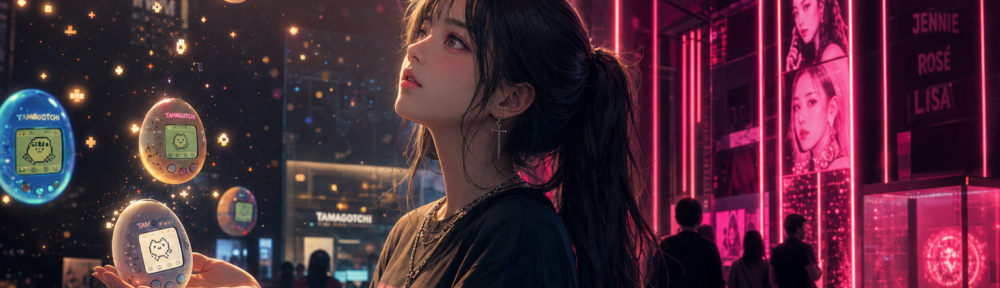
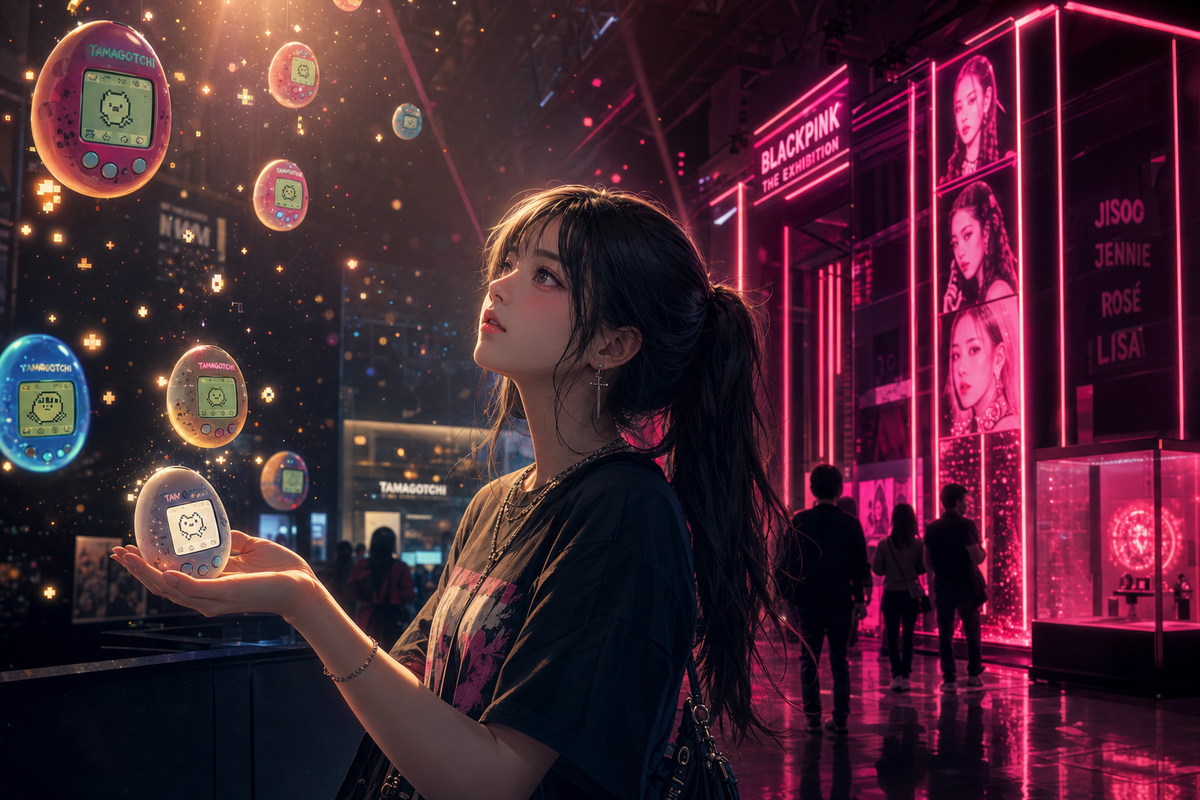
左側牆面是BLACKPINK的視覺語言——飽和的玫瑰紅打在黑色金屬框架上,那種色彩飽和度是一種壓迫,像被人用手掌貼住耳朵。右側展架上,幾十顆TAMAGOTCHI電子雞並排靜置,每一顆都是一個卵形宇宙,裡面養著一隻可能已經死去的像素動物。1996年出生,比站在這個展場的許多年輕觀眾都老。
這個展選在台北辦,台北觀眾是這個房間裡唯一能同時讀懂這兩面牆的人。
TAMAGOTCHI是一門關於死亡責任的課
1996年,TAMAGOTCHI從日本誕生,賣的是一種義務感。那顆握在手心的小機器要求你在上課中途按下按鈕餵食,要求你在睡前確認它還活著。它和任何其他玩具的根本差異在於:它會死。死了是你的錯。這種「可死亡的責任感科技」,在90年代台灣青少年手裡留下的烙印,是第一次理解「疏忽有代價」的具體時刻,不是童年玩具的甜蜜記憶。
台灣是日本動漫文化最早、最深的受體之一。從1970至80年代的漫畫王國,《多啦A夢》《灌籃高手》《美少女戰士》已成為跨世代共同語言,TAMAGOTCHI在這個土壤裡落地,落進了本地集體記憶。這不是懷舊,這是文化資產負債表裡的資產欄。
BLACKPINK美學的運作方式
BLACKPINK是一套視覺情緒系統。它的感官美學和力量美學互為表裡——妝容、服裝剪裁、MV的燈光設計、舞台調度——每一個細節都在傳遞同一個訊息:我在場,而且我比你預期的更大。這是一種空間感知的語言,不依賴歌詞翻譯,不依賴文化背景解碼,身體直接接收。
但台灣觀眾和這套語言的關係,比「喜歡」更複雜。K-pop在台灣深度滲透超過十年,粉絲社群不只是消費者,是意義生產者——她們翻譯、詮釋、再創作,把韓語歌詞轉成繁體中文字幕,把BLACKPINK的穿搭邏輯轉化成本地街頭風格。這種積累,讓台灣觀眾對K-pop美學擁有接近母語使用者的直覺。
為什麼這個展不在首爾也不在東京
首爾觀眾讀懂BLACKPINK,但TAMAGOTCHI對他們是外來語。東京觀眾讀懂TAMAGOTCHI,但K-pop的符號系統對他們有距離感——K-pop進入日本的路徑,從2001年BoA正式進軍日本算起,走了二十五年才形成跨世代粉絲社群,這個積累的深度和台灣不同。台北觀眾同時擁有兩套解碼器,而且兩套都是母語層級。這是亞洲其他市場無法複製的能力。
BLACKPINK Jisoo × Hello Kitty的快閃店在台北新光三越引發排隊熱潮,已經示範過一次這個公式:日本長青IP加上韓國頂流偶像,在台北落地,不需要太多說明文字,觀眾自己帶著解碼工具進場。這場BLACKPINK × TAMAGOTCHI展覽,是同一個公式的進階版——兩套美學體系正面碰撞,不只是聯名商品。
展覽是台灣升格的證據
台灣人口2300萬,在亞洲IP文化消費與落地實驗中佔有不成比例的位置。這個數字背後的原因,在於台灣市場具備一種稀缺能力:它能同時承接來自不同文化語境的IP,並且在本地社群內完成意義轉化,再把轉化後的版本回輸到社群媒體的亞洲流通網絡。消費力只是其中一個因素,解碼能力才是關鍵。
台灣動漫展覽從早期小規模同人展進化到今日大型商業展,展場早已不只是購買商品的場所,是粉絲文化交流的節點。IP選擇台北首發,台北展場的觀眾反應,是最能預測這個IP組合能否在亞洲走多遠的樣本。
我在展場最後一個房間站了很久。TAMAGOTCHI的像素屏幕和BLACKPINK的燈光裝置並置在同一面牆上,1996年和2020年代在同一個空間裡呼吸。沒有說明文字解釋它們為什麼應該在一起。
台北觀眾不需要說明文字。
— 葉貞凡
Taipei Was Always the Right Table for This Surgery
The moment I walked in, I existed in two time zones at once.
The left wall ran BLACKPINK’s visual language — saturated rose red against black metal frames, a color pressure that didn’t read as “pretty” but as a palm pressed flat against both ears. The right wall held rows of TAMAGOTCHI devices in silent formation, each one an egg-shaped universe possibly housing a dead pixel animal. Born in 1996. Older than many of the people standing in that room.
This exhibition landed in Taipei because Taipei audiences are the only ones in the room who can read both walls simultaneously.
TAMAGOTCHI Taught a Generation About Consequence
When TAMAGOTCHI launched in 1996, it was selling obligation. That small device in your palm demanded a button press mid-class to feed something. It demanded a check before sleep to confirm something was still alive. Its fundamental difference from every other toy: it could die, and the death was yours. This “mortal-responsibility technology” left a mark on Taiwanese teenagers in the 90s that wasn’t sweet nostalgia — it was the first concrete lesson that neglect has a cost.
Taiwan absorbed Japanese pop culture earlier and deeper than most of Asia. From the manga-kingdom era of the 1970s and 80s through titles like Doraemon, Slam Dunk, and Sailor Moon, Japanese cultural output became cross-generational common language. TAMAGOTCHI landed in soil that was already prepared. It is not nostalgia. It is an asset on a cultural balance sheet.
How BLACKPINK’s Aesthetic Actually Operates
BLACKPINK is a visual-emotional system. Its sensory aesthetic and power aesthetic function as two sides of the same architecture — makeup choices, garment construction, MV lighting design, stage blocking — every element transmitting the same message: I am here, and I am larger than you expected. This is a language of spatial presence. It requires no lyric translation, no cultural decoder. The body receives it directly.
But Taiwanese audiences have a relationship with this language that goes beyond liking it. K-pop has penetrated Taiwan deeply over more than a decade, and the fan communities here are meaning producers, not just consumers — they translate, interpret, recreate, converting Korean lyrics to Traditional Chinese subtitles and reconstructing BLACKPINK’s styling logic into local street aesthetics. That accumulated labor gives Taiwanese audiences something close to native-speaker intuition for K-pop’s visual grammar.
Why Not Seoul, Why Not Tokyo
Seoul audiences read BLACKPINK fluently, but TAMAGOTCHI is a foreign language to them. Tokyo audiences carry TAMAGOTCHI in their cultural DNA, but K-pop’s symbol system maintains a certain distance — K-pop’s entry into Japan, measured from BoA’s formal debut there in 2001, took twenty-five years to build a cross-generational fan community. That depth of accumulation differs from Taiwan’s. Taipei audiences hold both decoders, and both operate at mother-tongue level. That is a capability no other Asian market currently replicates.
The BLACKPINK Jisoo × Hello Kitty pop-up at Shin Kong Mitsukoshi drew queues that demonstrated the formula once already: a Japanese legacy IP plus a Korean top-tier idol, landing in Taipei, requiring almost no explanatory copy because the audience brought their own decoding tools through the door. This BLACKPINK × TAMAGOTCHI exhibition is the same formula at higher voltage — two complete aesthetic systems in head-on collision, not merely co-branded merchandise.
The Exhibition as Evidence of Taipei’s Upgrade
Taiwan has a population of 23 million and holds a disproportionate position in Asia’s IP culture consumption and live-market testing. The reason is that the market possesses a rare capability: it can absorb IPs arriving from different cultural contexts simultaneously, complete a meaning-conversion inside local communities, and push the converted version back into the pan-Asian social media circulation network. Spending power is part of it. Decoding capacity is the actual variable.
Taiwan’s exhibition culture has evolved from small-scale doujin events into large-scale commercial shows where venue floors function as fan-culture exchange nodes rather than retail floors. When an IP chooses Taipei for its live deployment, the audience response here is one of the best-available predictors of how far an IP combination can travel across Asia.
I stood for a long time in the final room. A TAMAGOTCHI pixel screen and a BLACKPINK light installation shared the same wall — 1996 and the 2020s breathing the same air. No explanatory placard told visitors why they belonged together.
Taipei audiences didn’t need one.
— 葉貞凡
延伸閱讀
https://justfly.idv.tw/s/HTtGYiZ