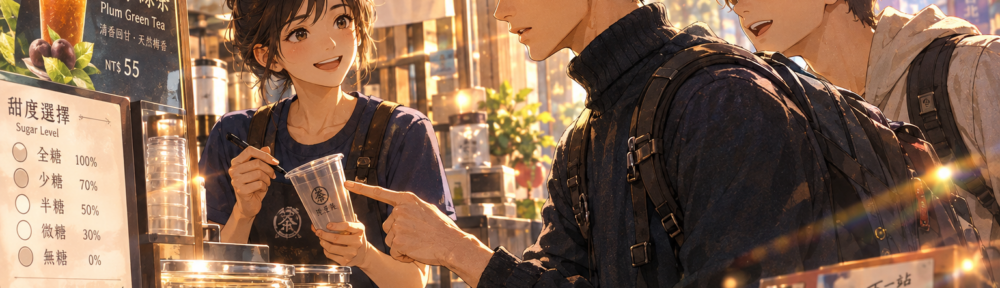
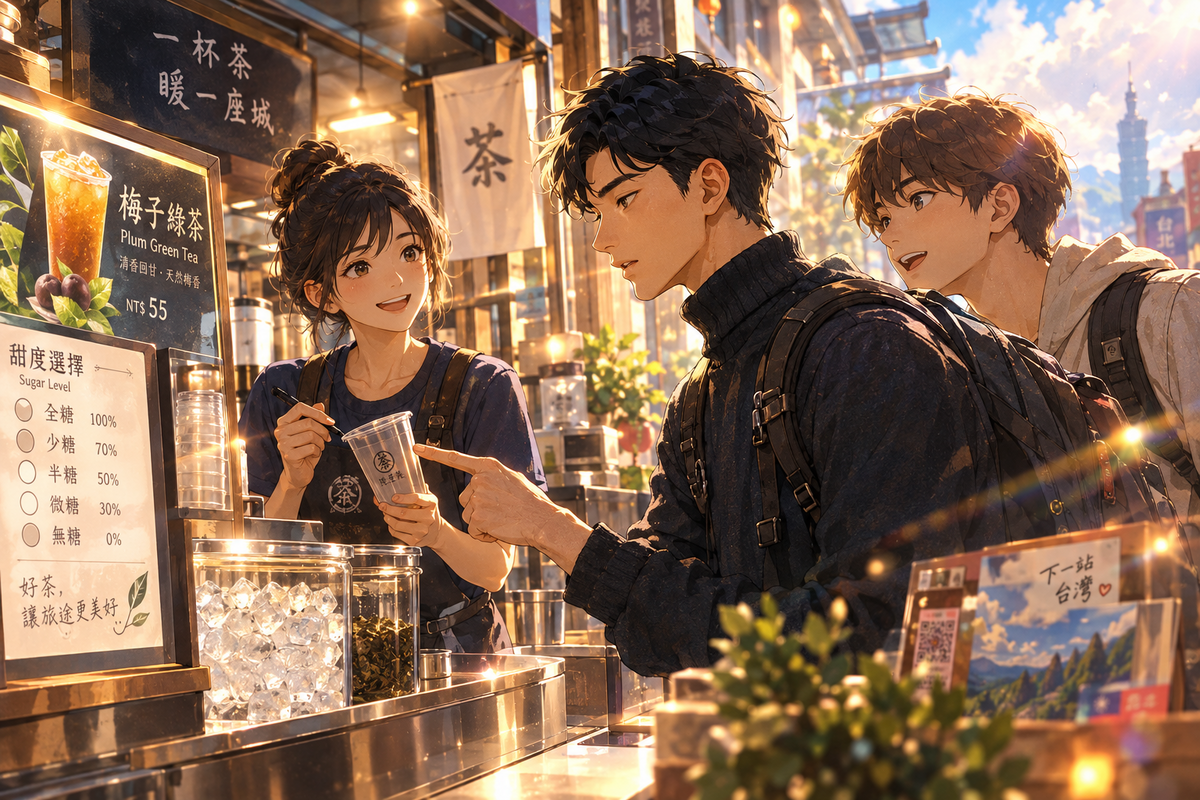
一位日本旅客站在手搖飲櫃檯前,手指停在菜單上的「梅子綠茶」,店員抬頭問:「甜度冰塊?」旅客回頭看同伴,同伴也回頭看他。三道視線在半空中繞了一圈,沒有人接話。
這一幕在櫃檯後面看了很多遍。問題從來不在茶,茶已經選好了。卡住的是那個還沒被翻譯過的字:糖度。
四個字,其實是同一把尺
清心福全官方中文頁的梅子綠茶頁面,把這件事寫得很乾脆:表格裡的「糖分」,也就是無糖、微糖、半糖、少糖,是現場調製時添加「甘蔗液糖」量的點餐選項。這四個詞量的是師傅手上多加了多少糖漿,不是整杯飲料最後測出來的含糖量。
這個差別,是旅客最容易誤讀的地方。「無糖」聽起來像一杯零糖的飲料,頁面的說法卻是:它只指現場沒有再加糖。茶裡的話梅、整杯配方裡的其他成分,不在這個詞的管轄範圍內。頁面上列出的原料有特級綠茶茶葉、話梅、甘蔗液糖和半月形冰塊,哪一項帶多少甜,點餐的那個詞不負責回答。
另一個細節更反直覺:這款梅子綠茶的最高甜度是「少糖」。習慣上以為「全糖」會排在最上面,這一頁的菜單卻不這麼排。第一次來的旅客若把「少糖」當成「已經減過了」,會發現官方的說法正好反過來,少糖就是這款的頂格。
把櫃檯變成一場考試
換個角度看,這種點餐方式很像一份小考卷,題目只有兩題:糖,和冰。答案不需要長篇大論,一個詞就夠。難的只是第一次,不知道那個詞存在。
所以那位日本旅客的故事,可以有第二幕。第一杯,他指著菜單說「這個」,拿到店員幫他決定的版本,喝完覺得不錯,也說不上為什麼不錯。第二天換了一家店,進門前先在手機上查了四個字的順序,走到櫃檯,聽到「甜度?」的瞬間,直接接上:「少糖。」店員點頭,筆在杯身上畫了一下。
杯身上那一筆很重要。手搖飲是現場手工調製,頁面也坦白寫著,實際熱量會因人為操作誤差而略有增減。糖度選項是一個約定,不是一把游標卡尺。記號畫在杯子上,後面的師傅才知道這杯該怎麼做。
冰量,各店的規矩不一樣
冰塊那一題,各家店的選項與說法不盡相同,菜單上怎麼排,以現場看到的那一張為準。這一頁還有一行小字:本產品可做溫、熱飲,熱飲請小心燙口。想避開冰塊的旅客,櫃檯上其實還有第三條路,只是不少旅客根本沒想到可以問。
敢開口問的,是已經被問過一次的旅客。第一次點餐的窘,換來的是第二次說得出口的那個詞。
下一次站到櫃檯前,先決定「糖」,再決定「冰」,然後把兩個詞各說一遍,店員會在杯子上畫下去。
— 周子恩
The Counter Question That Stumps Every Traveler
A Japanese traveler stands at a hand-shaken drink counter, finger resting on “plum green tea” on the menu. The clerk looks up: “Sweetness? Ice?” The traveler turns to a friend. The friend turns back. Three sets of eyes make a lap in mid-air, and nobody answers.
The tea was never the problem. It was already chosen. What stalls the order is a word nobody translated: sweetness level.
Four words, one ruler
The official Chinese page for Plum Green Tea at Chingshin is blunt about it. The “sugar” column in the table, meaning no sugar, slight sugar, half sugar and less sugar, refers to the amount of cane liquid sugar added on-site when the drink is made. These four words measure how much syrup the person behind the counter adds. They do not describe the final sugar content of the whole cup.
That is exactly where first-timers misread. “No sugar” sounds like a zero-sugar drink. The page’s wording says it only means no sugar was added at the counter. The salted plum and everything else in the recipe sit outside the word’s jurisdiction. The ingredient list on the page names premium green tea leaves, salted plum, cane liquid sugar and half-moon ice. Which of them contributes how much sweetness is not something the ordering word answers.
A second detail runs against habit: the highest sweetness level for this drink is “less sugar.” Habit places “full sugar” at the top of the ladder. This page’s menu does not stack it that way. A newcomer who hears “less sugar” as “already reduced” has it backwards. For this drink, it is the top rung.
The counter as a two-question quiz
Seen another way, the ordering ritual is a tiny exam with two questions: sugar, and ice. Each answer is one word. The hard part is only the first time, before the word exists in a traveler’s head.
So the Japanese traveler’s story can have a second act. On the first day the traveler points and says “this one,” gets whatever version the clerk picks, enjoys it, and can’t say why. On the second day, at a different shop, the order of the four words has been looked up on a phone. At the counter, the moment “sweetness?” is asked, the answer comes: “less sugar.” The clerk nods and a pen marks the cup.
That mark on the cup matters. These drinks are made by hand on the spot, and the page says plainly that actual calories shift slightly with human variation in handling. The sugar options are an agreement, not a caliper. The note on the cup is how the next person in line behind the counter knows what to make.
Ice differs by shop
Ice options and the way they are worded vary from shop to shop. The menu at the counter is the one that counts. The same page carries one more line in small print: this drink can be made warm or hot, and hot drinks should be sipped carefully. For any traveler who wants to skip the ice, there is a third path at the counter that many travelers never think to ask about.
The travelers who can ask are the ones who have been asked once already. The awkward first order buys the word that comes easily on the second.
Next time at the counter, decide sugar first, ice second, say both words out loud, and watch the pen touch the cup.
— 周子恩
延伸閱讀
- 一間店賣兩個時段,台灣餐飲學會了新算法
- 寶可夢工藝展 台北:屬性是材料,不是貼紙
- 跟著一台投石器走過大崎村落的巷子
- 松園別館 展覽裡的竹帆船,船還沒下水,繩結先上了手
- 石頭在呼吸 花蓮:13公尺的巨石,其實是一袋空氣
https://justfly.idv.tw/s/B1AGNuc