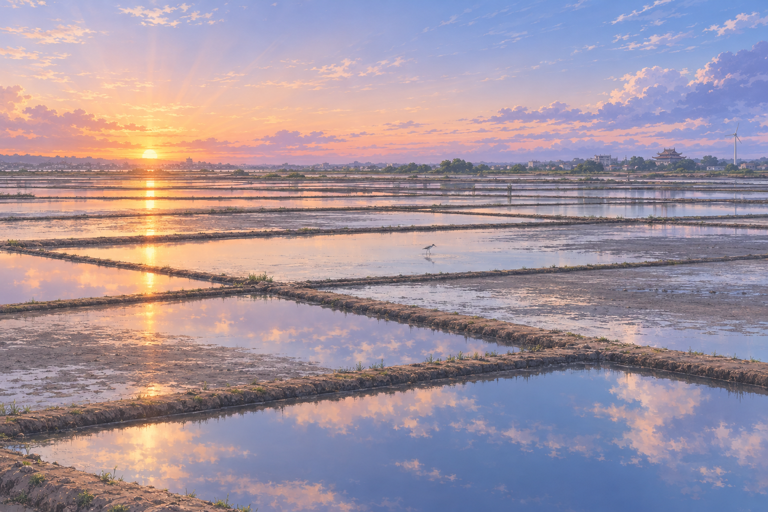
灘地上,一隻諾氏鷸低頭覓食。自由時報報導所附、圖說註明「台南鳥會提供」的那張照片(不是本頁上方的情境示意圖),沒有壯闊的鳥群,沒有起飛的瞬間,只有一隻鳥、一片泥、一層薄水。站在紀錄片導演的位置,這種畫面最難拍,也最值得拍:主角小,背景大,真正在說話的其實是腳下那一層水有多深。
水深是這部片的第一個角色
根據自由時報 2026 年 11 月 12 日的報導,台南市野鳥學會日前在將軍濕地記錄到全球瀕危的諾氏鷸。這種鳥在香港稱小青腳鷸,香港觀鳥會《香港鳥類誌》的物種條目記載牠的 IUCN 等級為瀕危,估計族群只有 600 至 1,300 隻,在鄂霍次克海周邊與庫頁島繁殖,遷徙時行經東亞沿海濕地。本文沒有取得鳥會的原始新聞稿,以下鳥會的說法都出自這篇報導的轉述。其中最適合當旁白的一句是:濕地保育不能只著眼於明星物種,更應維持不同水深、裸露泥灘及淺水域等多樣化環境,提供水鳥覓食與休息的空間。
這句話翻成鏡頭語言很直接。深水一格、淺水一格、泥灘露出來一格,三種地面並排,鳥喙往哪裡伸,就知道哪一格有鳥在用。鹽田原本是為曬鹽切出來的方塊,如今同一批方塊以不同的水位被重新讀取。人工的格子沒有拆,用途換了。
十一年的紀錄,不等於一隻鳥的返鄉
諾氏鷸自 2016 年首次被發現後,已連續 11 年造訪將軍濕地。這是全片最容易被剪壞的一段。「連續十一年」很容易被剪成一隻鳥年年回家的團圓戲,配上弦樂,觀眾落淚。
但報導轉述的鳥會說法很克制:過去多以單隻個體為主,不排除是同一隻候鳥持續返回,目前尚無足夠證據確認。沒有足旗,沒有個體辨識,這部片能成立的敘事,是一個地點十一年都被這個物種使用,而不是某個角色十一年的歸途。後者拍出來好看,但片子裡沒有那樣的證據。字幕該寫的是「連年有紀錄」,不是「牠又回來了」。
報導裡另有一隻琵嘴鷸,左腳繫淺綠色 88 號足旗,2019 年曾在俄羅斯繁殖地繫放。那是另一種鳥、另一條可追蹤的線,剪接時不能把它的故事借給諾氏鷸。
鏡頭外的距離
報導也轉述,鳥會呼籲賞鳥時保持適當距離,避免進入鳥類活動區域。對拍攝者而言,這條等於劃定了機位:長鏡頭、遠處、不踩進灘地。一隻瀕危鳥種值得的畫面,不該靠走近一步換來。
報導還提到,將軍濕地也曾記錄全球極危的琵嘴鷸、瀕危的大濱鷸與黦鷸,以及黑面琵鷺、黑嘴鷗。黦鷸又稱遠東杓鷸(Far-eastern Curlew,學名 Numenius madagascariensis),生物多樣性研究所的新聞稿寫明牠在全球與臺灣的受脅物種紅皮書都屬瀕危級。七股將軍鹽灘濕地復育聯盟每月定期做鳥類調查,2023 年全區記錄 112 種鳥類、9 萬 4701 隻次。這組數字屬於該年度與該調查範圍,放在片尾字卡可以,換算成今年有多少鳥就不行。
至於保育成效,報導把諾氏鷸的紀錄稱為生態保育的重要指標,並沒有證明哪項做法造成了這個結果。片子該拍的是水、泥、鳥喙,以及一行年份:2016。
— 鄭佩玲
When the Salt Pans Left, the Water Level Took the Lead
On a mudflat, a single Nordmann’s greenshank bends to feed. The photo that accompanies the Liberty Times report, credited there to the Tainan Wild Bird Society (not the illustrative image at the top of this page), has no vast flock and no dramatic takeoff, only one bird, one patch of mud, one thin layer of water. From a documentary director’s chair, this is the hardest kind of frame to shoot and the most worth shooting: the subject is small, the setting is large, and what speaks is how deep the water is underfoot.
Water depth is the first character
According to the Liberty Times report of 12 November 2026, the Tainan Wild Bird Society recently recorded the globally endangered Nordmann’s greenshank at the Jiangjun wetland. The Hong Kong Bird Watching Society’s species account lists the bird as Endangered on the IUCN Red List, with an estimated population of 600 to 1,300, breeding around the Sea of Okhotsk and on Sakhalin and passing through East Asian coastal wetlands on migration. This piece did not obtain the society’s original press release; everything attributed to the society below is as relayed by the report. Its most usable line for narration is that wetland conservation should not focus only on star species, but should keep varied habitats such as different water depths, exposed mudflats and shallow water, giving waterbirds room to feed and rest.
That translates directly into camera language. Deep water in one cell, shallow in the next, mud exposed in a third; where the bills go shows which cell is being used. Salt pans were originally cut as squares for making salt. The same squares are now read again through different water levels. The artificial grid was not torn out; its purpose changed.
Eleven years of records is not one bird coming home
Since its first sighting in 2016, the species has visited Jiangjun for eleven years running. This is the easiest passage to cut badly. “Eleven consecutive years” slides into a reunion drama, strings swelling, the audience in tears.
The society’s wording, as the report relays it, is restrained: records have mostly involved a single bird, it cannot be ruled out that it is the same individual returning, but there is not yet enough evidence to confirm it. With no leg flag and no individual identification, the story the film can honestly tell is a place used by a species for eleven years, not a character’s eleven-year journey home. The second makes better cinema, but the evidence is not there. The subtitle should read “recorded year after year,” not “it came back.”
The report also mentions a spoon-billed sandpiper with a light-green flag numbered 88 on its left leg, banded in 2019 at its breeding ground in Russia. That is a different bird with a traceable thread, and its story cannot be borrowed for the greenshank in the edit.
The distance outside the frame
The report also relays the society’s request that birdwatchers keep a suitable distance and stay out of areas where birds are active. For a filmmaker, that line fixes the camera position: long lens, far away, no stepping onto the flats. An endangered species deserves an image that was not bought with one step closer.
The report adds that Jiangjun has also recorded the critically endangered spoon-billed sandpiper, endangered great knot and Far Eastern curlew alongside black-faced spoonbills and Saunders’s gulls. The curlew (黦鷸, Numenius madagascariensis) is classed as Endangered on both the global and Taiwan red lists, according to a Taiwan Biodiversity Research Institute release. A restoration alliance surveys birds monthly across the Qigu–Jiangjun salt flats; in 2023 the whole area logged 112 species and 94,701 bird-counts. Those figures belong to that year and that survey area. They suit an end card, but not a claim about how many birds are there now.
As for conservation results, the report calls the greenshank record an important indicator; it does not show that any single measure caused it. What the film should shoot is water, mud, bills, and one line of text: 2016.
— 鄭佩玲
延伸閱讀
- 金點設計展 松菸:得獎作品搬上餐桌
- 薑母鴨酒測 0.11:一杯湯喝完隨即測到的數字
- 「運將」由來:台語辭典與日文辭典對上了同一個字
- 《遙遠的東方有一群鬼》在吉隆坡:臺馬演員同台,劇本未刻意在地化
- 鸚哥魚 可以吃嗎?菜市場那條青衣的兩種答案
https://justfly.idv.tw/s/dQeGzNW