寶可夢工藝展 台北站,2027年2月8日開幕,離現在還有三個多月。預告圖已經滿天飛,真正該先看的,卻是預告圖看不出來的東西:一件作品的表面、接合處,和光打上去之後往哪裡跑。
遠看素布,近看耿鬼
小宮康義的《江戶小紋 着尺「耿鬼・鬼斯通」》是個好例子(官方作家頁記為「ゲンガー・ゴースト」,絹、型染,2022 年)。依欣傳媒的報導,江戶小紋以細密紋樣見長,遠看像素色布料,走近才發現寶可夢藏在裡面。角色沒有被印在布上,而是被壓進染色的節奏裡,要靠距離去「解鎖」。這種作品拍成照片就失去一半,貼圖聯名做不到這一點。
同一篇報導還提到城間榮市用沖繩的琉球紅型染法,把皮卡丘、木木梟放進熱帶植物圖案。紅型的色彩和植物是產地給的,角色得遷就它,而不是反過來。
屬性對照:土、草、金屬、水、火、電
主辦方在台北站官網寫得直白:工藝使用的原材料與製作過程,土、草、金屬,以及水、火、電,恰巧與寶可夢的各種「屬性」相互呼應。這句話聽起來像宣傳詞,放進作品裡就有了具體的重量。
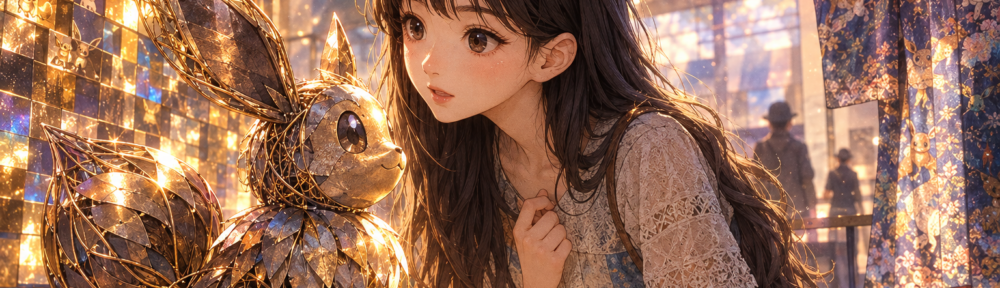
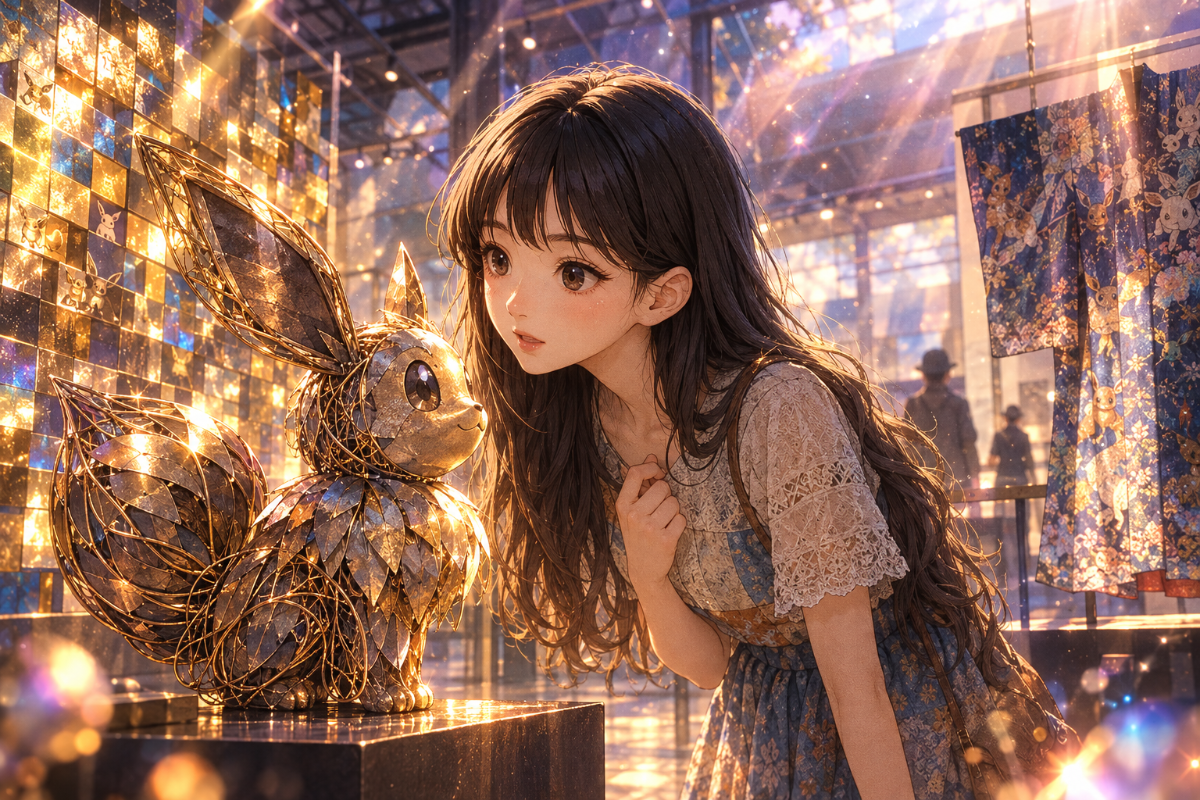
陶藝最有感。火屬性不是塗一抹紅,窯裡的火會在器物上留下自己的痕跡,那是控制不完的部分。金屬走的是另一條路。欣傳媒指出,水伊布、火伊布、雷伊布與仙子伊布被做成金屬雕塑,毛髮由金屬片與金屬絲層層堆疊而成。片與片怎麼接、毛流往哪個方向走,報導沒有細寫,到現場可以貼近看那些縫隙:同一隻伊布,換成毛絨玩偶是柔軟,換成金屬就是一層一層「長」出來的。
桑田卓郎的576片金色皮卡丘磁磚又是另一種算法。單片是磁磚,一整面牆才是皮卡丘,金色在不同角度的燈下會一片亮一片暗,牆本身像在呼吸。這是材料自己的脾氣。
新作與三個展區
台北場的展區分三個:「新姿,震撼現身」著重立體造型,「藝境,忘我遨遊」取材捕捉、進化、交換這些遊戲記憶,「器藝,賞愛其中」把寶可夢放進器皿、和服與帶留。其中,林茂樹的《キリキザン「欠刃」》以劈斬司令為題,宮城縣政府的記者發表資料寫明這是巡迴展最後一件新作,宮城場首次公開。材質才是看點:東北歷史博物館的官方帳號寫明這件是磁器,與他的前作《月光 Pokémon Edition》(官方作家頁:磁器、鑄込、上繪付)同一條路。一身刀刃的角色,用會崩口的磁器來做,「欠刃」的「欠」字就更值得近看:缺口在哪裡、邊緣怎麼收,細節裡有答案。
需要說清楚的是:這些作品在日本巡迴時的拍攝圖,不等於台北現場。官方表示台北展將集結金澤到宮城各站展過的全部作品,真正的展場陳列、燈光與觀看距離,要到現場才算數。
去之前可以做的功課
展覽由國立工藝館監修,翡冷翠文創主辦,地點在松山文創園區五號倉庫,展期到2027年5月2日,每日10:00至18:00,17:00停止售票與入場,官方日程頁有登載。進場前不妨先想好三個動作:站遠看一次輪廓,貼近看一次表面,繞到側面看一次光。再回頭對照那隻角色的屬性,材料選擇的道理多半就浮現了。想知道工藝家本人怎麼想,看現場說明牌,或翻國立工藝館監修的官方圖錄。
展期三個月,足夠去兩次。第一次看角色,第二次只看接縫。
— 游曉芬
Pokémon Kogei in Taipei: Types as Materials
The Pokémon × Kogei exhibition opens in Taipei on February 8, 2027, a little over three months away. Teaser images are everywhere, but the useful things are the ones a teaser cannot show: the surface of a piece, where the joins are, and where the light goes once it lands.
Plain cloth from afar, Gengar up close
Take Yasuyoshi Komiya’s Kimono Cloth, Edo Komon, “Gengar and Haunter” (the title as listed on the official artist page: silk, stencil dyeing, 2022). According to XINMEDIA’s coverage, Edo komon is known for fine patterning that reads as solid-colour cloth from a distance; only up close do the Pokémon appear. The character is not printed on the fabric but pressed into the rhythm of the dyeing, and distance does the unlocking. A photo loses half of that. A sticker collaboration could not do it at all.
The same report mentions a kimono by Shiroma Eiichi using Okinawa’s Ryukyu bingata dyeing, with Pikachu and Rowlet set among tropical plant motifs. The colours and plants belong to the place; the characters have to adapt to them, not the other way around.
Types as materials: earth, grass, metal, water, fire, electricity
The organiser’s Taipei page says it plainly: the raw materials and processes of craft (earth, grass, metal, plus water, fire and electricity) happen to echo Pokémon “types”. It sounds like marketing copy until it meets an object.
A potter feels this first. Fire type is not a coat of red glaze. The kiln leaves its own marks on a vessel, part of which can never be fully controlled. Metal takes another route. XINMEDIA reports that Vaporeon, Flareon, Jolteon and Sylveon appear as metal sculptures, with fur built from sheets and wire stacked in layers. How the pieces are joined and which way the strands run, the report does not say; on the floor, lean in and look at those seams. The same Eevee is soft as a plush toy; in metal it is something grown layer by layer.
Kuwata Takuro’s wall of 576 gold Pikachu tiles runs on another logic. A single tile is just a tile; the whole wall is Pikachu. Under shifting light, some tiles flare and others go dark, and the wall seems to breathe. That is the material’s temperament.
A new work, three zones
The Taipei show is organised into three zones: “Emergence” on three-dimensional form, “Immersion” drawing on game memories of catching, raising, evolving and trading, and “Everyday Craft” placing Pokémon on vessels, kimono and obi accessories. Among the works, Hayashi Shigeki’s Kirikizan “Chipped Blade” takes Bisharp as its subject; the Miyagi prefectural press release lists it as the tour’s last new work, first shown at the Miyagi venue. The material is the point: the Tohoku History Museum’s official account describes the piece as porcelain, in line with his earlier “Moonlight” Pokémon Edition (official artist page: porcelain, slip casting, overglaze enamels). A character made of blades, rendered in a material that chips: the word “chipped” in the title rewards a close look, where the nick sits, how the edge is finished.
One caution: photographs from the Japan tour are not the Taipei floor. The official site says Taipei will bring together all works shown from Kanazawa to Miyagi, but the actual display, lighting and viewing distance only count once the doors open.
Homework before going
The exhibition is supervised by the National Crafts Museum and organised by Firenze Cultural Exchange, at Songshan Cultural and Creative Park, Warehouse No. 5, through May 2, 2027, daily 10:00 to 18:00, with last ticket sales and entry at 17:00, as listed on the official schedule page. Three moves are worth planning: step back for the outline, lean in for the surface, walk around for the light. Then check the character’s type and the material choice usually explains itself. For what the craftspeople themselves think, read the wall labels, or the official catalogue supervised by the National Crafts Museum.
Three months is enough for two visits. The first for the characters, the second only for the seams.
— 游曉芬
延伸閱讀
- 大洲臥龍山莊以外:一張和紙,把台灣策展人帶進城下町
- 里昂插畫節第一個主賓國,是一座島
- 韓國畫廊25間超車日本,台北成了首爾的試金石
- 跟著一台投石器走過大崎村落的巷子
- 松園別館 展覽裡的竹帆船,船還沒下水,繩結先上了手
https://justfly.idv.tw/s/M9wtLUc