
2025年12月,台灣北方海域出現2,000艘中國漁船,排列成長達300公里的蛇形陣列。船隻維持固定位置,沒有正常捕魚航跡。這不是漁汛,這是一堵牆——只是這堵牆的建材看起來像漁網、聞起來像魚腥。
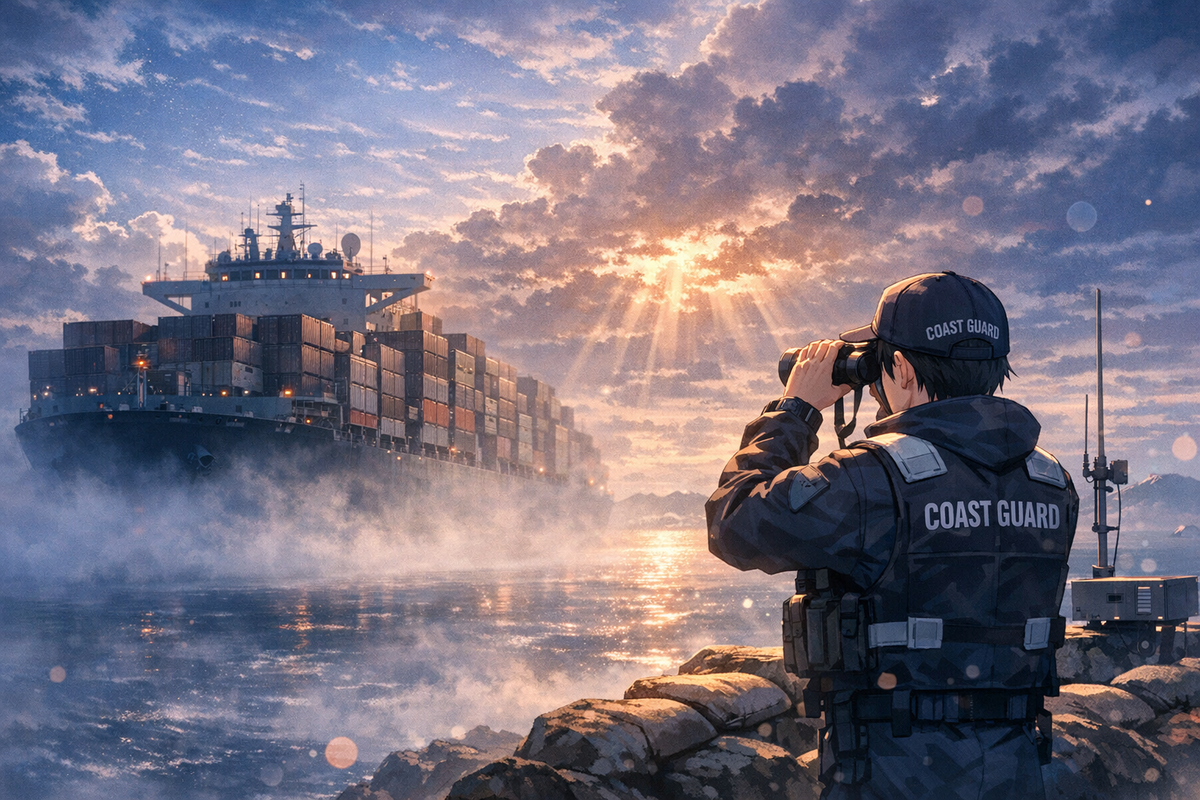
「動旦79號」的存在讓這個問題更難回答。根據中國軍事雜誌的分析,解放軍研發的集裝箱驅逐艦(Container Destroyer)可以在標準貨輪的貨櫃中隱藏飛彈發射架與偵察設備,外觀與商業貨船無異。你在高雄港外看到一艘散裝貨輪,用眼睛是看不出它是否裝載著對地攻擊飛彈的。這是設計好的。它的目標不是更強大,而是讓你根本認不出來。
礁石變機場,十年沒人宣戰
南海Antelope礁的變化是另一條時間軸上的同一種邏輯。2016年到2026年,一塊退潮才露出水面的礁石,在十年內長出人工島、停機坪、深水港。2026年4月,衛星影像顯示Antelope礁啟動了十年來最大規模的建構工程,施工範圍涵蓋人工島擴建、停機坪升級及港口深化。沒有任何一天有人宣布開戰,但礁石已經是機場了。
這種轉變沒有戲劇性的時間點可以標記。它不是閃電戰,它是地質時間——慢到你習慣它的存在之前,它已經完成。
三個看不見的洞
台灣面對這種「非線性武裝化」,有三個具體的感知缺口。第一是情報判斷能力:如何從船舶自動識別系統(AIS)的數據中分辨商業船隊與偽裝艦艇?ISW與AEI的聯合報告指出,自2025年8月起,中國漁船在台灣專屬經濟區內廣播假的AIS信號,偽裝成俄羅斯軍艦、法國軍艦、中國海警船。更嚴重的是,ISW-CDOT於2026年2月23日評估,中國可能已將至少一個AIS設備走私進台灣,從台灣港口廣播假的中國船隻信號。
第二是太空監測能力:Antelope礁的建設需要即時衛星影像才能追蹤,而台灣目前對南海島礁的即時監測能力有限。第三是海底感知:水下鏈式感測網絡可以追蹤艦艇動向,但這需要龐大的基礎建設投資,且效果不在武器庫裡,它在數據中心。
這三項缺口有個共同之處:傳統武器預算無法填補它們。買一艘驅逐艦對應的是另一艘驅逐艦;買情報能力、衛星頻寬、海底感測網絡,對應的是「你能看見什麼」——這是完全不同的採購邏輯,也是完全不同的政治語言。
翟山坑道的年代,威脅是有形狀的
金門翟山坑道建於冷戰時期,是挖入花崗岩的地下船塢,設計用途是讓登陸艇在炮擊中存活。那個年代的軍事邏輯非常直接:你知道炮從哪裡來,你就挖洞躲。澎湖90座島嶼散布台灣海峽,作為台灣西側最重要的海上屏障,其地理邏輯也是清晰的——你守住這些島,你就守住了進入台灣本島的距離。馬祖列島地理上比台灣本島更接近中國大陸,在那個年代,「接近」就意味著「危險」,邏輯鏈清晰。
今天,翟山坑道已成為歷史記憶建築對外開放。那種「威脅有形狀、有方向、有聲音」的年代,某種程度上是可以應對的年代。台灣國防部於2026年4月28日證實,兩艘中共軍艦在澎湖群島西南海域出現,隨即調派兵力監控——這是看得見的威脅,有可以執行的應對程序。
但「動旦79號」在商業航道上行駛時,它不會觸發任何警報。Antelope礁的施工船隻,在某個時間點上與正常疏浚船沒有外觀差異。走私進台灣港口的AIS設備,廣播的信號在系統裡看起來像正常數據。
民主社會的感知問題
一個研究集體感知的人必須問這個問題:當威脅的外觀與日常生活完全相同時,民主社會如何形成對威脅的共識?
威權體制可以用命令要求社會維持警戒狀態。民主社會需要「看見」才能「相信」,需要「相信」才能授權資源。但這一代的威脅設計原則,恰好是讓你什麼都看不見。
Brookings的研究指出,中國灰色地帶行動以非對稱方式系統性測試台灣海防應變能力。「系統性測試」是一個溫和的說法。它的實際意思是:對方在持續校準你的感知底線,看你什麼時候反應,看你的反應成本多高,然後調整到你剛好不會反應的那個刻度。
台灣需要一套社會可以理解、可以授權、可以問責的感知基礎建設——情報透明度、衛星數據的公民取用、對海上異常的集體辨識能力。這些東西沒有一項出現在傳統的國防預算標題下。
一艘貨輪停在港外。它可能只是在等待卸貨的窗口。也可能不是。我們現在沒有能力區分這兩種可能——這才是最需要被看見的問題。
— 施郁雯
That Cargo Ship in the Harbor Might Be a Warship
In December 2025, two thousand Chinese fishing vessels appeared north of Taiwan, arranged in a serpentine formation stretching three hundred kilometers. The boats held fixed positions. No one was fishing. This was a wall — built from materials that look like fishing nets and smell like the sea.
The existence of what Chinese military journals call the Container Destroyer makes this harder to answer. The People’s Liberation Army has developed a system to conceal missile launchers and surveillance equipment inside standard shipping containers aboard ordinary cargo vessels. Standing on the Kaohsiung waterfront, you cannot tell by looking whether a bulk carrier is carrying soybeans or surface-attack missiles. That indistinguishability is the design goal — not power, but unrecognizability.
Reef to Runway, No Declaration of War
Antelope Reef in the South China Sea follows the same logic on a different timeline. Between 2016 and 2026, a shoal that barely clears the water at low tide grew an artificial island, runway, and deepwater port. In April 2026, satellite imagery showed the largest construction activity at Antelope Reef in a decade — expanded island footprint, upgraded airstrip, deepened harbor. No single day had a declaration. The reef is now an airport.
This transformation has no dramatic timestamp. It is not a blitzkrieg. It moves at geological speed — slow enough that the finished fact arrives before anyone thought to object to it.
Three Invisible Gaps
Taiwan faces three concrete intelligence deficits against this kind of non-linear militarization. First: distinguishing commercial fleets from disguised warships. A joint ISW-AEI report documents that since August 2025, Chinese fishing vessels have been broadcasting false AIS signals inside Taiwan’s exclusive economic zone, impersonating Russian warships, French warships, and Chinese coast guard vessels. More seriously, an ISW-CDOT assessment from February 23, 2026 concluded that China may have already smuggled at least one AIS device into Taiwan — broadcasting fabricated Chinese vessel signals from inside Taiwan’s own ports.
Second: real-time satellite coverage of South China Sea construction. Tracking Antelope Reef’s expansion requires persistent overhead imagery that Taiwan currently lacks at sufficient resolution and cadence. Third: undersea sensor networks to track submarine movements. Each of these gaps requires a fundamentally different procurement logic than buying a destroyer to counter another destroyer. You cannot buy your way to situational awareness with a weapons budget line. The political language for this kind of investment does not yet exist in most defense debates.
When Threats Had Shapes
Zhaishan Tunnel in Kinmen was carved into granite to shelter landing craft from artillery barrages. The Cold War military logic was direct: you know where the shells come from, so you dig. Penghu’s ninety islands scattered across the Taiwan Strait formed a western maritime barrier whose strategic geometry was legible — hold the islands, control the approach distances. Matsu’s position, geographically closer to mainland China than to Taiwan proper, made proximity synonymous with danger in a way everyone could map.
Zhaishan is now a heritage site. That era, when threats had shapes and directions and sounds, was at least an era of manageable recognition. On April 28, 2026, Taiwan’s Ministry of National Defense confirmed two PLA warships appeared southwest of Penghu; Taiwan scrambled naval vessels and air assets to monitor them. Visible threat, executable response protocol.
The Container Destroyer traveling a commercial shipping lane triggers no such protocol. The construction vessel at Antelope Reef, at some point in its work, was visually indistinguishable from a normal dredging ship. The smuggled AIS device broadcasting from a Taiwan port looks, in the data stream, like a normal data point.
A Democracy’s Perception Problem
When a threat’s appearance is identical to ordinary civilian life, how does a democratic society build consensus that a threat exists at all? Authoritarian systems can mandate vigilance by decree. Democracies require seeing before believing, and believing before authorizing resources. The current generation of gray-zone tactics is engineered precisely around that requirement — calibrated to stay just below the threshold of visible, reportable, politically actionable evidence.
Brookings research has documented that China’s gray-zone operations systematically test Taiwan’s maritime response capacity through asymmetric means. The operative word is systematic: the other side is continuously calibrating your perception threshold, finding the frequency at which you do not respond, then operating at that frequency.
Taiwan needs not just weapons but a publicly legible intelligence infrastructure — one that citizens can understand, authorize, and hold accountable. Satellite data access, maritime anomaly recognition, transparent assessment of what is and is not known. None of these appear as standard line items in a conventional defense budget.
A cargo ship sits outside the harbor, waiting for a berth. It may be waiting to unload. It may not be. The fact that we currently cannot tell the difference is the problem that most needs to be seen.
— 施郁雯
延伸閱讀
https://justfly.idv.tw/s/7hidgsL