4月27日,玻里尼西亞航行學會(PVS)執行長 Nainoa Thompson 站在台灣,向接待方表達,每次來到台灣都像回家一樣。
這句話不是外交辭令。Thompson 是夏威夷最重要的傳統航海復興者,用星象導航橫越太平洋的那種人。他口中的「家」,指向一個台灣人自己幾乎遺忘的事實:台灣東海岸,是整個太平洋文明的出發點。
3.86 億人的源頭,在花蓮
語言學、考古學、基因學三條研究路線,在過去數十年間各自收斂,最終指向同一個地點:台灣東部的航海原住民族群。南島語族今天分布從馬達加斯加到夏威夷,橫跨印度洋與太平洋,涵蓋約3.86 億人口。這個龐大的語族網絡,約 4000 年前從台灣東岸出發。
最新語言學研究推翻了過去50年的部分共識,發現馬來-玻里尼西亞語支並非獨立分化,而是從台灣東部某原住民族群直接衍生。考古證據顯示,南島語族在台灣停留約1000年後,才開始向外遷徙。花蓮附近的阿美族人,在基因與語言意義上,是夏威夷人、毛利人、薩摩亞人最近的親緣族群。
阿美族今天約有 22 萬人,是台灣16族原住民中人口最多的一族。台灣原住民總人口約 61 萬(2024 年底原民會統計),說著南島語系在全球分布最北端的語言。語言學家認為,這些語言保留了數千年前的「原始南島語」(proto-Austronesian)的特徵——那是所有南島語族共同祖先說的話。
語言正在消失,儀式還在
但現實很殘酷。能流利使用母語的多為長者,年輕世代則普遍以華語為主,世代之間有明顯斷層。2017 年《原住民族語言發展法》將原住民語言列為國家語言,與華語並列,但法律的宣示和教室裡的真實之間,仍隔著相當距離。
花蓮光復鄉太巴塱部落的阿美族收穫祭Ilisin,每年7到9月仍在舉行,已傳承數百年。這個儀式幾乎是台灣最可見的原住民文化實踐,但大多數去花蓮旅遊的台灣人,並不知道參與者的祖先,曾是太平洋最偉大的航海文明的源頭。
Hōkūleʻa要回來了
Thompson 此次率領 PVS 與 Kamehameha Schools 代表團完成10天台灣文化踏查,走訪花蓮阿美族、台東卑南族、蘭嶼達悟族部落,在台灣原住民族文化發展中心與原住民族委員會既有合作協議框架下完成此次踏查。這不是學術交流,是航海民族的認祖歸宗。
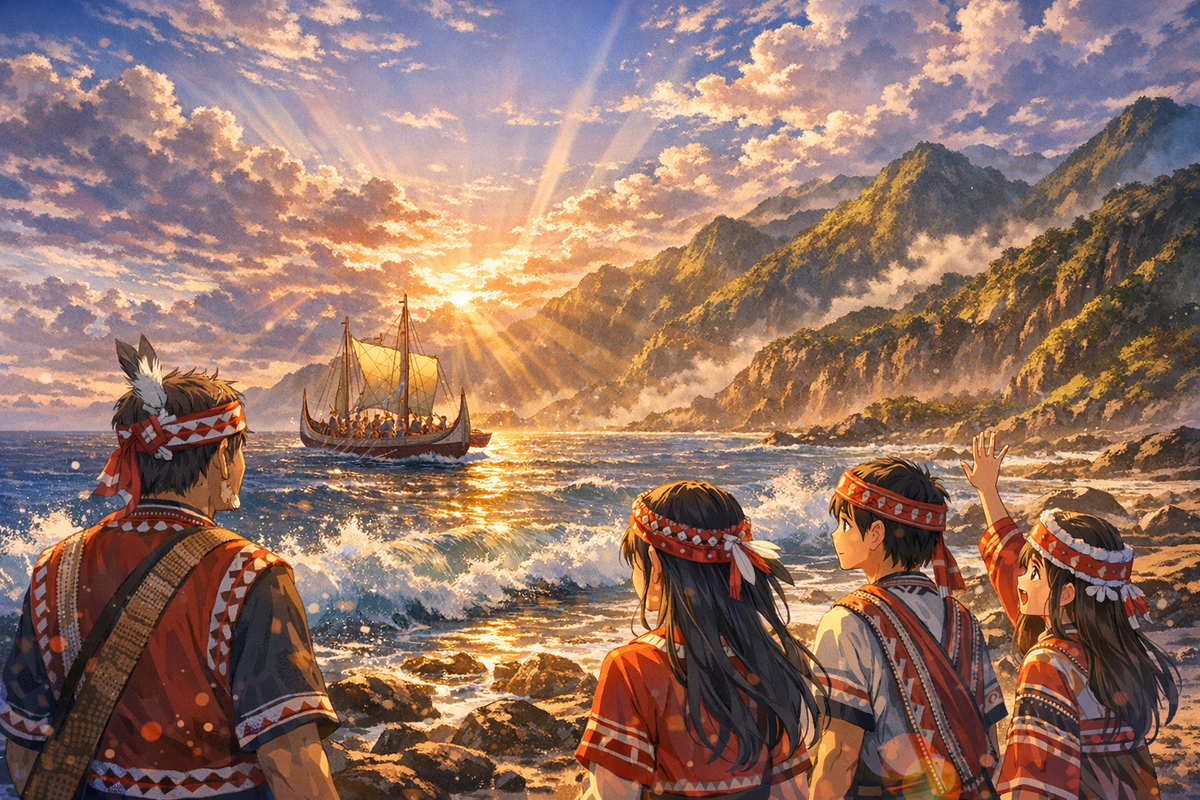
PVS 的旗艦雙體獨木舟 Hōkūleʻa,建於1975年,曾完成全球海洋航行,是夏威夷原住民文化復興的物質象徵。2027年春季,Hōkūleʻa 預計正式訪台——這將是「台灣為南島語族原鄉」論述第一次以船的形式抵達台灣東海岸。港口候選點據報包括高雄與台東。
Kamehameha Schools 執行文化官 Randie Fong 在此次訪問中將此行形容為回到南島語族離散群體的祖國。這句話從一位夏威夷原住民口中說出,意義和台灣政府官員說「我們是南島語族原鄉」完全不同。那是族人回家,不是主人介紹自己家。
台灣不知道自己是誰
過去幾十年,台灣的自我敘事反覆在「中華民國」與「台灣主體意識」之間拉鋸,偶爾提及南島語族,但大多停在觀光文宣的層次。然而,全球有3.86 億人口的語言與文化,在學術意義上指向台灣東海岸作為起點——這個事實的重量,台灣社會還沒有認真消化。
當 Thompson 形容此行像回家,他說的是一個橫跨數千年的回家。台灣東海岸的那些部落、那些快要失傳的語言、那些每年夏天的祭儀,不只是「文化資產」,是3.86 億人的源碼。
Hōkūleʻa 預計2027年春季到來。在它抵達之前,也許值得先問:我們準備好如何迎接了嗎?
— 葉知舟
When Polynesia Says Taiwan Feels Like Home
On April 27, Nainoa Thompson — executive director of the Polynesian Voyaging Society and the navigator who crossed the Pacific by stars — stood in Taiwan and told his hosts that every visit to Taiwan feels like coming home.
That is not a diplomatic courtesy. Thompson’s “home” points to a fact that most Taiwanese people have quietly forgotten about themselves.
386 Million People, One Origin Point
Linguistics, archaeology, and genetics have each, independently, converged on the same location: the seafaring indigenous peoples of eastern Taiwan. The Austronesian language family today spans from Madagascar to Hawaii, encompassing roughly 386 million people. That entire network traces back to Taiwan’s eastern coast, roughly 4,000 years ago.
Recent linguistic research overturned parts of a fifty-year-old consensus, finding that the Malayo-Polynesian branch did not diverge independently — it emerged directly from an indigenous group in eastern Taiwan. Archaeological evidence suggests Austronesian peoples remained in Taiwan for around 1,000 years before dispersing outward. The Amis people of Hualien, in genetic and linguistic terms, are the closest living relatives of Hawaiians, Māori, and Samoans.
The Amis number approximately 220,000 today — the largest of Taiwan’s 16 officially recognized indigenous peoples. Taiwan’s total indigenous population stands at approximately 610,000 (end of 2024, Council of Indigenous Peoples), speaking languages that represent the northernmost distribution of the Austronesian family on earth. Linguists consider these languages to preserve features of proto-Austronesian, the common ancestral tongue spoken roughly 4,000 years ago.
The Language is Fading. The Ritual Holds.
The reality is stark: fluency in indigenous mother tongues is concentrated among elders, while younger generations have largely shifted to Mandarin, leaving a generational gap. The 2017 Indigenous Languages Development Act elevated indigenous languages to the status of national languages alongside Mandarin, yet the legal declaration and the classroom reality remain considerably apart.
The Amis harvest festival Ilisin, held annually between July and September, has continued at the Tafalong community in Hualien’s Guangfu Township for hundreds of years. Most Taiwanese tourists who visit Hualien do not know that the people performing that ritual are, by the reckoning of modern science, the ancestors of Pacific civilization.
The Canoe Is Coming Back
Thompson led the PVS and Kamehameha Schools delegation through a ten-day cultural survey — visiting Amis communities in Hualien, Puyuma communities in Taitung, and the Tao people of Orchid Island — under an existing cooperative framework with the Indigenous Peoples Cultural Development Center and the Council of Indigenous Peoples. This is not an academic exchange. It is a homecoming by descent.
PVS’s flagship double-hulled canoe Hōkūleʻa, built in 1975, has completed a circumnavigation of the world’s oceans. It is the physical embodiment of Hawaiian indigenous cultural revival. The canoe is scheduled to visit Taiwan in spring 2027 — the first time the “Out of Taiwan” thesis will arrive in Taiwan by boat. Candidate ports reportedly include Kaohsiung and Taitung.
Kamehameha Schools executive cultural officer Randie Fong described arriving in Taiwan as a return to the homeland of the Austronesian diaspora. That sentence, spoken by a Native Hawaiian rather than a Taiwanese government official, carries a different kind of authority. It is a family member identifying the house, not the owner giving a tour.
Taiwan Doesn’t Know What It Is
For decades, Taiwan’s self-narrative circled between competing political identities, touching on Austronesian heritage mostly in tourism brochures. But a linguistic family of 386 million people points to Taiwan’s eastern coast as its origin. The full weight of that fact has not yet landed in Taiwanese public consciousness.
When Thompson describes the visit as a homecoming, he is invoking a homecoming spanning thousands of years. The communities along Taiwan’s east coast, the languages nearly gone, the midsummer rituals that persist — these are not “cultural assets.” They are source code for 386 million people.
Hōkūleʻa is scheduled to arrive in spring 2027. The question worth asking now is whether Taiwan will know how to receive it.
— 葉知舟
延伸閱讀
https://justfly.idv.tw/s/fTwL9vT