
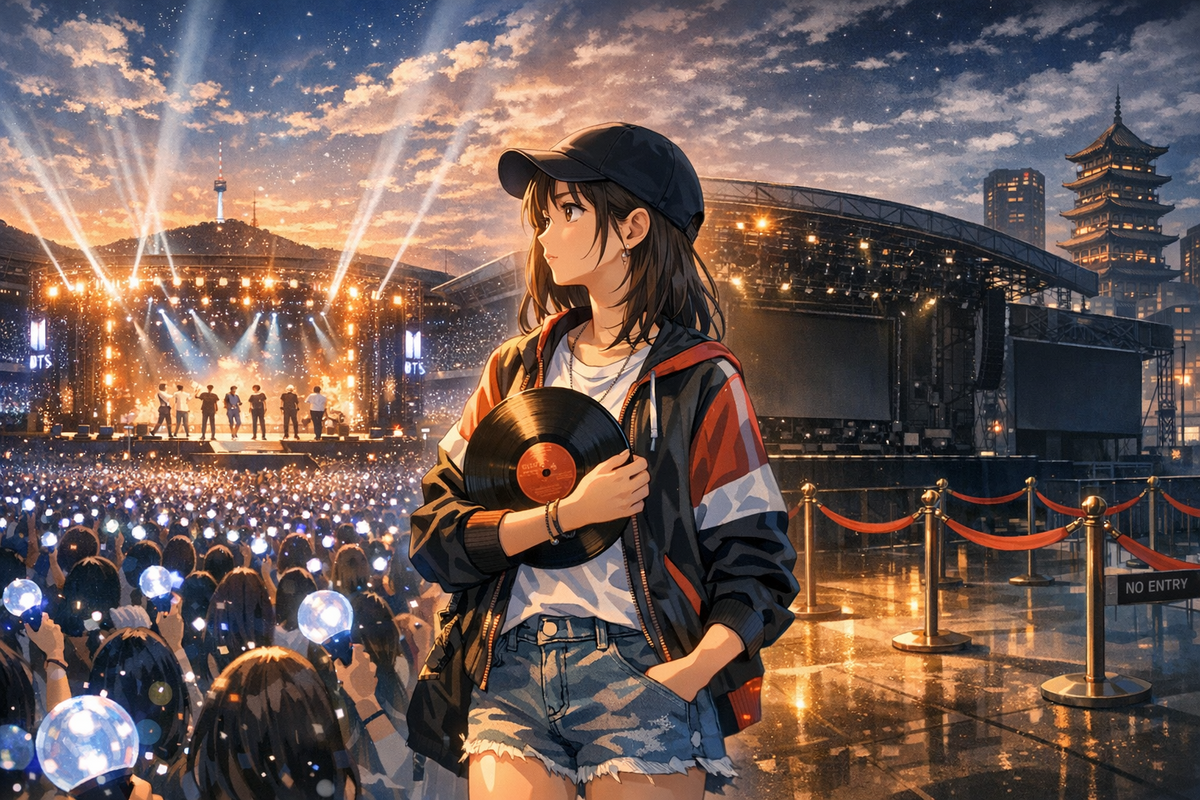
2026年BTS世界巡演地圖上,首爾有、東京有、洛杉磯有,唯獨北京和上海是空白。這不是票房考量,是十年文化封鎖的直接後果。
限韓令從2016年薩德飛彈防禦系統部署爭議開始,北京從未正式宣告、從未透過法律文件公布,卻實實在在讓韓星消失在中國螢幕上。沒有官方文件可引述,只有韓綜突然下架、韓星演唱會突然取消、韓劇突然停播。這種「不存在的禁令」運作至今從未撤銷,BTS的缺席只是最新一個證據。
封鎖的反效果:強制全球化
限韓令啟動那年,HYBE和SM娛樂開始系統性轉向:美國市場、拉丁美洲、東南亞。結果?韓國2024年文化內容輸出額達146億美元,K-pop在Spotify全球串流榜單佔據前排位置,BTS成為首個登上Billboard榜首的韓國團體。中國粉絲想看演唱會?飛首爾、飛東京、飛曼谷。封鎖沒有扼殺韓流,反而訓練出一批跨境消費能力極強的海外粉絲群。
這和北京的預期完全相反。原本想透過市場准入來控制文化內容,結果逼迫韓國娛樂產業建立了一套完全繞過中國的全球供應鏈。現在K-pop根本不需要中國市場也能活得很好,甚至活得更好——因為不用再自我審查、不用配合官方敘事、不用擔心哪句歌詞會踩線。
台灣的1999與2025
1999年台灣唱片市場規模約新台幣150億元,全台有3,000多家唱片行,周杰倫首張專輯在台銷量破30萬張,五月天《人生海海》賣出50萬張。那時台北是華語流行音樂的世界中心,demo帶從香港、新加坡、吉隆坡寄來,製作人在師大路錄音室通宵混音。
到了2005年市場萎縮至不足50億元。不是盜版殺死唱片業——是整個產業把賭注押在中國市場,以為十四億人口就是無限商機。結果呢?台灣歌手開始在歌詞裡迴避敏感詞、演唱會上不敢講政治、專輯企劃要先過審。市場是拿到了,但創作自由沒了,產業主導權也沒了。
諷刺的是,台灣在2005年推出KKBOX,全球第一個合法音樂訂閱串流平台,比Spotify早好幾年。技術有、創意有、市場敏銳度有,唯獨缺一個戰略決定:不要把所有雞蛋放在中國那個籃子裡。
限韓令是教材不是警告
BTS跳過中國不是損失,是示範。當一個市場的准入條件是放棄editorial control、接受政治審查、隨時可能因為地緣政治被下架,那這個市場的價值就要重新計算。韓國娛樂產業用十年時間證明:失去中國市場不會死,反而可能活得更自由、更有創造力、更國際化。
台灣音樂產業現在還有獨立場景、台語復興、電子音樂輸出,但規模和系統性遠遠不及韓國。台灣IP產業規模僅約日本的1/220。差距不在才華,在策略——我們需要的不是另一個爆紅歌手,是一套不依賴單一市場、能把創作轉化為跨境商業價值的產業架構。
限韓令十年,BTS照樣賣爆全球。這不是韓國的勝利,是所有小型文化輸出經濟體的參考答案。
— 葉貞凡
BTS Skips China: A Decade of Cultural Blockade and Taiwan’s Lesson
The 2026 BTS world tour map shows Seoul, Tokyo, Los Angeles—but Beijing and Shanghai remain blank. This isn’t about ticket sales. It’s the direct consequence of a decade-long cultural blockade.
The “Korean ban” (限韓令) began in 2016 over the THAAD missile defense system dispute. Beijing never officially announced it, never issued legal documentation, yet Korean stars vanished from Chinese screens. No official documents to cite—just Korean variety shows suddenly pulled, concerts abruptly canceled, dramas quietly removed. This “non-existent ban” has operated ever since, never lifted. BTS’s absence is merely the latest proof.
The Backfire Effect: Forced Globalization
The year the ban started, HYBE and SM Entertainment systematically pivoted: U.S. market, Latin America, Southeast Asia. Result? South Korea’s cultural content exports hit $14.6 billion in 2024. K-pop dominates Spotify global charts. BTS became the first Korean act to top the Billboard 200. Chinese fans who want concerts? Fly to Seoul, Tokyo, Bangkok. The blockade didn’t kill Hallyu—it trained a generation of cross-border consuming superfans.
This is the opposite of Beijing’s intention. What was meant to be market-access leverage to control cultural content instead forced the Korean entertainment industry to build a global supply chain that completely bypasses China. Now K-pop thrives without the Chinese market—arguably better, because there’s no more self-censorship, no need to align with official narratives, no fear of which lyric might cross a line.
Taiwan’s 1999 and 2025
In 1999, Taiwan’s music market was worth NT$15 billion, with over 3,000 record stores nationwide. Jay Chou’s debut album sold 300,000+ copies in Taiwan alone. Mayday’s “Life of the People” moved 500,000 units. Taipei was the center of Mandopop—demo tapes arrived from Hong Kong, Singapore, Kuala Lumpur; producers mixed tracks all night in Shida Road studios.
By 2005, the market had collapsed to under NT$5 billion. Piracy didn’t kill the industry—strategic dependence on China did. Taiwanese artists started avoiding sensitive lyrics, steering clear of politics at concerts, pre-clearing album concepts. Market access was gained, but creative freedom and industry autonomy were lost.
Ironically, Taiwan launched KKBOX in 2005—the world’s first legal music subscription streaming platform, years before Spotify. The technology existed, the creativity existed, the market instinct existed. What was missing: a strategic decision not to put all eggs in China’s basket.
The Korean Ban as Textbook, Not Warning
BTS skipping China isn’t a loss—it’s a demonstration. When a market’s entry condition is surrendering editorial control, accepting political censorship, and facing potential blacklisting over geopolitics, that market’s value needs recalculation. The Korean entertainment industry spent a decade proving: losing the Chinese market won’t kill you—it might make you freer, more creative, more international.
Taiwan still has vibrant indie scenes, a Taigi music revival, electronic exports—but nowhere near Korea’s scale or systemic approach. Taiwan’s IP industry is roughly 1/220th of Japan’s. The gap isn’t talent, it’s strategy. What’s needed isn’t another viral hit, but an industrial architecture that converts creativity into cross-border commercial value without single-market dependence.
Ten years of the Korean ban, and BTS still sells out globally. This isn’t Korea’s victory—it’s a reference answer for all small cultural export economies.
— 葉貞凡