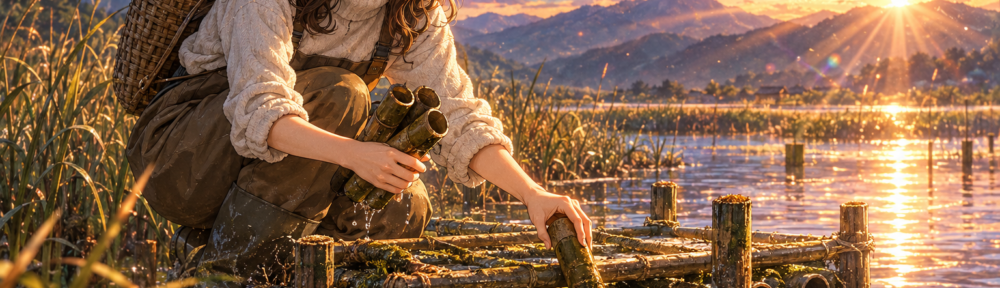

花蓮馬太鞍濕地的水面下,藏著三層結構:最上層是竹枝糾結成的浮台,讓水草攀附;中層是竹筒與樹枝交疊的空隙,魚蝦躲藏產卵;底層沉在泥裡,供螃蟹與泥鰍棲身。這套系統叫巴拉告(palakaw),阿美族用來捕魚,也用來養魚——先讓魚礁把生態養起來,再收成。沒有電魚、沒有毒藤,靠的是竹子和耐心。
這套工藝最近多了一個德文條目。收錄的機構把它與日本滋賀縣琵琶湖「針江生水(Kabata)」並列比較——同樣是引水入屋、人與魚共用一套水系統的生活智慧。兩者被放進同一個框架討論,說明的不是誰模仿誰,而是東亞濕地文化各自摸索出類似答案。
魚礁不是裝置藝術,是分工邏輯
巴拉告的三層設計常被外人誤認成造景,其實每一層都對應不同物種的生活需求。上層淺水通風,中層陰暗適合藏身,底層淤泥留給底棲生物。這種分層思維在阿美族的海域管理裡也看得到:花蓮磯崎部落過去把海域分成潮間帶、一般漁區、外海漁區,各自對應不同使用者與規則。巴拉告只是把同一套分區邏輯,從海洋搬進了濕地。這種依傳統生態知識分層管理棲地的做法,並非阿美族獨有的孤例,泰雅族的森林分層、達悟族的水芋田系統都是同一種思考方式的不同版本。
國立東華大學已經是「國際里山夥伴關係(IPSI)」指導委員會成員,這個由聯合國支持的平台正是巴拉告被放進國際保育視野的入口之一。里山倡議談的是人為介入不等於破壞——適度干擾有時比完全禁止更利於生態多樣性,這點在台灣原住民的森林與海域管理案例裡已經有跡可循。
德文條目背後,是誰在計價
一項工藝被翻成德文,通常代表歐洲的永續消費市場開始把它當成可以被討論、被比較、甚至被採購的對象。巴拉告目前被放進的敘事框架,一頭連著里山倡議這種國際保育網絡,一頭連著綠色旅遊與ESG企業採購的商業邏輯——生態研學遊程、地方風土伴手禮,都是這套語言底下可能長出的產品。台灣觀光單位在美西旅展拿下最佳國際展館獎時,主打的也是同一套敘事:自然景觀加原住民生態智慧,是台灣對外溝通時少數還能打出差異化的牌。
但把千年工藝塞進ESG報表,終究是兩種時間感在拉扯。巴拉告的三層魚礁需要季節等待,魚要自己游進來、自己長大;ESG採購要的是可驗證、可量化、能寫進年報的指標。馬太鞍濕地接下來會不會出現正式的綠色旅遊認證,或者台日之間的里山交流會不會擴大,都還沒有答案。已經確定的只有一件事:一份德文條目,讓阿美族人蹲在濕地邊插竹筒的動作,第一次被寫進了國際保育機構的資料庫。
— 鍾雅筑
Bamboo Fish Traps and the ESG Ledger: Amis Ecology Goes Global
Under the surface of the Matai’an wetland in Hualien, three layers do different jobs. On top, a raft of woven bamboo branches lets water plants take hold. In the middle, gaps between stacked bamboo tubes and twigs give fish and shrimp somewhere to hide and spawn. At the bottom, sunk into the mud, crabs and loaches move in. This structure is called palakaw — an Amis fishing method that doubles as fish farming. No electrofishing, no poison. Just bamboo and time.
The technique recently got a German-language entry in an international database, filed alongside Taiwan’s indigenous ecological knowledge. The same entry places it next to Japan’s Lake Biwa region’s “Kabata” water-channel system in Shiga Prefecture — households built around shared water flowing between kitchen, pond, and river. The comparison isn’t about who copied whom. It’s that wetland cultures across East Asia arrived at similar answers independently.
Three Layers, Not Decoration
Outsiders sometimes mistake palakaw’s three-tier structure for landscaping. Each layer actually answers a different species’ needs — shallow and airy on top, dark and sheltering in the middle, muddy and still at the bottom. The same zoning logic shows up in how Amis communities historically managed coastal waters: in Hualien’s Jiqi area, the intertidal zone belonged to women and elders for gathering, the middle waters were general fishing grounds, and the outer sea was reserved for full-time fishermen. Palakaw takes that same division of space and moves it from ocean to wetland. This isn’t unique to the Amis — Atayal forest zoning and Tao taro-terrace systems follow comparable logic, each shaped by its own environment.
National Dong Hwa University now sits on the steering committee of the International Partnership for the Satoyama Initiative, a UN-backed platform — one of the channels through which palakaw entered international conservation discourse. The Satoyama framework argues that human intervention isn’t automatically harmful; moderate disturbance can support biodiversity better than strict no-touch preservation, a pattern already observed in Taiwan’s indigenous forest and marine management.
Who Pays for a German Entry
When a craft gets translated into German, it usually means Europe’s sustainability-minded consumer market has started treating it as something that can be discussed, compared, even purchased. Palakaw now sits inside two overlapping frames: one is the Satoyama conservation network, the other is the commercial language of green tourism and ESG procurement — ecological study tours, local heritage products, the kind of goods that language tends to produce. When Taiwan’s tourism board won a Best in Show award at a Los Angeles travel exhibition, it pitched the same story: natural landscapes plus indigenous ecological knowledge, one of the few genuinely differentiated pitches Taiwan has for external audiences.
Still, fitting a thousand-year-old craft into an ESG spreadsheet pulls against two different clocks. Palakaw’s three-tier reef needs a season to work — fish swim in and grow on their own schedule. ESG procurement wants something verifiable, quantifiable, ready for an annual report. Whether Matai’an wetland eventually gets a formal green-tourism certification, or whether exchange between Taiwan and Japan’s satoyama networks expands, remains open. What’s already true: a German-language database entry now records the exact motion of an Amis fisherman crouching at the water’s edge, wedging a bamboo tube into the mud.
— 鍾雅筑
延伸閱讀
https://justfly.idv.tw/s/fdvAWYb