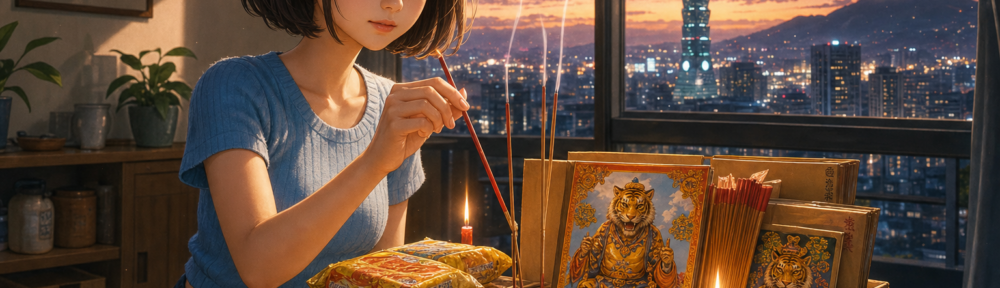
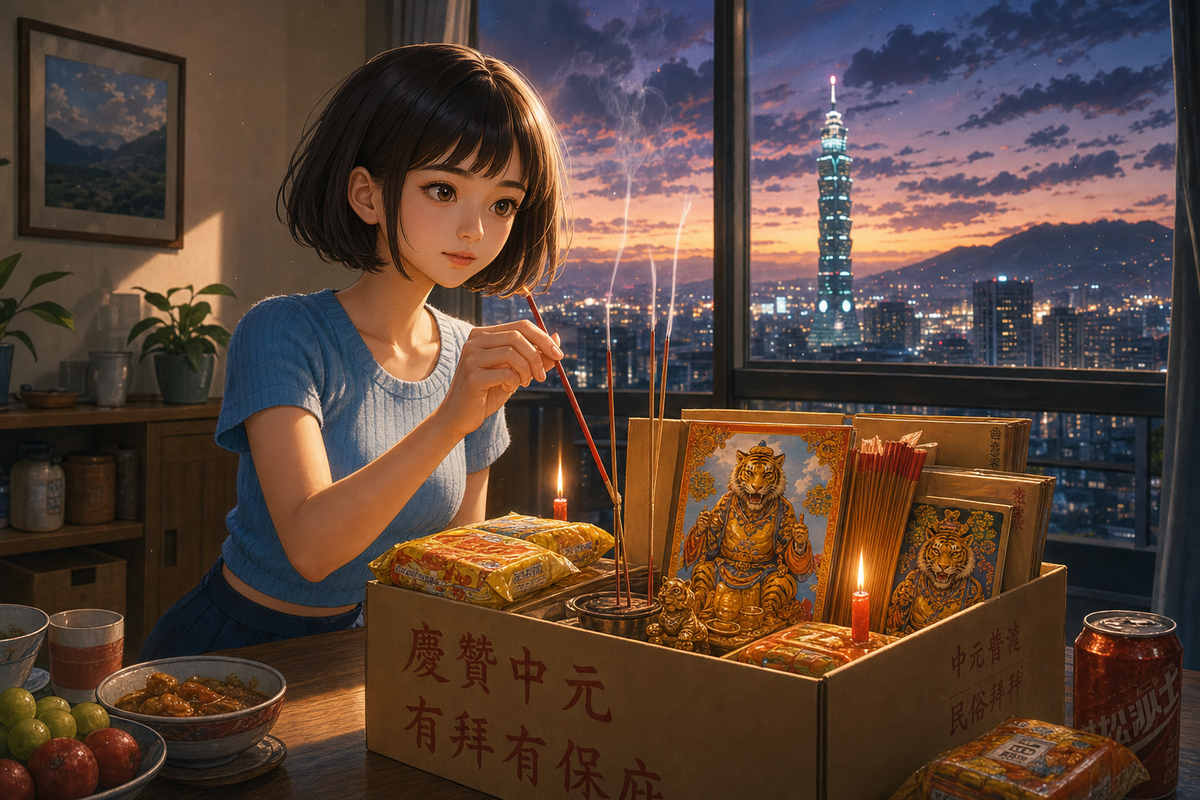
農曆七月的普渡桌,幾十年來長這個樣子:罐頭疊罐頭,餅乾堆餅乾,塑膠袋隨手撕開,香插在哪裡都是問題。這是流程問題。供品的包裝從來不是為了「拜拜」設計的,為了超市貨架設計,為了保存期限設計,唯獨沒有為插香孔留位置。
台灣乾拌麵品牌 HōSSET 虎勢在 2026 年農曆七月前推出「虎勢好運箱」,定價 NT$718,把這個流程痛點直接做進紙箱結構裡:箱子一折,變成供桌展示台,專屬插香孔已在其中。這不是把供品「美化」,這是把祭祀動線重新工程化。品牌官方的說法是「不只供品,更是精品」——這句話的重量,在於前半段承認了問題的存在。
從半導體到拌麵,再到金虎爺
創辦人張溫森的背景是半導體業。這個跨度本身就說明一件事:帶進來的思維是製程邏輯,不是食品業的慣性。把「拆包裝、擺供桌、無處插香」這三個步驟看成生產流程的摩擦點,然後用包裝結構消除它——這是半導體廠工程師的思考方式,不是傳統食品業務員的。
禮盒內附「金虎爺好運小物」,與松山汝南堂合作,把虎爺元素融入。這裡要說清楚:松山汝南堂在這個企畫裡的角色是限定通路或文化背書,不是品牌聯名的主體。這個區分關鍵,因為決定了 HōSSET 的定位——把宮廟的儀式感轉譯成可攜帶的物件,而不是把宮廟當成素材消費。
嘻哈歌手 Kenzy 小春的加入,對應的是另一層文化座標。頑童 MJ116 的宮廟美學本來就在嘻哈與民俗之間建立了一條通道,HōSSET 借用的是這條通道已經存在的流量,而不是硬開一條新路。老一輩的供品文化、中生代的設計轉譯、年輕世代的次文化語言,三個時間層剛好壓在同一個紙箱上。
台灣民俗節日的品牌空白,現在才開始被填
台灣的中元節規模龐大,家庭、公司、社區都有祭祀活動,市場需求從來不小。但相比日本「お中元」禮盒已發展成高度品牌化的贈禮文化,台灣的普渡供品長期停留在量販通路的價格邏輯裡——便宜、實用、沒有故事。
HōSSET 不是孤例。同期市場裡,印花樂走的是圖像 IP 路線,把信仰符號轉成可複製的設計語言;北海祭品把傳統禮盒做外觀升級;旺旺設了全素普渡的產品線。連鎖量販數據也顯示,箱購、異國零食與素食品項在中元節前後的成長幅度可觀。
但 HōSSET 做的事情,在這個光譜裡的位置比較靠邊:從儀式流程的痛點出發,用工業設計的方法重新封裝一個習俗,而不只是換個包裝印個虎爺圖案。這個差距,值得辨認。
供品拜完,還能放在書架上
「拜完還能當居家擺設」是 HōSSET 給這個禮盒設定的雙重使用情境。這一句話裡藏著一個對台灣消費者的洞察:節日供品的浪費是真實的家庭痛點,食物拜完之後吃不完、包裝用完就丟,是每年農曆七月後的固定困擾。把禮盒設計成可以留下來的物件,是把消費端的心理帳戶從「一次性支出」移往「長期物件」。
同一時期,誠品推出昭和風文具展「書寫大眾湯」,義美冰菓室與板橋復古理髮廳合辦快閃。這些活動的形式各異,但共享一個操作邏輯:把集體記憶裡的某個日常物件,重新放進一個有設計框架的空間,讓它被當成文化而不是習慣去經歷。普渡禮盒、昭和文具、復古冰菓室,換的是包裝,不變的是那個節日或那個年代留在身上的質感。
2026 年農曆七月鬼門開是 8 月 13 日,中元節是 8 月 27 日。距離那張供桌,還有幾個禮拜。
— 方雨柔
The Ghost Festival Gets a Design Overhaul
Taiwan’s Ghost Festival altar has looked the same for decades: stacked cans, bags of crackers, plastic ripped open wherever convenient, and nowhere obvious to plant the incense sticks. The problem was never aesthetic. It was logistical. Offering packaging was designed for supermarket shelves and expiration dates — nobody designed it for the ritual.
Dry noodle brand HōSSET launched the “好運箱” (Lucky Box) gift set ahead of the 2026 Ghost Month season, priced at NT$718. The cardboard box folds out into a display altar with a built-in incense hole. That structural detail is the whole argument: the ritual friction has been engineered away. The brand’s official tagline is “not just an offering, but a premium gift” — the weight of that line is in the first half, which admits the problem existed.
Semiconductor Logic Meets Temple Culture
Founder Chang Wen-sen came from the semiconductor industry before moving into food. That trajectory matters. The thinking brought in wasn’t food industry habit — it was process logic. Identifying “unwrap packaging, arrange altar, find somewhere for the incense” as three friction points in a manufacturing flow, then eliminating them through box structure: that’s how a semiconductor engineer sees a problem.
The Lucky Box includes golden tiger deity charms and connects with Songshan Runan Temple, where the tiger deity (虎爺) is enshrined. The temple’s role here appears to be as a distribution channel and cultural anchor — not a co-branding partner in the commercial sense. That distinction shapes how HōSSET positions itself: not capitalizing on temple iconography, but translating ritual weight into a portable object.
Hip-hop artist Kenzy 小春’s involvement maps onto a different cultural layer. The temple aesthetic that runs through artists like Kenzy and the MJ116 collective had already built a channel between Taiwanese folk religion and youth subculture — HōSSET entered a passage that already existed, rather than trying to construct one from scratch.
A Market That Was Always There
Taiwan’s Ghost Festival is large. Households, companies, and neighborhood associations all observe it. The consumer demand was never small. But compared to Japan’s “お中元” season — which evolved into a fully branded gift-giving culture decades ago — Taiwan’s Ghost Festival offerings stayed stuck inside the wholesale price logic: cheap, functional, no story attached.
HōSSET is not operating in isolation. The current market includes graphic-IP brand inBlooom (印花樂), which converts traditional Taiwanese imagery into reproducible design language; established suppliers upgrading their packaging; and major food companies adding all-vegetarian Ghost Festival product lines. Category data shows strong growth in bulk purchasing, international snacks, and vegetarian items around Ghost Month. But HōSSET’s position in that spectrum is at the far end — starting from ritual friction, using industrial design methods to re-engineer the practice, not just print a tiger deity on an existing box.
After the Altar, It Stays on the Shelf
“Display-worthy after the ceremony” is one of the use cases built into HōSSET’s design brief. That framing addresses a real household problem: Ghost Festival food waste. Offerings that can’t all be consumed afterward, packaging immediately thrown out — this is a recurring frustration every year after Ghost Month ends. Designing a box that earns a place on a shelf after the ritual moves the consumer’s mental account from “one-time expenditure” to “lasting object.”
Around the same period, Eslite launched a Showa-era writing goods exhibition “書寫大眾湯,” and Yi Mei’s ice cream parlor collaborated with a vintage barbershop in Banqiao for a pop-up. The formats differ, but the operating logic is shared: take something from collective memory — a ritual food, a school stationery set, a neighborhood ice parlor — place it inside a designed frame, and let it be experienced as culture rather than habit.
Ghost Month opens August 13. Ghost Festival is August 27. The altar is a few weeks away.
— 方雨柔
延伸閱讀
https://justfly.idv.tw/s/UTNZnff