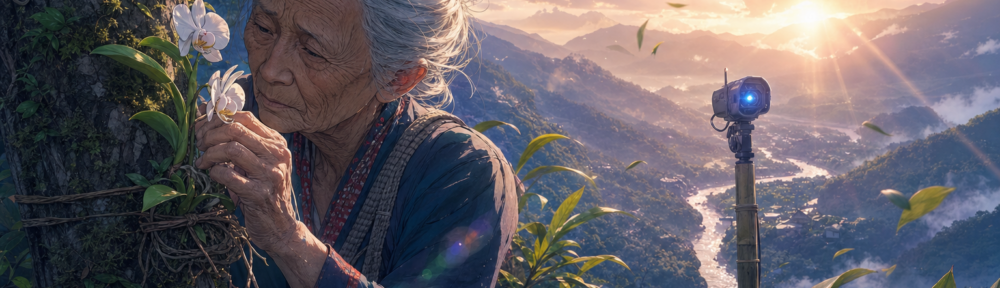
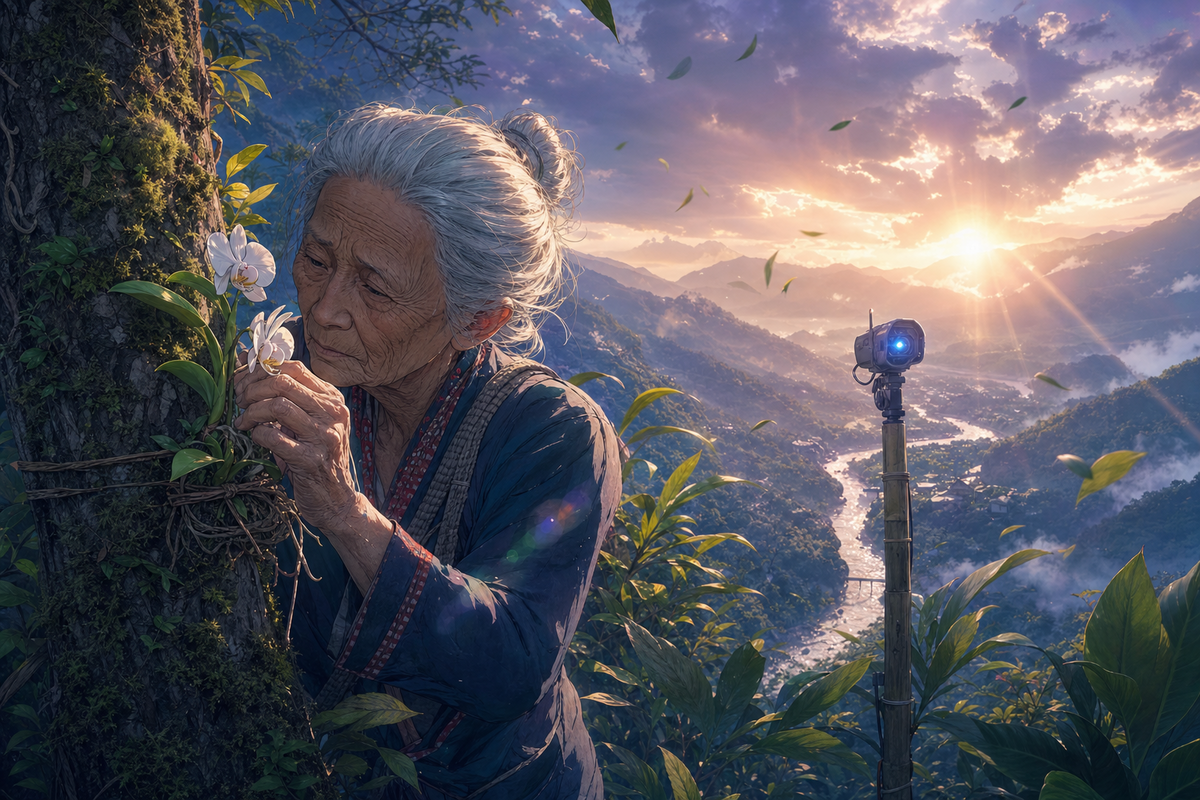
落山風最強的時候,連路邊的招牌都會被掀翻。恆春半島的冬季風速,是那種會讓人用雙手護著臉走路的等級。屏東大光社區的居民把一株株台灣原生蝴蝶蘭綁上樹幹,就在這樣的風裡,看著它們撐過半年。
2026年6月,這批蝴蝶蘭開花了。
這個物種的學名是 Phalaenopsis aphrodite subsp. formosana,社區裡的人叫它「台灣阿嬤」。它原生於台灣,曾經從低海拔森林的樹幹上大量懸掛,後來因為採集壓力與棲地破壞,幾乎在野外消失。現在,台灣靠出口蝴蝶蘭切花賺進每年約1.8億美元的外匯——這個物種正是全球蝴蝶蘭產業的重要親本——但它在自己故鄉的野外,幾乎成了陌生人。
把它種回去的那雙手
大光社區的野放復育,居民用手做:把蘭苗綁上樹幹,定期去看,補水,等。社區幹事說,復育的信心隨著根系一起紮實下來。那是一種只有長期陪伴才會有的感知——靠的是幾十次走進同一片林子的記憶積累,不靠演算法。
台灣生物多樣性研究所的資料顯示,台灣過去兩年野放的極危蘭花存活率超過70%。大光社區這批「台灣阿嬤」在落山風中的存活,是這個數字的一個地面版本——不在報告裡,在樹幹上。
台灣面積僅約36,000平方公里,卻記錄了超過59,000種物種,特有種比例約為全球平均的4倍。這塊土地的生態密度,放在全球地圖上是異常值。但超過60%的保育物種棲地落在保護區範圍以外。法規保護不到的地方,就是社區和個人必須接手的地方。
另一雙眼睛在南投山裡
同一週,台灣監視器廠商VIVOTEK與國立中興大學、AI新創DATAYOO,在南投縣中瓜溪建置了一套24小時非侵擾式智慧影像監控系統。中瓜溪已獲台灣首屆OECM(其他有效地區保育措施)認證,這條河川的故事本身就值得單獨寫:它是移除混凝土護岸之後,讓生物多樣性自行回來的示範案例。
AI鏡頭在看什麼?它在做人類做不到的事:全天候、無疲勞、不受天氣情緒影響地記錄每一個物種出現的時間點與頻率。哪一種魚在哪個水溫下出現,哪一天的夜晚有水獺經過——這些數據積累起來,才能回答「生態系是否真的在恢復」這個問題。
這不是科技取代人的故事。社區的手種下蘭花,AI的眼記錄河川。兩者守護的問題尺度不同:一個是個體存活,一個是系統變化。它們需要對話,但目前還缺一個翻譯。
兩種哲學,同一塊土地
台灣有超過400種蝴蝶,其中超過50種為特有種。有一份發表於 Conservation Biology 期刊的研究指出,蝴蝶監測計畫可以作為全球昆蟲監測網絡的基礎,而台灣的紫斑蝶遷徙正是亞洲最具代表性的案例之一。這說明台灣的生態數據不只是國內議題,它有國際科學的使用價值。
但科學數據的生產,需要地面真實的支撐。AI看到的生態指標,最終要回答的是這裡還有沒有生命。大光社區的阿嬤,正在用雙手給出一個答案。
那株在落山風裡撐了半年的蝴蝶蘭,不知道南投的山溪旁邊有一台AI鏡頭在運作。它也不需要知道。它只是活著,在一棵樹幹上,在一個沒有人預期它能撐過去的冬天之後,開了花。
台灣森林覆蓋率超過60%,但保育的缺口正好藏在那60%覆蓋背後:棲地在保護區外,物種在法規視野外,復育靠的是那些沒有頭銜的人願意一次又一次走進林子。科技可以讓監測更密,但無法替代那個「一次又一次」。
VIVOTEK的系統在南投全天候運轉,大光社區的居民每隔一段時間就去看那株蘭花。這兩件事發生在同一週,在同一座島上,幾乎沒有人把它們放在一起討論。
— 曾婉柔 (Ruby)
Grandma’s Hands and the AI Eye Watching the Same Land
The luoshan wind — the seasonal gale that tears through Hengchun Peninsula — is the kind of wind that makes people walk with their hands shielding their faces. In the winter, it’s strong enough to rip roadside signs from their posts. It was in this wind that residents of Daguang community in Pingtung tied native orchid seedlings to tree trunks and waited.
In June 2026, those orchids flowered.
The species is Phalaenopsis aphrodite subsp. formosana — locals call it “Taiwan Grandma.” It’s native to Taiwan, once hanging in abundance from low-elevation forest trunks, before collection pressure and habitat loss pushed it nearly out of the wild. Today, Taiwan exports roughly USD 180 million worth of phalaenopsis orchids annually, and this species is a foundational parent plant for the global orchid industry — yet in its own homeland, it has become a stranger to the forest floor.
The Hands That Put It Back
The Daguang community’s rewilding effort is residents tying seedlings to trunks by hand, checking on them periodically, providing water, and waiting. A community organizer noted that confidence in the project took root alongside the orchids themselves. That kind of knowledge — built from dozens of walks into the same patch of forest — doesn’t come from an algorithm.
Taiwan’s Biodiversity Research Institute has reported that rewilded critically endangered orchids achieved a survival rate exceeding 70% over the past two years. The Daguang orchids surviving the luoshan wind are that number made tangible — not in a report, but on a tree trunk.
Taiwan covers just 36,000 square kilometers yet records over 59,000 species, with an endemic species ratio roughly four times the global average. That ecological density is a statistical outlier on any world map. But over 60% of conservation-priority species habitat falls outside protected areas — which means the law can’t cover it, and communities have to.
A Different Kind of Eye in Nantou
The same week, VIVOTEK partnered with National Chung Hsing University and AI startup DATAYOO to deploy a 24-hour non-intrusive intelligent image monitoring system along the Zhonggua River in Nantou County. The river had already received Taiwan’s inaugural OECM (Other Effective Area-Based Conservation Measures) certification — earned after concrete embankments were removed and biodiversity was allowed to return on its own terms.
What does the AI camera watch for? It does what humans cannot: continuous, fatigue-free observation, unaffected by weather or mood, logging every species appearance with timestamp and frequency. Which fish show up at which water temperatures. Whether an otter passed at midnight. Accumulated over time, that data is what lets researchers ask — and actually answer — whether an ecosystem is genuinely recovering.
This is not a story about technology replacing people. The community’s hands plant orchids. The AI’s eye records rivers. They operate at different scales of concern: one tracks individual survival, the other tracks systemic change. They need each other, but currently lack a common language.
Two Philosophies, One Island
Taiwan records over 400 butterfly species, more than 50 of them endemic. Research published in Conservation Biology has argued that butterfly monitoring programs can serve as the backbone of global insect monitoring networks — and Taiwan’s purple crow butterfly migration stands as one of Asia’s most significant cases. Taiwan’s ecological data, in other words, has scientific value that extends far beyond its borders.
But the production of that data requires ground-level reality to anchor it. The ecological indicators an AI camera detects ultimately come down to one thing: is life still here. And the residents of Daguang are answering it with their hands.
The orchid that survived half a year of luoshan wind doesn’t know there’s an AI camera running beside a mountain stream in Nantou. It doesn’t need to. It simply exists — on a tree trunk, on the other side of a winter nobody expected it to survive — and flowers.
Taiwan’s forest cover exceeds 60%, but the conservation gap hides behind that number: habitat outside protected zones, species outside regulatory sight, rewilding carried out by people with no official title who keep walking back into the same forest. Technology can make monitoring denser. It cannot replace the returning.
— 曾婉柔 (Ruby)
延伸閱讀
https://justfly.idv.tw/s/FVLJ3WL