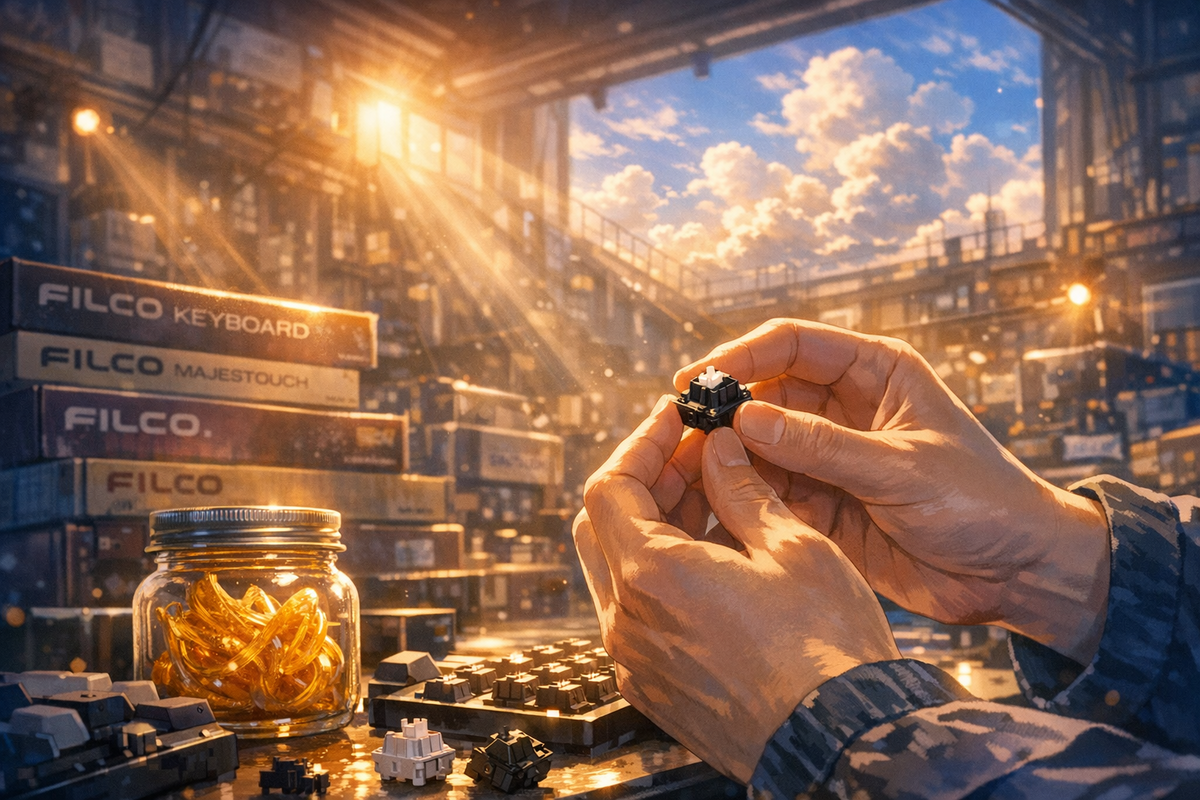
4月27日,台灣製造商非爾特宣布接手日本機械鍵盤品牌FILCO的全部業務——生產、販售、維修一手包。FILCO母公司ダイヤテック成立44年,Majestouch系列在全球鍵盤收藏圈是不折不扣的長銷經典。這不是一件科技業新聞,也不是常見的跨境併購。這件事的奇特之處在於:非爾特本來就是FILCO的代工廠。
幕後的人,走到了台前。
一個工廠如何繼承一個品牌的靈魂
台灣電子製造業的起點是1960至1980年代的OEM與ODM時代——幫日本、美國品牌做東西,不署名、不發聲。幾十年下來,這條產業鏈孕育出Compal、Wistron這樣規模的製造巨頭,台灣人均GDP也從1950年代的186美元爬升至今日超過33,000美元。那個「代工」的身分,某種程度上一直像是一塊壓在胸口的石頭。
非爾特接收FILCO,用自己的聲明定義了這件事的性質:「守護鍵盤敲擊的驕傲與喜悅。」這句話在商業新聞稿裡罕見,因為它說的是工藝情感,而不是利潤邏輯。當一家代工廠說出這種話,並且有資格說,代表它在製造鏈上的位置早已不只是執行單位。
FILCO的品牌價值建立在Majestouch系列數十年的工藝積累上。這個系列的機械手感、鍵位設計,是全球鍵圈用戶長期建立的情感記憶。非爾特接手的,是一套對特定使用者群體有意義的工藝承諾,一個商標檔案裡裝不下的東西。如果這套承諾被一家對手感沒有理解的公司接管,Majestouch就只剩名字。
蘋果糖社長與他的台灣居留證
同一週,另一件事在台日社群悄悄發酵。日本傳統菓子店「東京林檎製飴所」社長池田喬俊,5月1日宣布取得台灣健保卡,5月2日透露已拿到台灣居留證。他選擇移居台灣的理由落在食材上。他在台灣找到了接近失傳的颴糖所需原料——台糖一號砂糖——並且說了一句讓我反覆想的話:「正因很喜歡台灣,所以做不到利用、消耗,想用某種形式回饋這片土地。」
他想在台灣成立公司,繼續製作在日本本土幾乎找不到材料可做的傳統颴糖工藝。這意味著,一個日本的傳統食文化,它的存活地點,正在從日本移向台灣。
這和FILCO的故事結構驚人地相似:都是日本的東西,在日本走到了盡頭,然後在台灣找到了繼續存在的條件。
「學生」這個標籤,裂開了一道縫
台灣長期以「向日本學習」作為自我敘事的一部分——日本的製造工藝、服務文化、都市美學,一度是台灣人的仰望對象。這個關係裡有尊重,也有某種隱性的位階感。
但現在發生的事,打破了這個位階的方向性。池田喬俊不是來台灣學東西的;他是來台灣保存日本東西的。非爾特不是向日本品牌取經;它是替日本品牌續命的。台灣在這兩個故事裡扮演的角色,是一個具備條件的保存者——有製造能力、有食材來源、有願意讓傳統工藝生存的市場土壤。
日本的內容輸出戰略這幾年從追求數量轉向質量,政府與民間都在談傳統工藝的保護與傳承。但有些工藝在原產地已經找不到載體;颴糖需要的原糖,在台灣還在生產。Majestouch需要的製造工藝,在非爾特的工廠裡還活著。
這不是台灣的慷慨,這是台灣的實力。一個製造業底子扎實、食材供應鏈完整、消費者對工藝有辨識力的地方,自然會吸引那些在原產地找不到出路的東西前來落腳。
換一雙手繼續
非爾特接手FILCO的聲明沒有說「我們將帶領品牌走向新高度」這類話。它說的是「守護」——守護的對象是使用者敲擊鍵盤時的那種感受。這個措辭選擇,說明非爾特清楚自己承接的是什麼責任。
池田喬俊的颴糖如果在台灣做出來,原料是台灣的,做糖的人是日本人,技術是日本傳統工藝,吃的人可能是台灣人也可能是日本觀光客。這顆糖,屬於哪裡?
這個問題沒有簡單的答案,但它說明了一件事:文化的存活,和它出生的地點,並不是同一回事。
— 張誠書
Japan Is Preserving Itself in Taiwan
On April 27, Taiwan-based manufacturer Feierte announced it would take over all operations of the Japanese mechanical keyboard brand FILCO — production, sales, and repair. FILCO’s parent company, Diatec, had operated for 44 years. The Majestouch series is a genuine long-run classic among keyboard collectors worldwide. This isn’t a tech industry story. It isn’t a standard cross-border acquisition either. What makes it strange is that Feierte was already FILCO’s contract manufacturer. The factory stepped out from behind the curtain.
How a Manufacturer Inherits a Brand’s Craft Logic
Taiwan’s electronics industry started in the OEM and ODM era of the 1960s to 1980s — making things for Japanese and American brands, unnamed, without credit. Over decades, that chain built manufacturers of enormous scale. Taiwan’s GDP per capita climbed from $186 in the 1950s to over $33,000 today. The “contract manufacturer” identity sat like a weight on the chest the whole time.
Feierte’s own statement defined what this takeover means: “Not cost control, but protecting the pride and joy of every keystroke.” In a business press release, that kind of language is unusual. It names craft feeling, not profit logic. When a contract manufacturer says that — and has standing to say it — it signals the company has long since moved beyond pure execution.
FILCO’s brand value lives in decades of Majestouch craftsmanship. The tactile experience of that series is an emotional memory built by a specific global user community. What Feierte is taking over isn’t a trademark file. It’s a craft commitment that means something to real people. If that commitment passed to a company with no understanding of how a keystroke should feel, Majestouch would be a name with nothing behind it.
The Candy Maker and His Residency Card
The same week, something else surfaced quietly in Taiwan-Japan social circles. Ikeda Takayoshi, president of Japanese traditional candy shop Tōkyō Ringo Seiaijo, announced on May 1 that he had received a Taiwan national health insurance card. On May 2, he revealed he had already obtained a Taiwan residency permit. His reason wasn’t commercial expansion. It was ingredients. In Taiwan he found the source material — Taiwan Sugar’s No. 1 cane sugar — needed for a traditional candy-pulling craft that has nearly disappeared. He said something I’ve been turning over since: “Because I love Taiwan, I cannot bear to simply use it and consume it. I want to give something back.”
He plans to establish a company in Taiwan and continue making a form of traditional Japanese candy that can barely find raw materials back in Japan. The survival site of that Japanese food tradition is shifting from Japan to Taiwan.
The structure of this story is strikingly close to FILCO’s: something Japanese, reaching its end in Japan, finding the conditions to keep existing in Taiwan.
The Direction of the Relationship Has Flipped
Taiwan spent decades narrating itself as a student of Japanese manufacturing, service culture, and urban aesthetics. There was respect in that relationship — and a quiet hierarchy built into it.
What these two events describe is a different direction. Ikeda didn’t come to Taiwan to learn. He came to preserve something Japanese. Feierte didn’t go to Japan to absorb a brand’s knowledge. It took the brand in when the brand had nowhere else to go. Taiwan’s role in both stories is that of a capable custodian — with manufacturing depth, with intact supply chains for specific raw materials, with a consumer base that recognizes craft.
Japan’s cultural export strategy has shifted toward quality over quantity, with real attention to protecting traditional crafts. But some crafts can no longer find the materials or the makers they need at home. The sugar Ikeda needs still exists in Taiwan. The manufacturing DNA behind the Majestouch series still runs in Feierte’s facilities.
This isn’t Taiwanese generosity. It’s Taiwanese capacity. A place with a serious manufacturing base, functional agricultural supply chains, and consumers who can tell the difference between craft and copy will naturally draw the things that can’t survive where they started.
Passing the Baton Is Not Forgetting
Feierte’s statement didn’t say it would “elevate the brand to new heights.” It said “protect” — protect the feeling a user gets when a key travels down and springs back. That word choice shows Feierte understands exactly what it’s taken on.
If Ikeda makes his candy in Taiwan, the sugar is Taiwanese, the maker is Japanese, the technique is traditional Japanese craft, and the person eating it might be a local or a visitor from Tokyo. Which culture does that candy belong to?
There’s no clean answer. But the question itself proves one thing: where a tradition was born and where it survives are not the same address.
— 張誠書
延伸閱讀
https://justfly.idv.tw/s/9P2vQAP