
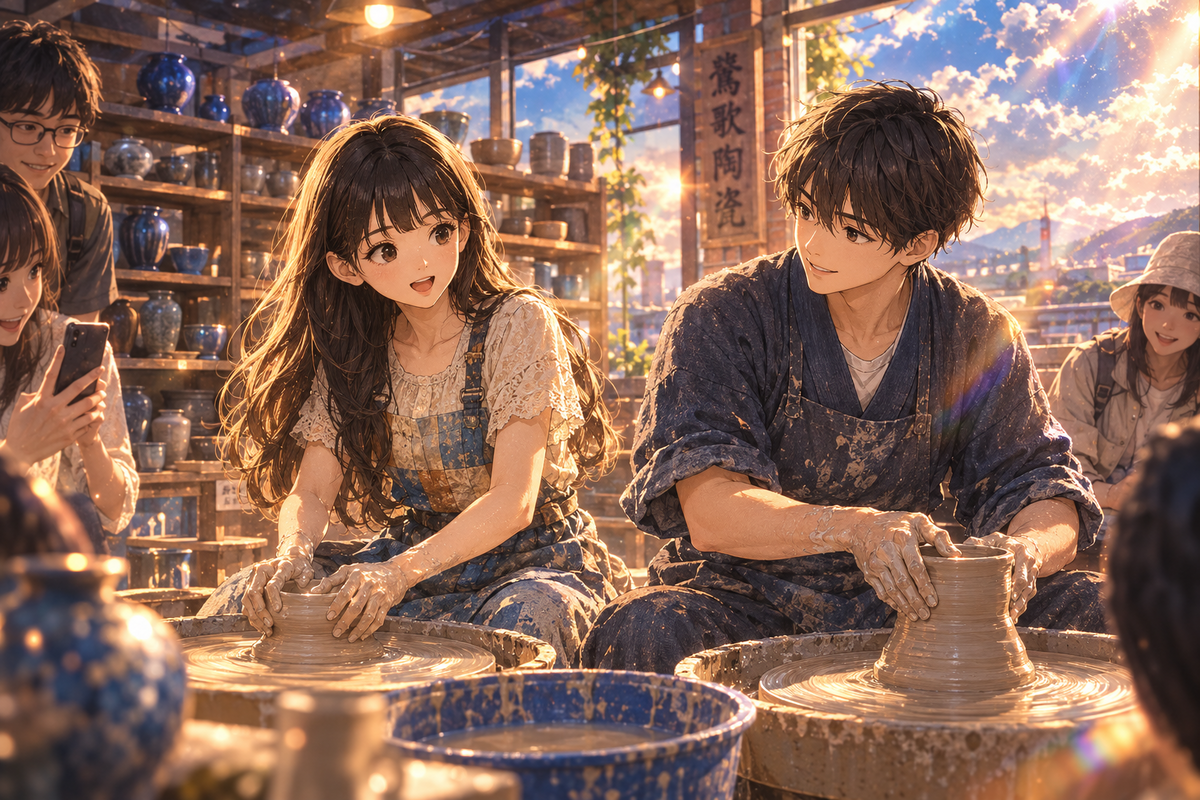
一件陶杯離開窯房的方式,決定了觀眾怎麼看它。過去外銷展場裡的日本陶藝品,隔著玻璃櫃,標籤寫產地、寫釉色、寫價錢,看不到拉坯的手。這次不一樣——10月7日到11日,鶯歌把後台直接變成前台,笠間、益子的職人帶著轆轤和釉藥過海來,台灣鶯歌的師傅在自己的工作室裡接待他們,不是誰展示給誰看,是三組人同桌拉坯。
這場「鶯歌產地開放日」從2022年開始辦,今年是把規模拉到跨國的一次。10月9日到11日,鶯歌國小古窯旁的「鶯歌陶藝市集 CRAFT MARKET」安排台日職人現場拉坯交鋒,還做了融入鶯歌陶神香灰釉的「鶯式祈福」陶卡——把在地信仰元素直接燒進釉色裡,不是紀念品,是一次具體的共同創作。
三種顏色,各自說各自的話
台灣藍、笠間質樸灰、益子土感棕,擺在一起才看得出差別。台灣藍偏亮、偏濕,像釉面還沒乾透;笠間灰低調到幾乎不想被注意,質地做給手摸而不是給眼睛看;益子棕帶顆粒感,土本身的雜質沒有被磨光,故意留著。三地職人各自守著自己那套配方幾十年,這次願意把窯房鑰匙交出來讓外人進來比較,是真正值得留意的地方——比較之後才會看見,所謂「產地風格」從來不是裝飾性的選擇,是當地土質、窯溫、燃料逼出來的結果。
活動也做了接地氣的部分:9家鶯歌在地美食跟9家窯場合作,把大同電鍋、香菜、自製辣椒醬這類日常元素轉成「童滿味碗」「花辣辣」小碟等量產器皿,規劃出3條特色餐桌路線,讓工藝品從「收藏用」降到「吃飯用」。交通上也配合捷運三鶯線推出60元一日票,10月1日到31日在多個站點販售,附散策指南跟沿線店家優惠——把觀光門檻壓低,走進窯房的人才有機會變多,不只是來拍照打卡的人。
平視不是嘴巴說的
台日之間的工藝合作不是第一次,地方產業互相借鏡的案例這幾年一直有。但多數合作停在「日本的來台灣展」或「台灣的去日本秀」,單向輸出居多。這次的不同在於,笠間跟益子本身就是日本用「產地開放」模式解決代工聚落老化問題的先行者——益子陶器市、笠間の陶炎祭辦了很多年,鶯歌這次是直接借來整套機制,再邀請原創者本人進場一起玩。借鏡跟平視之間,差一個動作:對方願不願意把自己的窯房也打開,讓台灣職人反過來看。這次笠間跟益子的職人也來了現場拉坯,答案是願意。
跨世代的部分也值得記一筆:7家窯場走進鶯歌7所國小,帶學童設計圖樣再轉成商品,10月9日讓學童自己參與定價、陳列、銷售。工藝傳承這件事,嘴巴說一萬次不如讓十歲小孩算過一次成本。
本週是最後窗口
活動排到10月11日,之後工作室照常關起門做自己的事,下一次要等明年。想看台灣藍跟笠間灰擺在同一張桌上的人,這幾天是唯一機會——窯房的門不會一直開著。
— 游曉芬
Yingge Opens Its Kilns for a Rare Equal Footing With Japan
A teacup leaving a kiln tells you nothing behind glass. Export showrooms label the origin, the glaze, the price — but nobody sees the hands that threw it. This week in Yingge, that backstage becomes the stage itself. From October 7 to 11, potters from Kasama and Mashiko cross the sea to sit at the same wheel as Yingge’s own craftsmen. Nobody performs for anybody. Everyone works.
The event, Yingge Open House, started in 2022 and this year scales up into a cross-border edition. From October 9 to 11, a craft market beside the old kiln near Yingge Elementary School stages live throwing sessions pairing Taiwanese and Japanese potters, and produces a commemorative ceramic card glazed with incense ash from Yingge’s own kiln god tradition — not a souvenir, but a fired, shared object.
Three colors, three arguments
Taiwan blue, Kasama’s plain gray, Mashiko’s grainy brown — line them up and the differences surface. Taiwan blue runs bright and almost wet-looking. Kasama gray is deliberately unglamorous, made for touch rather than display. Mashiko brown keeps its clay’s impurities visible on purpose, refusing to polish them away. Each region has defended its own formula for decades. Handing over the kiln keys for outsiders to compare side by side is the actual event here — comparison reveals that regional style was never decorative. It’s the result of local clay, kiln temperature, and fuel.
The grounded part of the program: nine local food vendors paired with nine kilns, turning everyday items — a rice cooker, cilantro, homemade chili sauce — into mass-produced tableware, mapped onto three dining routes through the old street. A commuter pass tied to the local metro line sells for NT$60 through October, pairing a walking guide with local discounts, lowering the barrier for anyone wanting to wander in.
Eye level isn’t a slogan
Taiwan-Japan craft exchange isn’t new; regional craft collaborations have circulated for years, usually one-directional — Japan exhibits in Taiwan, or Taiwan tours Japan. What’s different here: Kasama and Mashiko pioneered the open-studio model themselves, running their own long-standing production-district festivals to fight the aging of traditional manufacturing towns. Yingge borrowed that entire mechanism, then invited the originators in to work it together. The gap between “borrowing a model” and “standing at eye level” is one decision: whether the other side opens its own kiln door in return. This week, Kasama and Mashiko’s potters showed up to throw clay on Yingge’s turf. That’s the answer.
The generational piece matters too — seven kilns entered seven local elementary schools, had children design patterns that became real products, then let them handle pricing, display, and sales on October 9. Craft transmission argued in theory convinces nobody; a ten-year-old doing the math on cost does.
The window closes October 11
After that, the studios shut their doors again and go back to ordinary production until next year’s edition. Anyone wanting to see Taiwan blue sitting next to Kasama gray on the same table has until this week. The kiln door won’t stay open.
— 游曉芬
延伸閱讀
- 六本木藝術之夜 2026:同一排警示燈,三種看法
- 車埕貯木池一天撈走400尾外來魚,真正的收穫是那張體重表
- 空白文庫本:讀者替自己寫作者頁
- 嘉義竹蒸籠還在冒煙,日本找不到的手藝就在這裡
- 赤峰街小店搬去承德路,那杯咖啡的味道會留下嗎
https://justfly.idv.tw/s/wCGiTDe