金虎酒造 名古屋市北區的蔵地內,準備了一棟一棟貸しの宿:虎竹庵(こちくあん)。依 2026 年 10 月 26 日發出的新聞稿,這家 1845 年創業的酒藏當時寫的是目標在 2026 年 11 月開始受理預約,最多住 6 人,推薦 4 到 5 人。今天是 11 月 11 日,酒藏官網的消息頁(頁面標示 2026.10.08)寫的已經是「現在、Airbnbで、宿泊予約を受け付け開始しています」。兩份公告都沒有提供實際入住的人數或住客回饋。
溫度是變數,不是氣氛
跑過賽道的人都知道,同一組輪胎,冷的時候和熱開的時候是兩種東西。抓地力、回饋、壽命,全跟溫度綁在一起。日本酒的邏輯相近:同一瓶酒,冰著喝、室溫喝、燗過再喝,香氣的輪廓會換一張臉。老手靠經驗,外行人只會說「好像不一樣」,然後說不出哪裡不一樣。
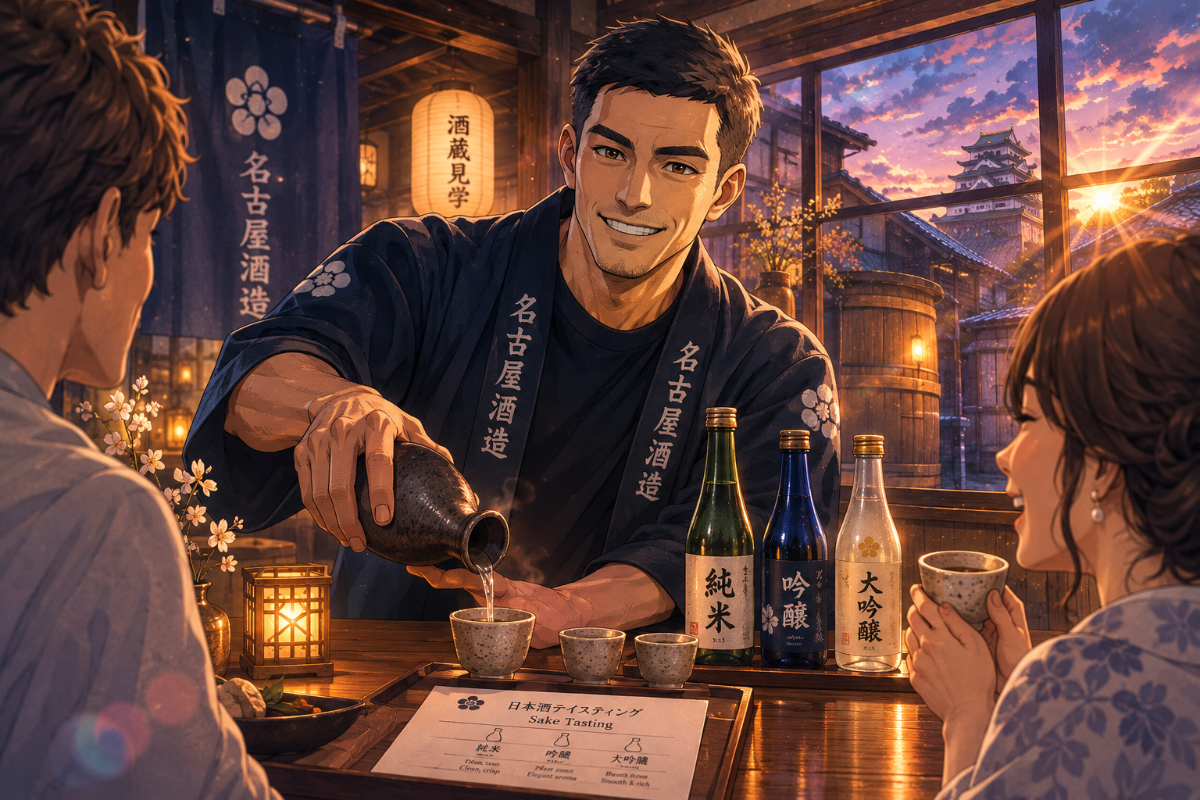
虎竹庵準備的東西,剛好對著這個缺口。住宿者可免費拿到「虎變」三款,每款 300ml,其中包含拿過全國新酒鑑評會金賞的大吟醸。房內另備酒器與燗酒用具,新聞稿的說法是要提案「飲む温度による味わいの変化」這類日本酒才有的喝法。另附日文、英文兩種語言的テイスティングシート,新聞稿明說,這張表是為了讓不熟日本酒的人、海外旅客也能輕鬆入手。表格內容沒有公開,公開的只有語言和對象。
酒溫有名字,也有刻度
要自己試,先認得刻度。日本酒的飲用溫度有一套通用叫法,日文維基「燗酒」條目引酒類總合研究所的研修通信整理如下,數字都是「前後」的參考值:
- 雪冷え 5°C、花冷え 10°C、涼冷え 15°C
- 冷や:常溫,指沒有加溫的酒,不是冰過的酒
- 日向燗 30°C、人肌燗 35°C、ぬる燗 40°C
- 上燗 45°C、熱燗 50°C、飛び切り燗 55°C 以上
同一份研修通信也提到,大吟醸、生酒這類喝香氣與新鮮感的酒,不適合拿來燗。虎變三款是大吟醸、純米吟醸、特別純米;酒藏的虎變品牌頁寫,這個牌子 2012 年起造,純米吟醸與大吟醸為了留住香氣,生的狀態裝瓶後才做瓶火入れ,再放冷藏低溫貯藏。哪一款拿來溫、溫到幾度,新聞稿沒有指定,照上面的通則,大吟醸從冷的那一端喝起比較穩。
一個從客人變成藏人的經理
經理是美國出身的ホイ・ナサニエル(Nate)。2005 年 6 月來日,2010 年為了在南山大學學日語搬到名古屋,之後一直住在東海地方。旅行業出身,日本酒專業資格不止一張,疫情那兩年在金虎酒造當兼職藏人,實際下過場。2026 年辭掉原本的工作,9 月入社,身分是藏人加旅宿經理。新聞稿給他的定位是「海外からの旅行者と名古屋の酒蔵をつなぐ架け橋」。
新聞稿附了他的 comment,以下是供稿引語,非採訪:「日本酒への愛、この地域への愛、そしてこれまで培ってきた日本を旅する方々をサポートする経験。これらすべてを活かせることを、とても嬉しく思っています。」(筆者譯:對日本酒的愛、對這個地區的愛,還有一路累積下來、協助來日本旅行的人的經驗,能把這些全部用上,我非常高興。)
公告寫了什麼
容量 6 人的算法是:2 樓兩間寢室各放兩張單人床,加上 1 樓的沙發床。各樓層有廁所,備乾燥機,採自助入住。價格公布為 2 人一晚 30,000 日圓起、4 人 40,000 日圓起,週末另有加價,經由 Airbnb 受理。官網消息頁補了兩件新聞稿沒寫的事:建物是既有房舍翻修,「虎竹庵」的名字取自名古屋城本丸御殿障壁畫裡在竹林歇息的虎。
酒的底子,新聞稿自述是全國新酒鑑評會連續 12 年入賞,其中 7 次金賞;歷年審查結果由主辦的酒類總合研究所公布,可以逐年對。七代目藏元水野善兵衛在同一份新聞稿的 comment(供稿引語,非採訪)是:「日本酒を楽しみながらゆっくりと過ごし、名古屋という街をより深く知っていただく。虎竹庵での滞在が、名古屋や日本酒を好きになるきっかけになれば嬉しく思います。」(筆者譯:一邊享用日本酒一邊慢慢度過,更深地認識名古屋這座城市。如果在虎竹庵的停留能成為喜歡上名古屋或日本酒的契機,我會很高興。)
酒藏所在的地方,創業時是善行寺街道旁的山田村,一片田地,如今是住宅與商業設施。新聞稿說,之後要和大曾根一帶的餐飲店、商店街串在一起。想訂的人,Airbnb 連結掛在官網那則消息頁上;官網消息列表另外預告,12 月 1 日起新酒「吟醸初しぼり」「吟醸にごり酒」出藏。
— 吳建廷
A Nagoya Brewery Guesthouse Pairs a Bilingual Tasting Sheet with Sake-Warming Tools
Inside the grounds of 金虎酒造 in Nagoya’s Kita Ward, a self-contained guesthouse called 虎竹庵 (Kochikuan) has been prepared. According to a press release dated October 26, 2026, the brewery, founded in 1845, was then aiming to start taking reservations in November 2026. It sleeps up to 6, with 4 to 5 recommended. As of today, November 11, the brewery’s own news page (marked 2026.10.08) states that reservations are now being accepted on Airbnb. Neither notice gives any figures on actual stays or any guest feedback.
Temperature is a variable, not a mood
Anyone who has driven a track knows the same set of tires behaves like two different objects cold and warmed up. Grip, feedback and wear all tie back to temperature. Sake works on a similar logic: one bottle, served chilled, at room temperature or warmed, changes the outline of its aroma. A veteran reads it by experience. A beginner says “it tastes different” and cannot say where.
What 虎竹庵 is preparing points at exactly that gap. Guests get a free set of three 虎變 sake, 300ml each, including a 大吟醸 that won gold at the 全國新酒鑑評會. The house also has sake cups and 燗酒 (warmed sake) tools, and the release says it will suggest ways of drinking particular to sake, such as how taste shifts with serving temperature. There is also a tasting sheet in Japanese and English, which the release says is meant to let people unfamiliar with sake, including overseas travelers, enjoy it easily. The sheet’s contents have not been published. Only its languages and its intended audience have.
Sake temperatures have names and numbers
To try it yourself, start with the scale. Japanese has a standard set of names for serving temperatures. The Japanese Wikipedia entry on 燗酒, citing a training bulletin from the National Research Institute of Brewing, lists them as follows. All figures are approximate guides:
- 雪冷え (yukibie) 5°C, 花冷え (hanabie) 10°C, 涼冷え (suzubie) 15°C
- 冷や (hiya): room temperature. It means sake that has not been warmed, and does not mean chilled
- 日向燗 (hinatakan) 30°C, 人肌燗 (hitohadakan) 35°C, ぬる燗 (nurukan) 40°C
- 上燗 (jokan) 45°C, 熱燗 (atsukan) 50°C, 飛び切り燗 (tobikirikan) 55°C and above
The same bulletin notes that types drunk for aroma and freshness, such as 大吟醸 and unpasteurized sake, are not suited to warming. The three 虎變 bottles are a 大吟醸, a 純米吟醸 and a 特別純米. The brewery’s 虎變 brand page says the label has been made since 2012, and that the 純米吟醸 and 大吟醸 are bottled unpasteurized and then pasteurized in the bottle to keep their aroma, before cold storage. The release does not say which bottle to warm or how far. Going by the general guide above, the 大吟醸 is the one to start from the cold end.
A guest turned brewer, now the host
The manager is Nate (ホイ・ナサニエル in the release), from the United States. He came to Japan in June 2005 and moved to Nagoya in 2010 to study Japanese at 南山大學, and has lived in the Tokai region since. He has a background in the travel industry and holds several sake qualifications. During the pandemic he spent about two years as a part-time brewer at 金虎酒造. In 2026 he left his previous job and joined in September as brewer and guesthouse manager. The release describes his role as a bridge between overseas travelers and a Nagoya brewery.
The release carries a comment from him. This is a statement supplied in the press release, not an interview, translated here from the Japanese: “My love of sake, my love of this region, and the experience I have built up supporting people who travel in Japan. I am very happy to be able to put all of these to use.”
What the announcements say
The capacity of 6 is counted this way: two bedrooms upstairs with two single beds each, plus a sofa bed on the ground floor. Each floor has a toilet, there is a dryer, and check-in is self-service. Announced rates start at 30,000 yen a night for 2 guests and 40,000 yen for 4, with weekend pricing, booked via Airbnb. The brewery’s news page adds two things the release leaves out: the house is a renovation of an existing building, and the name 虎竹庵 comes from the tiger resting in a bamboo grove in the wall paintings of Nagoya Castle’s Honmaru Palace.
On the sake itself, the release states 12 straight years of awards at the 全國新酒鑑評會, 7 of them gold. Each year’s results are published by the organizer, the National Research Institute of Brewing, and can be checked year by year. The seventh-generation head of the brewery, 水野善兵衛, is quoted in the same release (a supplied statement, not an interview, translated from the Japanese): “Spend time slowly while enjoying sake, and come to know the city of Nagoya more deeply. I would be glad if a stay at 虎竹庵 became a reason to grow fond of Nagoya and of sake.”
When the brewery was founded, its site was Yamada village on the Zenkōji highway, surrounded by rice fields. It is now housing and shops. The release says the guesthouse will build ties with restaurants and shopping streets around Ōzone. For anyone who wants to book, the Airbnb link is on that news page. The brewery’s news list also announces that the new-season 吟醸初しぼり and 吟醸にごり酒 ship from December 1.
— 吳建廷
延伸閱讀
- 《黃翊與庫卡》:工廠裡的手臂,如何學會等一個人
- 阿里山山椒魚的育幼影像,是在零度以下熬出來的
- 飛鼠咖啡的一粒豆子,如何在旅展擺出一座山
- 木頭不會說謊:八斗阿美族學生的十日木構課
- 花蓮狐蝠的宵夜時間,開進了百貨公司一樓
https://justfly.idv.tw/s/EnpMeF6