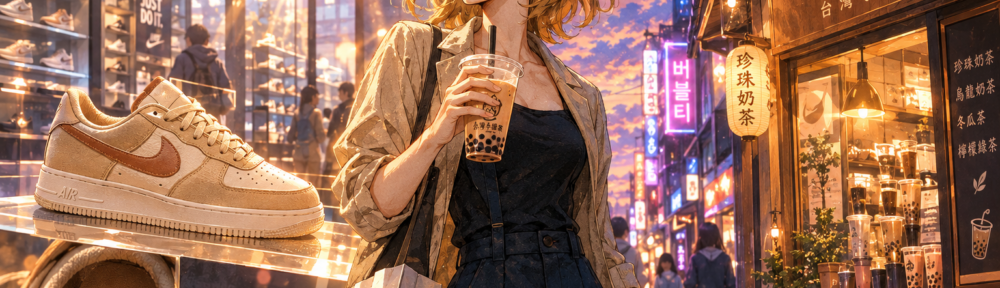
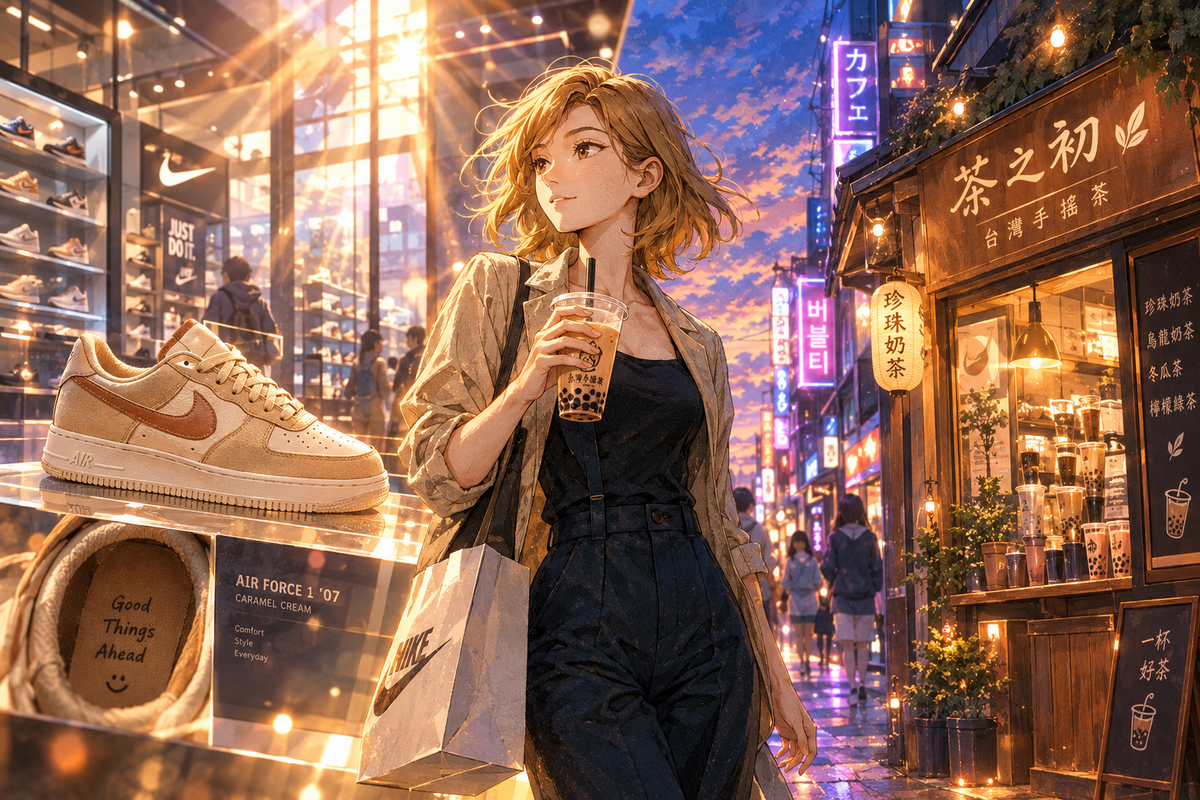
鞋墊上印著「微糖少冰」。一雙運動鞋,鞋底藏著手搖飲的點餐密碼,配色是珍珠奶茶那種焦糖混奶白的漸層。國際運動品牌把這款鞋做出來,社群立刻認出那行小字在講什麼——不用翻譯,台灣人一看就懂。這種「只有在地人懂的幽默」,正是全球品牌近年在地化行銷最愛用的招數:抓一個生活細節,讓人會心一笑,順便轉發,比印個地名了事有效多了。
同一段時間,另外兩件事也在發生,方向卻反過來。台灣的漢方生活品牌走進橫濱的商場,台灣的茶飲品牌插旗首爾的商圈。一邊是外國品牌拿珍奶當素材做聯名,一邊是台灣品牌帶著自己的配方和說法出海。兩種商品化,看起來像同一件事的正反面,細看卻完全不對稱。
誰在說故事,誰在被說
珍珠奶茶的故事本來就有版本之爭。台中的春水堂與台南的翰林茶館,兩邊都說自己是1980年代發明珍珠奶茶的那一家,爭論持續到今天,連維基百科的條目都得寫成「起源爭議」。這杯飲料從一開始就是被反覆重新講述、重新命名的產物,沒有單一版本。國際品牌把它做成鞋子上的彩蛋,某種意義上只是這個「被重新講述」歷史的最新一章——差別在於,這次講故事的人,手上握著的是全球通路和行銷預算,而不是一間台中的小茶館。
韓國的蝴蝶結包品牌進駐台中,推出珍奶造型的限定背包,吸引排隊人潮,用的也是同一套邏輯:外國品牌想在台灣市場落地,珍奶是最快能讓消費者「喔這個懂」的鑰匙。這說明一件事——珍奶做為符號,好用到誰都想借,借的人不分國籍。問題不是能不能借,是借完之後,誰記得這符號原本從哪來的。
台灣自己怎麼講這個故事
反過來看台灣品牌出海的路徑,漢方生活品牌走進日本的商場,茶飲品牌落腳首爾,賣的是整套配方、包裝邏輯、店面語言,一次帶出去,而不只是印著台灣兩個字的商品。這和另一條已經被驗證過的路徑很像:台北的官方經貿機構近年也把珍奶、教育、體育這類「非官方」文化連結,當成鞏固對外關係的工具——珍奶早就不只是飲料,是一張隨身攜帶的名片。
差別在於,名片要自己遞出去,還是被別人撿去印成別的東西。印尼咖啡品牌進台灣市場時,有官方經貿機構護航,選在百貨公司做第一站測試,這套「國家貿易機構+高端通路」的組合,其實也可以反過來問:台灣品牌要往外走,能不能借同樣的路徑,而不是只能等別人來借台灣的符號。
符號沒有版權,但敘事有立場
珍奶不可能申請專利,誰都能做聯名鞋、聯名背包、聯名任何東西。這件事本身不必動氣——文化符號的擴散本來就是雙向的,台灣的手搖飲文化能傳到全世界,靠的正是它夠開放、夠好複製。真正該追問的,是複製之後的分潤與話語權:外國品牌用珍奶賣鞋,賺的錢、累積的品牌好感,回得到台灣多少?台灣品牌自己出海,講的又是誰的版本、誰的配方、誰的定義?
市場會不會選台灣做這類文化聯名的第一站,從來不是單一原因決定的——市場規模、消費力、通路熟悉度、文化辨識度,都在其中起作用。台灣常被列進這類布局的優先名單,是這些條件疊加的結果,不是誰天生就比較懂珍奶。真正值得留意的,是台灣品牌有沒有把握住同一批條件,自己走出去講自己的版本。
— 曾凡凡
Who Gets to Package Taiwan Into a Product
The insole reads “less sugar, less ice.” An international sportswear brand built a shoe around it — caramel-and-cream colorway, bubble tea order codes hidden under the foot. Taiwanese social media clocked the joke instantly, no translation needed. That’s the trick global brands have learned: skip the flag-slapping, find the one local detail that makes people grin and repost.
Around the same window, two other things happened, pointing the opposite direction. A Taiwanese herbal-wellness lifestyle brand moved into a shopping complex in Yokohama. A Taiwanese tea brand planted itself in a Seoul neighborhood. One side: a foreign brand borrowing bubble tea as material for a collab. The other: Taiwanese brands carrying their own formula and their own language abroad. Same word — commodification — pointed in two directions that don’t quite mirror each other.
Who Tells the Story, Who Gets Told
Bubble tea’s origin story was contested from day one. A tea house in Taichung and a tea house in Tainan both claim to have invented it in the 1980s, a dispute still unresolved enough that its Wikipedia entry lists it as disputed. The drink was never a single, settled narrative — it’s been re-told and re-branded from the start. A shoe insole joke is, in a sense, just the newest chapter of that re-telling. The difference: this storyteller has global distribution and a marketing budget behind it, not a family tea counter.
A South Korean ribbon-bag brand opened a pop-up in Taichung and sold a limited bubble-tea-themed backpack, drawing lines out the door — same logic, different product. Bubble tea works as a shortcut for any brand trying to say “this one gets it” to a Taiwanese audience. Which proves the symbol travels well. It doesn’t answer who gets credited once it’s borrowed.
How Taiwan Tells It Back
Taiwanese brands moving into Yokohama or Seoul aren’t exporting a product stamped with the word Taiwan — they’re exporting a full formula, packaging logic, and vocabulary. That mirrors something already underway elsewhere: Taiwan’s overseas cultural-economic offices have leaned on bubble tea, alongside education and sports, as informal connective tissue in relationship-building abroad. The drink stopped being just a drink a while ago. It became a card carried into rooms someone wants to enter.
The open question is who hands the card over, versus who picks it up off the floor and reprints it. When an Indonesian coffee brand entered the Taiwanese market, it did so with backing from its home country’s trade office, launching inside a department store as a first foothold. That state-office-plus-premium-retail pairing is a template. Whether Taiwanese brands can run the same play in reverse — official backing plus a premium foreign retail launch — is the more useful question than whether a shoe insole joke is culturally appropriate.
No Copyright on a Symbol, But a Story Still Has an Author
Nobody can patent bubble tea. Any brand, anywhere, can put it on a shoe or a backpack, and that openness is exactly why the drink spread as far as it did. The real question isn’t whether borrowing should be allowed — it’s what happens to the profit and the credit after the borrowing. Does a foreign shoe collab send anything back toward the tea houses that built the category? When a Taiwanese brand goes to Yokohama or Seoul instead, whose formula, whose name, gets remembered on the other end?
Whether a market becomes a first stop for this kind of cultural crossover is never down to one reason — market size, spending power, retail familiarity, cultural recognition all factor in. Taiwan showing up often on that shortlist reflects that combination, not some innate advantage. What’s worth watching is whether Taiwanese brands take the same conditions and use them to go tell their own version somewhere else.
— 曾凡凡
延伸閱讀
- 空白文庫本:讀者替自己寫作者頁
- 嘉義竹蒸籠還在冒煙,日本找不到的手藝就在這裡
- 赤峰街小店搬去承德路,那杯咖啡的味道會留下嗎
- 大洲臥龍山莊以外:一張和紙,把台灣策展人帶進城下町
- 台鐵排骨便當開盒:先炸後滷的那一塊肉
https://justfly.idv.tw/s/banTYQx