
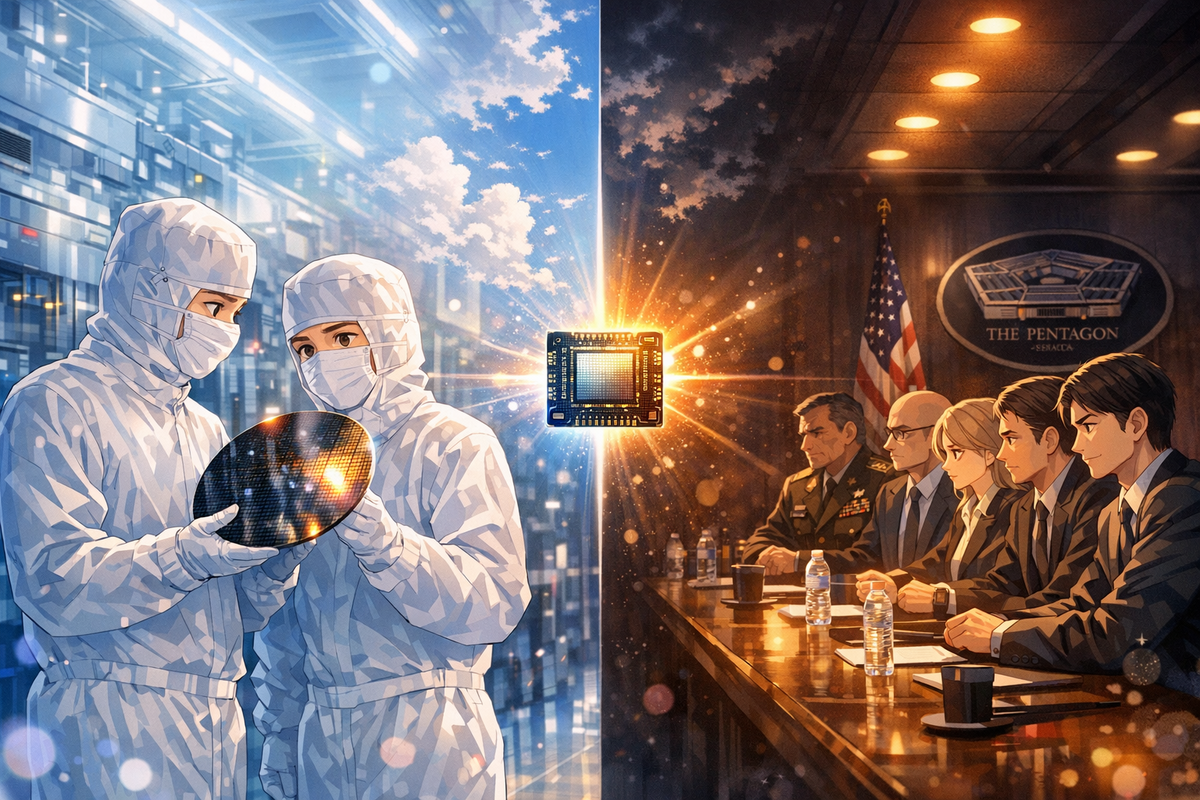
2026年4月17日,Anthropic的執行長在同一天做了兩件事:早上拒絕五角大廈移除AI武器化禁令的要求,下午緊急飛往白宮會見官員。訓練Claude系列的晶片,幾乎全數來自台積電的產線。這些晶片在新竹科學園區裡被刻蝕、封裝、測試,然後飛越太平洋,成為堅持倫理底線的AI大腦。但同一批產線,同樣的製程,也在為美國國防部的AI系統代工。
台灣造的晶片,誰能決定它做什麼?
舞台前後的兩套劇本
Anthropic在台上表演拒絕武器化,台積電在幕後供應晶片給所有玩家。這不是道德雙標,是供應鏈的物理現實。TSMC製造全球72%的晶圓代工,為NVIDIA的H100、Google的TPU、Apple的M系列晶片提供產能。每片H100報價超過25,000美元,但台積電不問買家拿晶片去訓練什麼。
2026年1月,台灣施行《人工智慧基本法》第13條,全球首例要求AI訓練資料「展現國家文化價值」。這是文化主權的野心——如果AI要理解台灣,就得用台灣的語料、台灣的脈絡。但同一部法律,對AI武器化應用隻字未提。沒有禁令,沒有審查機制,沒有出口管制條款。台灣想當AI倫理的守門員,卻把後門敞開。
AlphaGo之後的160億賭注
2016年AlphaGo擊敗李世乭那晚,台灣啟動「AI小國大戰略」。2018到2021年投入NT$160億,押注在算力優勢上。邏輯很清楚:台灣沒有資料規模,沒有市場縱深,但有全球最先進的晶片製造能力。如果AI是新時代的石油,台灣就是煉油廠。
問題是煉油廠不控制油品的用途。台積電消耗全台10%電力、全球25%氦氣需求,製造出來的晶片流向矽谷、流向國防承包商、流向任何付得起錢的客戶。Anthropic用這些晶片訓練出拒絕回答武器設計問題的Claude,五角大廈用類似的晶片開發目標識別系統。同一個產線,兩套價值觀。
誰的大腦,誰的決定
台灣AI基本法第13條要求訓練資料反映「文化價值」,但什麼是台灣的價值?拒絕武器化算不算?如果Anthropic的立場代表某種倫理共識,為什麼台灣的法律沒有跟上?
更實際的問題是:當美國政府施壓要求AI公司配合國防需求,台灣的晶片供應鏈會站在哪一邊?TSMC不能選擇客戶的政治立場,但台灣政府可以選擇要不要立法。2026年4月17日那場白宮會議之後,Anthropic是否仍能堅持底線,部分取決於台積電的產能分配。這是供應鏈政治的新劇本:誰控制晶片,誰就控制AI能做什麼、不能做什麼的邊界。
台灣造的AI大腦現在遍佈全球。有些拒絕開火,有些正在瞄準。中間的那條產線,還在24小時運轉。
— 沈偉哲
Who Decides If TSMC-Made Chips Pull the Trigger
On April 17, 2026, Anthropic’s CEO did two things on the same day: in the morning, refused the Pentagon’s demand to remove AI weaponization prohibitions; in the afternoon, flew to an emergency meeting with White House officials. The chips that trained the Claude series came almost entirely from TSMC’s production lines. These chips were etched, packaged, and tested in Hsinchu Science Park, then flew across the Pacific to become the brains of an AI that insists on ethical boundaries. But the same production lines, using identical processes, are also fabricating chips for the U.S. Department of Defense’s AI systems.
Who decides what TSMC-made chips can do?
Two Scripts, Same Stage
Anthropic performs its weaponization refusal onstage. TSMC supplies chips to all players backstage. This isn’t moral hypocrisy — it’s the physics of supply chains. TSMC manufactures 72% of global wafer foundry capacity, producing for NVIDIA’s H100, Google’s TPU, and Apple’s M-series chips. Each H100 sells for over $25,000, but TSMC doesn’t ask buyers what they’re training.
In January 2026, Taiwan enacted Article 13 of its AI Fundamental Act — the world’s first law requiring AI training data to “reflect national cultural values.” This is cultural sovereignty with teeth: if AI is to understand Taiwan, it must use Taiwan’s corpus and context. But the same law says nothing about weaponized AI applications. No prohibition, no review mechanism, no export controls. Taiwan wants to be the gatekeeper of AI ethics but leaves the back door wide open.
The NT$16 Billion Bet After AlphaGo
The night AlphaGo defeated Lee Sedol in 2016, Taiwan launched its “AI Small Nation, Big Strategy.” Between 2018 and 2021, NT$16 billion was invested, betting on computational advantage. The logic was clear: Taiwan lacks data scale and market depth, but it has the world’s most advanced chip manufacturing. If AI is the new oil, Taiwan is the refinery.
Refineries don’t control how the oil is used. TSMC consumes 10% of Taiwan’s electricity and 25% of global helium demand, fabricating chips that flow to Silicon Valley, defense contractors, and anyone who can pay. Anthropic uses these chips to train Claude, which refuses to answer weapons design questions. The Pentagon uses similar chips to develop targeting systems. Same production line, two value systems.
Whose Brain, Whose Call
Taiwan’s AI Fundamental Act Article 13 demands training data reflect “cultural values,” but what are Taiwan’s values? Does refusing weaponization count? If Anthropic’s stance represents some ethical consensus, why hasn’t Taiwan’s law caught up?
The practical question: when the U.S. government pressures AI companies to comply with defense needs, which side will Taiwan’s chip supply chain take? TSMC cannot choose clients’ political positions, but Taiwan’s government can choose whether to legislate. After that April 17 White House meeting, whether Anthropic can hold its line partly depends on TSMC’s capacity allocation. This is the new script of supply chain politics: whoever controls the chips controls the boundaries of what AI can and cannot do.
Taiwan-made AI brains now populate the globe. Some refuse to fire. Some are aiming. The production line between them runs 24/7.
— 沈偉哲