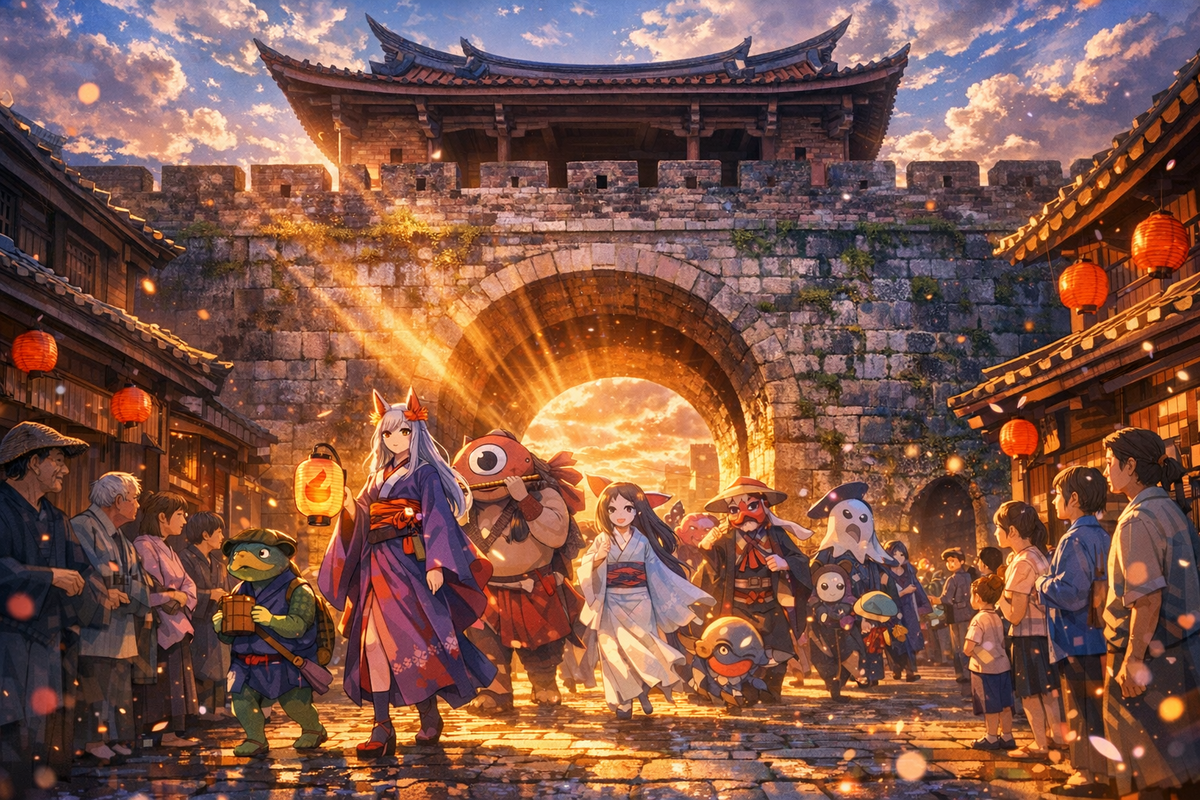
我從新竹開四個小時的車到恆春,就為了看一群江戶時代的妖怪從清朝古城門底下走過去。東映太秦映画村的妖怪踩街隊伍,第一次離開京都攝影棚,降落在屏東半島最南端。1875年興建的恆春古城四座城門保存完好,這是台灣極少數能完整呈現清代城郭格局的地方。日本 IP 為什麼要跨海來這裡?答案不是人流,是場景的不可複製性。
歷史空間的定價權
東映太秦映画村是日本現存最古老的電影攝影場之一,江戶時代的妖怪、武士 IP 在日本國內已經操作了數十年。但京都的片場再怎麼真實,終究是片場。恆春古城不同——城牆是真的被清軍搬過石頭砌起來的,城門洞的青苔是一百多年累積出來的濕氣。當妖怪踩街隊伍從西門穿出來,背景不是搭景板,是真實的歷史地層。這種空間背書,東京京都給不了。
台灣自 2002 年起投入 NT$288 億推動文化創意產業發展計畫,將華山 1914、松山文創園區、駁二藝術特區等閒置工業空間轉化為創意聚落。這段二十年的歷史空間活化經驗,讓各縣市政府累積了一套操作邏輯:不是蓋新的,是讓舊的活過來。恆春的案例更進一步——地方政府不只是把場地租出去辦活動,而是成為國際文化製作的共同出品方。南國國際生活節主辦單位與東映太秦映画村談的不是「借場地」,是「共創內容」。
哪些城門還沒被開發
恆春之後,台灣還有哪些歷史地景可以走這條路?鹿港老街的閩南建築群、北埔的客家古蹟聚落、馬祖的閩東石屋、金門的閩南古厝——這些地方的歷史紋理都比主題樂園的仿古造景更有說服力。問題是如何定價。地方政府習慣的思維是「吸引觀光人潮」,但真正有議價能力的模式是「提供不可替代的場景」。前者是被動等人來,後者是主動開條件。
當日本 IP 需要一座真實的清代城門當背景,選項只有恆春。當歐洲影視製作需要閩南建築群,選項可能只有鹿港或金門。這種空間的獨占性,才是地方創生真正的籌碼。不是比誰的文宣做得漂亮,是比誰手上握有無法在其他地方複製的歷史資產。
從場地出租到內容共製
地方政府要成為 IP 共製者,需要三個具體能力:第一是空間敘事——能清楚說明這個地方的歷史獨特性在哪裡,為什麼值得國際 IP 來合作。第二是內容介接——知道如何把在地歷史元素轉譯成 IP 可以使用的場景語言,而非只是「提供場地」。第三是權益談判——在合作協議裡不只收場地費,要有內容授權分潤、IP 衍生商品拆帳、國際宣傳露出條款。
恆春這次做對的地方是:妖怪踩街不是「東映來台灣辦活動」,而是「南國國際生活節×東映太秦映画村聯合製作」。主詞變了,遊戲規則就變了。台灣其他縣市如果還在想「怎麼吸引更多遊客」,可能要先想清楚:你手上那座老建築、那條古街、那片石牆,在全世界的歷史地景市場裡,到底值多少錢。
— 柯宗翰
Why Kyoto Yokai Chose a 150-Year-Old Taiwanese Gate
I drove four hours south from Hsinchu to watch Edo-period yokai parade through a Qing Dynasty gate. Toei Kyoto Studio Park’s monster procession left Kyoto for the first time, landing at Taiwan’s southernmost tip. Hengchun’s ancient city, built in 1875, preserves all four original gates — one of Taiwan’s few intact Qing fortifications. Why would a Japanese IP cross the sea for this? Not for foot traffic. For irreplaceable scenery.
Pricing Historical Space
Toei Kyoto Studio Park is one of Japan’s oldest film studios, operating Edo-era yokai and samurai IP for decades. But Kyoto’s sets, however authentic, remain sets. Hengchun is different. The walls were laid by Qing soldiers hauling real stones. The gate arches hold a century of accumulated moss and moisture. When the yokai procession emerged from the West Gate, the backdrop wasn’t painted scenery but geological time. Tokyo and Kyoto can’t replicate that.
Since 2002, Taiwan invested NT$288 billion in cultural creative industry development, converting idle industrial sites like Huashan 1914, Songshan Cultural Park, and Pier-2 Art Center into creative clusters. Two decades of adaptive reuse gave local governments a playbook: don’t build new, revive old. Hengchun takes this further — the local government isn’t renting out venue space, it’s co-producing international content. Southern Taiwan Lifestyle Festival organizers negotiated with Toei not for “venue rental” but “content co-creation.”
Which Gates Remain Undeveloped
After Hengchun, what other Taiwanese historical sites could walk this path? Lukang’s Minnan architecture clusters, Beipu’s Hakka heritage villages, Matsu’s Mindong stone houses, Kinmen’s Minnan compounds — all possess historical texture more convincing than theme park reconstructions. The question is pricing strategy. Local governments default to “attracting tourist crowds,” but the model with real bargaining power is “providing irreplaceable scenery.” The former waits passively. The latter sets terms.
When a Japanese IP needs an authentic Qing gate, only Hengchun qualifies. When European film production needs Minnan architecture, perhaps only Lukang or Kinmen work. This spatial monopoly is the real leverage for regional revitalization. Not who makes prettier brochures, but who controls historical assets impossible to replicate elsewhere.
From Venue Rental to Content Co-Production
For local governments to become IP co-producers requires three concrete capacities. First, spatial narrative — clearly articulating why this place’s historical uniqueness merits international IP collaboration, beyond just “providing space.” Second, content interfacing — translating local historical elements into scene language IPs can deploy, not merely offering facilities. Third, rights negotiation — contracts that go beyond venue fees to include content licensing revenue shares, IP merchandise splits, and international promotion exposure clauses.
Hengchun got it right: the yokai parade wasn’t “Toei holds event in Taiwan” but “Southern Taiwan Lifestyle Festival × Toei Kyoto Studio Park joint production.” Subject changed, game rules changed. If other Taiwanese counties still think “how do we attract more tourists,” they should first calculate: that old building, that ancient street, that stone wall you control — what’s it worth in the global historical scenery market?
— 柯宗翰