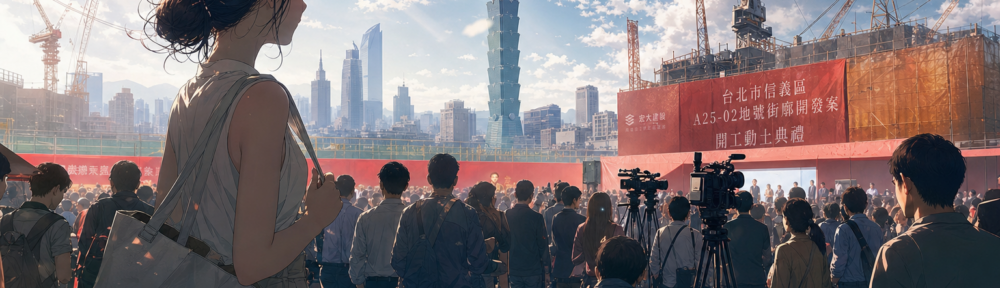
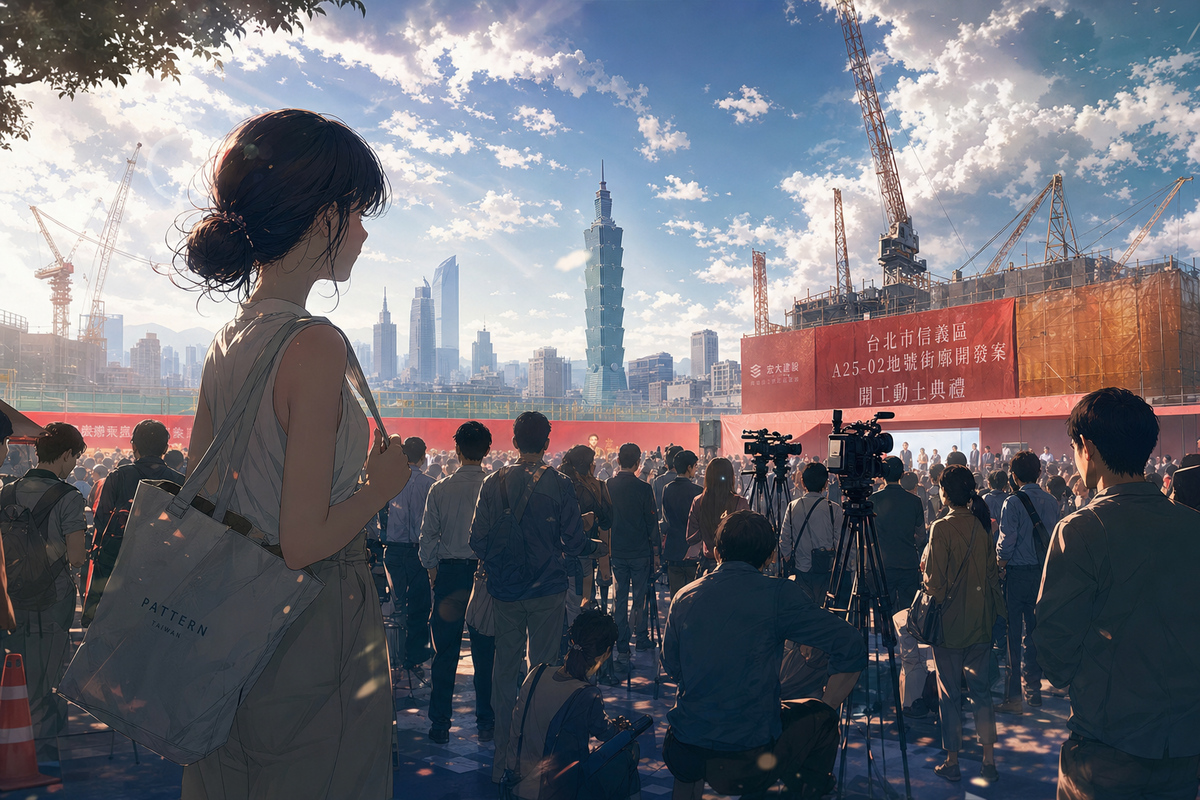
2026年5月27日,南港展覽館外的人群沿著走廊往北投士林方向湧去。NVIDIA台灣總部今天奠基,黃仁勳站在工地圍欄外的臨時舞台上。我站在人群邊緣,背著A.ling的樣品包,看著媒體把長鏡頭對準他。這個畫面讓我有點暈眩——一個問題在腦袋裡轉不出去:這塊地,這個廠,這個儀式,台灣等了幾十年,為什麼是NVIDIA的到來,才讓我們終於覺得可以大聲說出自己是誰?
從2.89兆開始算
台積電2024年的營收是新台幣2.89兆元,淨利1.17兆元。這兩個數字放在一起,意味著台積電不只是一間製造公司,它是一台印錢機——但更精確的說法是,它是全球AI算力的物理入口。NVIDIA的GPU、Google的TPU、Apple的A系列晶片、AMD的加速器,這四家公司的AI訓練晶片全數在台灣製造。全球超過90%的最先進AI晶片出自台灣,其中幾乎全部集中在台積電單一廠。
這不是台灣的驕傲宣言,這是史丹佛大學人本AI研究所2026年AI Index報告裡白紙黑字寫下的句子:台灣對全球AI供應鏈不可或缺的地位,同時構成全球AI基礎設施的「韌性弱點」。一個節點,撐著整個文明的算力。
而台積電只是供應鏈的中心錨點。向上游走:聯發科和瑞昱做晶片設計;往下游看:日月光負責封測;系統組裝端,鴻海和廣達把零件變成機架。黃仁勳在今年的公開場合說過:「Vera Rubin是台灣史上最大產品發布,200萬個零件,150家台灣合作夥伴。」他說的合作夥伴,就是這條從設計到組裝的完整鏈條。
通行的說法是「台灣因地緣政治而受惠AI浪潮」。這個說法的因果關係是倒的。地緣政治之所以把台灣列入考量,是因為台灣的製造能力讓任何替代方案在技術上都不成立。NVIDIA把總部設在北投士林科技園區,投資金額超過新台幣400億——離開台灣,它的下一代產品就出不來。
7,000個人才,和那200億的賭注
台灣AI學院2018年成立,由前Google台灣董事總經理徐薰平(Ethan Tu)主持。到目前為止,這個機構已培養超過7,000名AI人才。台灣AI行動計畫2.0投入了200億新台幣,目標是讓台灣在AI供應鏈裡從製造端爬升到研發端。
同一週,中央研究院入選NVIDIA量子AI模型Ising的採用名單。這個細節很小,但它說明的事情很大:台灣的AI參與正在從代工廠延伸進入學術共同體。設計NVIDIA需要的演算法,不再只是矽谷工程師的工作。
H200 GPU的出口許可已核發,但執行的是零對中國出貨政策。這意味著台灣的供應鏈已經成為地緣政治的槓桿點——美國決定哪些算力可以流向哪裡,而這個決定的物理執行地點,在台灣的工廠裡。台灣是這盤棋的棋盤,不是棋子。棋盤和棋子的差別在於:棋子可以被替換,棋盤不行。
在算力工廠和原民編織之間,同一個島
台灣能源主管機關在Computex 2026開幕前夕宣示,台灣電力基礎設施已具備支應AI資料中心大量電力需求的能力。這句話讀起來像是保證書,但對我來說,它更像是一份帳單的預告。
根據已揭露的數字,AI用電量到2030年估計將達1GW,相當於一座核能機組的輸出,是2023年的8倍。半導體加上AI資料中心在2026到2030年之間新增的用電需求估計達5GW。Google台灣的綠電使用率目前只有17%,遠低於它全球業務的66%。
我做永續設計,用的是回收布料和原民編織工藝。A.ling的每一件作品背後,是我在盤算碳足跡、追蹤供應鏈每一個環節的電費和水費。然後我抬頭看新聞,看到台灣正在準備迎接一波又一波的資料中心落地,電力就緒,基礎設施就緒,外商信心就緒。那個準備就緒的台灣,和我每天在工作室裡試圖保持誠實的台灣,是同一個島嗎?
原民編織的線,和伺服器機架的電纜,都從這片土地生長出來。這不是矛盾,但它需要被同時說出來,而不是讓其中一個聲音把另一個蓋掉。
5月27日,奠基
台積電1987年由張忠謀創立,政府的初始投資是4830萬美元,佔股48.3%。那個時候沒有人知道這筆錢會變成什麼。三十九年後,NVIDIA決定把總部蓋在台灣,黃仁勳說:「台灣幫助世界建立AI基礎設施,所以它從這裡開始。」
這句話是他說的,不是我們說的。這是問題所在,也是今天奠基典禮真正的重量。台灣造了讓AI存在的一切——從晶圓到封測到系統組裝到學術演算法——但把這件事說清楚說大聲,我們等了NVIDIA來做。
我在人群裡站了很久。工地的鏟土儀式結束,媒體開始收器材。我看著圍欄裡的那塊土地,心裡剩下一個沒有答案的問題:下一次,誰先開口?
來源參考:
https://www.taiwannews.com.tw/news/6368768
https://www.taiwannews.com.tw/en/news/6369934
https://www.taipeitimes.com/News/front/archives/2026/04/18/2003855807
— 陳艾琳
Taiwan Built AI’s Foundation. It Took NVIDIA to Say It Out Loud
On May 27, 2026, crowds spilled out from Nangang Exhibition Hall toward Beitou. NVIDIA was breaking ground on its Taiwan headquarters today. Jensen Huang stood at a temporary stage outside the construction fencing. I was at the edge of the crowd, carrying an A.ling sample bag, watching cameras swing toward him. One question kept circling in my head: Taiwan has been building all of this for decades — so why did it take NVIDIA’s arrival to make us feel like we could finally say it out loud?
Start with NT$2.89 Trillion
TSMC’s 2024 revenue was NT$2.89 trillion, with net profit of NT$1.17 trillion. Those two numbers together mean TSMC is not just a manufacturer — it is the physical gateway to global AI compute. NVIDIA’s GPUs, Google’s TPUs, Apple’s A-series chips, AMD’s accelerators: every AI training chip from all four companies is made in Taiwan. Over 90% of the world’s most advanced AI chips come from Taiwan, and almost all of it flows through a single company — TSMC.
This isn’t a national pride claim. It’s what Stanford University’s Human-Centered AI Institute wrote, in plain language, in the 2026 AI Index report: Taiwan’s indispensable position in the global AI supply chain is simultaneously the supply chain’s most critical vulnerability. One node, holding up the compute capacity of an entire civilization.
TSMC is the anchor, but the chain is complete. Upstream: MediaTek and Realtek on chip design. Downstream: ASE Group on packaging and testing. At system assembly: Foxconn and Quanta turning components into racks. Jensen Huang said it directly at a public event this year: “Vera Rubin is the biggest product launch in Taiwan’s history — 2 million parts, 150 Taiwan partners.” Those partners are the full length of that chain.
The standard narrative says Taiwan benefits from geopolitics. The causality runs the other way. Geopolitics takes Taiwan seriously because Taiwan’s manufacturing capacity makes every alternative technically untenable. NVIDIA chose to build its headquarters at Beitou Shilin Technology Park, committing over NT$40 billion. Without Taiwan, its next-generation products simply cannot ship.
7,000 People and a NT$20 Billion Bet
Taiwan AI Academy was founded in 2018, chaired by Ethan Tu, former Managing Director of Google Taiwan. It has trained over 7,000 AI professionals to date. Taiwan’s AI Action Plan 2.0 committed NT$20 billion — the goal is to push Taiwan’s role in the AI supply chain from manufacturing toward research and development.
The same week as this groundbreaking, Academia Sinica was selected for NVIDIA’s quantum AI model Ising. A small detail that says something large: Taiwan’s AI participation is now extending beyond the factory floor into academic co-creation. Designing the algorithms NVIDIA needs is no longer only a Silicon Valley job.
H200 GPU export licenses have been approved, with a zero-shipment policy to China in force. Taiwan’s supply chain has become a lever for geopolitical enforcement — Washington decides which compute flows where, and the physical execution of that decision happens inside Taiwan’s factories. Taiwan is the board in this game, not a piece on it. The difference matters: pieces get replaced, boards don’t.
Server Racks and Woven Thread, Same Island
Taiwan’s energy authority declared, on the eve of Computex 2026, that the island’s power infrastructure is ready to meet the massive electricity demands of AI data centers. To me, that statement reads less like a guarantee and more like a preview of a bill arriving soon.
The numbers disclosed: AI electricity demand is estimated to reach 1GW by 2030 — equivalent to one nuclear reactor unit, eight times the 2023 level. Combined semiconductor and AI data center new demand is projected at 5GW between 2026 and 2030. Google Taiwan’s renewable energy usage rate currently sits at 17%, far below its 66% global average.
I run a sustainable design label. Every piece from A.ling involves tracking carbon footprints, chasing down electricity and water costs at every step of the supply chain. Then I look up and see Taiwan preparing to welcome wave after wave of data centers — power ready, infrastructure ready, foreign investor confidence ready. Is that Taiwan and the Taiwan I try to be honest about in my studio every day the same island?
Indigenous woven thread and server rack cabling both come from this land. That’s not a contradiction. But both need to be said at the same time, not one voice burying the other.
May 27, Ground Breaks
TSMC was founded in 1987 by Morris Chang, with an initial government investment of US$48.3 million, covering a 48.3% stake. No one knew then what that money would become. Thirty-nine years later, Jensen Huang said: “Taiwan helps the world build AI infrastructure, so it starts here.”
He said it. We didn’t. That’s the whole weight of today’s ceremony. Taiwan built what makes AI possible — from wafers to packaging to system assembly to academic algorithms — but it took NVIDIA to say it clearly and loudly on our behalf.
The groundbreaking ended, cameras packed up. I stood in front of that fenced-off patch of earth and was left with one question that doesn’t have an answer yet: next time, who speaks first?
Sources:
https://www.taiwannews.com.tw/news/6368768
https://www.taiwannews.com.tw/en/news/6369934
https://www.taipeitimes.com/News/front/archives/2026/04/18/2003855807
— 陳艾琳
延伸閱讀
https://justfly.idv.tw/s/B1z3dtv