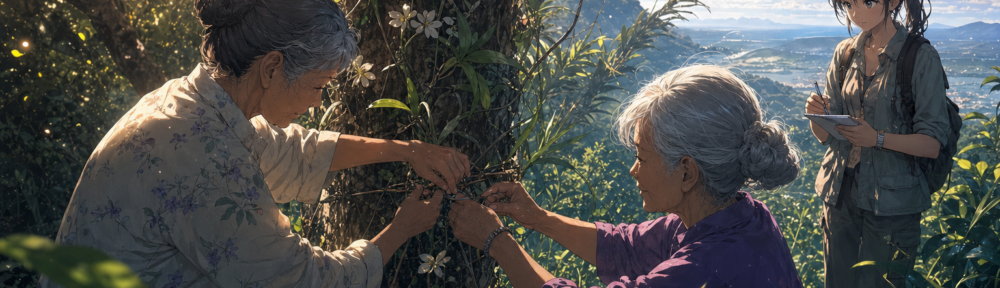
恆春的落山風不是氣象預報裡的「東北季風略強」。每年秋冬,中央山脈像一道牆把季風擋住、壓縮、加速,風在恆春半島出口時可以輕鬆吹倒人,連路邊的電線桿都會在夜裡發出低頻共鳴。把一株剛野放的蝴蝶蘭苗綁在樹幹上,然後走開——這需要某種信念,而不只是園藝技術。
出口了,但沒留住
走進歐洲超市的花卉區、紐約的花店、東京百貨公司的盆花展示架,你看到的白色蝴蝶蘭,很高比例產自台灣的溫室。台灣是全球最大蝴蝶蘭生產地之一,年產值達億元台幣規模,整個產業鏈從組培、育苗到成株出口高度成熟。
但這個物種的學名是 Phalaenopsis aphrodite,原產地是台灣。它最早由19世紀的西方植物學家在台灣採集、記錄,帶回歐洲命名,此後變成全球溫室花卉的明星。一百多年後,台灣的野生族群幾乎消失了。在自然棲地,你幾乎找不到原生植株。
台灣把蝴蝶蘭出口給全世界,但沒把它留在自己的土地上。這是植物地理的事實。
大光阿嬤的手
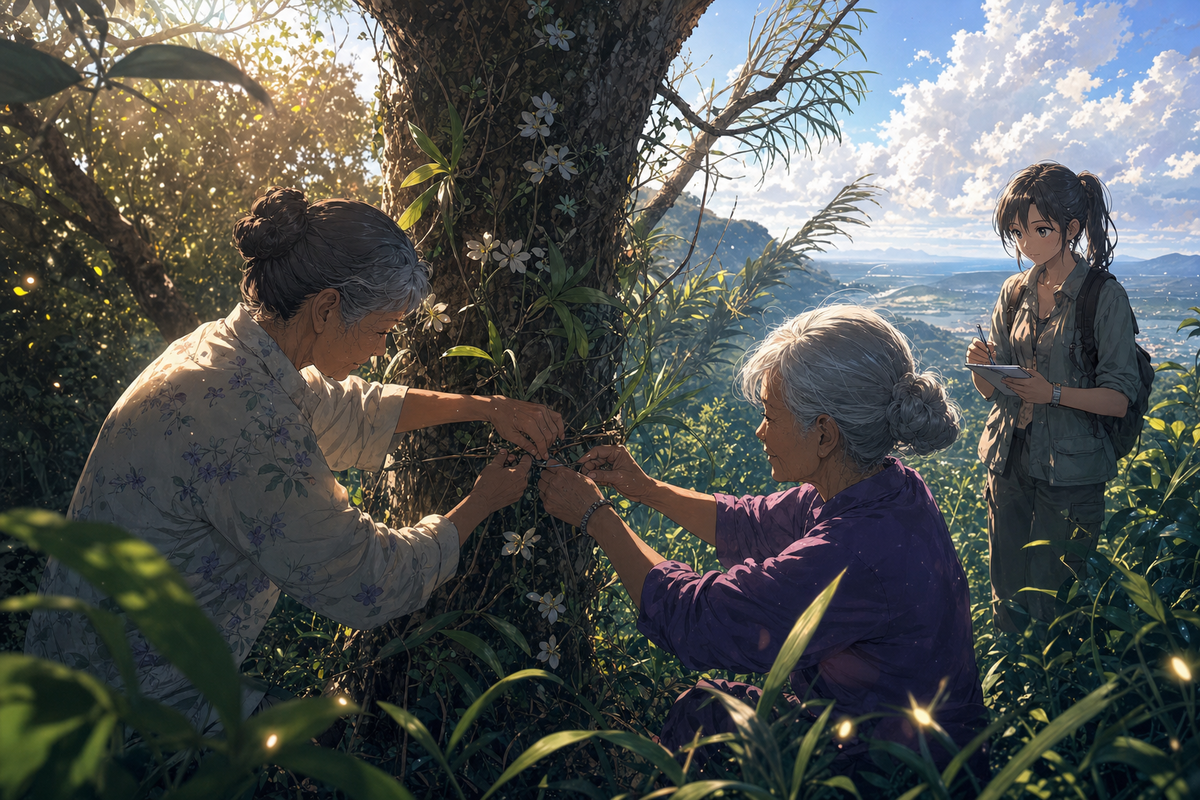
恆春大光社區的阿嬤們在做的事,用說的很簡單:手工綁苗、選地、野放、定期回來看。但每一個步驟都有細節要對。
選地要考慮遮蔭程度、宿主樹種、通風與濕度;綁苗要讓根系能接觸樹皮卻不被束縛;野放之後每隔幾週回去紀錄,觀察附著狀況、新根生長、葉片是否有病徵。這些判斷靠的是長年生活在這塊土地上累積的眼力,課本裡找不到。
然後落山風來了。
秋冬之際,強烈東北季風在恆春半島肆虐,這是恆春半島特有的氣候現象。野放的蝴蝶蘭苗就這樣在風裡待了半年。2026年,它們開花了。
從植物研究的角度,這個結果並不理所當然。蝴蝶蘭在野外附生於樹幹,根系需要時間真正錨定宿主,在這段脆弱期遇上落山風,存活率本來就是未知數。能撐過去、能開花,代表選地和綁苗的工法是對的,也代表這個地點的微氣候還保有 Phalaenopsis aphrodite 能生存的條件。
台灣最會出口自己
台灣擁有超過4,000種特有種,特有種比例約25%,是全球平均的4倍。蘭科植物的特有種比例在台灣尤其高,許多種類具有高度園藝價值——這也正是它們容易被商業採集、棲地受壓的原因(參考:Wikipedia: Endemic fauna of Taiwan;林業及自然保育署)。
台灣有一種能力:把本地的東西做成世界級產品。半導體如此,蝴蝶蘭也是。問題是這個過程往往是單向的——資源流出去,棲地留下來,但棲地裡空了。
學術資料庫裡有 Phalaenopsis aphrodite 的基因序列、形態描述、分類位置。標本館裡有它採自19世紀台灣的押葉標本。這些都是記錄,但記錄不等於保存。讓一株植物回到它本來生長的樹幹上,才是另一種意義的保存——而且這種保存會開花。
一個還在進行中的問題
大光社區的野放計畫現在只是半年里程碑,不是終點。蝴蝶蘭開了花,但野外族群的真正復育需要植株能夠自然繁殖、種子能夠散播、下一代能在沒有人工介入的情況下附生存活。這件事需要多少年、成功率有多高,目前沒有人能確定。
恆春半島的棲地壓力沒有消失。氣候變遷讓原本規律的物候變得難以預測,落山風的強度和時序也在變。阿嬤們定期回去看的那些植株,每一次都是一筆野外資料。
台灣有多少這樣的故事正在發生,而沒有被記錄?
— 溫以君
Taiwan Exports Orchids to the World but Lost Them at Home
The lushan wind of Hengchun is not what a weather forecast means by “slightly strong northeast monsoon.” Every autumn and winter, the Central Mountain Range compresses and accelerates the seasonal wind, releasing it over the Hengchun Peninsula with enough force to knock a person sideways. Tying a freshly propagated orchid seedling to a tree trunk and walking away requires something beyond horticultural skill.
Exported, but Not Kept
Walk into a European supermarket’s flower aisle, a New York florist, or a Tokyo department store orchid display. A significant share of those white moth orchids came from Taiwanese greenhouses. Taiwan is one of the world’s largest producers of potted orchids, with annual output valued in the hundreds of millions of NT dollars and a fully integrated supply chain running from tissue culture to finished export plants.
The species is Phalaenopsis aphrodite. It is native to Taiwan. Western botanists collected and formally described it in the 19th century, and it went on to become the dominant flower of the global greenhouse industry. More than a century later, wild populations in Taiwan have nearly vanished. In natural habitat, original plants are almost impossible to find.
Taiwan exported the orchid to the world and did not keep it on its own land. That is not a metaphor. It is plant geography.
What the Grandmothers Know
The grandmothers of Daguang Community in Hengchun are doing something that sounds simple: hand-binding seedlings to host trees, selecting sites, releasing plants into the wild, and returning every few weeks to record what happens. But each step contains knowledge that does not come from textbooks.
Site selection requires reading the canopy shade, the host tree species, airflow, and humidity. Binding technique must allow roots to contact bark without being strangled. Follow-up visits track attachment progress, new root growth, and leaf condition. Then the lushan wind arrives — the peninsula’s signature autumn-winter phenomenon — and the seedlings spend half a year in it.
In 2026, they flowered.
From a plant research standpoint, this outcome was not guaranteed. Epiphytic orchids in the wild need time to anchor their root systems to a host before they can tolerate stress. Surviving the lushan wind during that vulnerable window, and then producing flowers, means the site selection and binding method were correct — and that the microhabitat still holds conditions Phalaenopsis aphrodite can use.
The Arithmetic of Loss
Taiwan holds more than 4,000 endemic species, with an endemism rate of roughly 25% — about four times the global average. The proportion of endemic species in the orchid family is especially high in Taiwan, and many of those species carry commercial horticultural value. That value is part of why they face pressure: collection, habitat conversion, and climate disruption combine into the standard threat profile (sources: Wikipedia: Endemic fauna of Taiwan; Forestry and Nature Conservation Agency, Taiwan).
Taiwan has a consistent pattern of turning local biological material into world-class products. That process tends to be one-directional. The resource leaves; the habitat stays, but hollowed out.
Specimen collections and gene databases hold detailed records of Phalaenopsis aphrodite. There are pressed specimens from 19th-century Taiwan sitting in herbaria. These are documentation, not conservation. Putting a plant back on the tree trunk it evolved to grow on is a different kind of keeping — one that can flower.
Half a Year In
The Daguang Community project has reached a six-month milestone, not a finish line. Flowering is promising, but genuine wild population recovery requires plants to reproduce naturally — seeds dispersed, seedlings established without human help. How long that takes and at what success rate, nobody yet knows.
The habitat pressures on the Hengchun Peninsula have not eased. The grandmothers who return to check on each plant are generating field data with every visit. How many similar efforts exist across Taiwan, unrecorded?
— 溫以君
延伸閱讀
https://justfly.idv.tw/s/yLk8JBM