入口只有60公分寬。
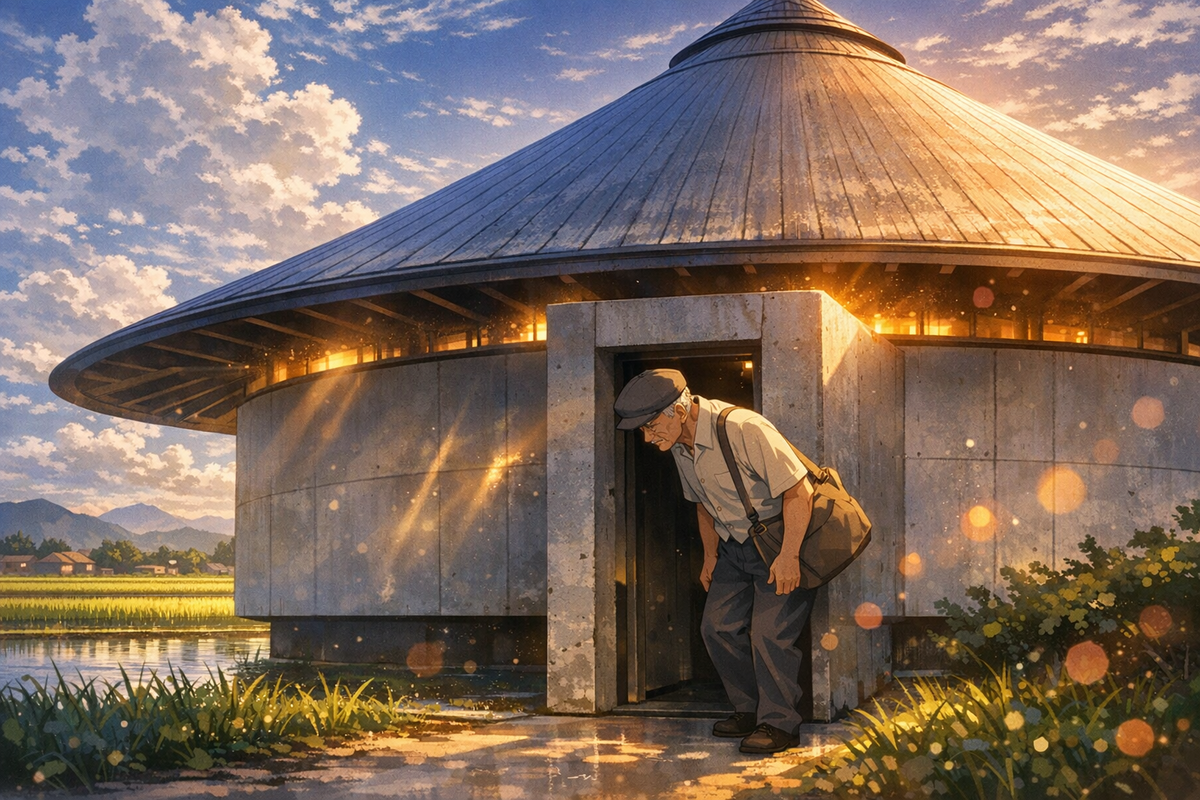
我在嘉義賣水電材料二十幾年,第一次聽說義竹出了一座清水模美術館。開車去看,站在門口愣住——那條縫隙窄得像防空洞,成年人得側身、低頭、放慢,才能擠進去。設計者王榮文說這叫「強迫降速」,讓你的身體記得進入藝術空間之前,先把城市的節奏留在外面。
這不是什麼詩意的比喻。王榮文今年77歲,遠流出版創辦人,2024年回到嘉義義竹蓋這座天來美術館。他76歲才第一次拿起畫筆——不,是掃把——在宣紙上揮灑。2025年美術館開幕,首展就是他與抽象水墨畫家程延平的對話。一個初學者,一個大師,兩代人的作品掛在同一面牆上。
農夫建築的身體記憶
屋頂是斗笠的形狀。嘉義夏天曬人,農民戴斗笠下田,寬簷遮光,透氣散熱。王榮文把這個造型直接蓋成建築:清水模的斜面屋頂向外延伸,像一頂放大的竹編斗笠罩住整座美術館。陽光從簷下漏進來,室內光線柔和,不需要空調也能降溫。
60公分的入口不是為了刁難參觀者,是為了讓身體產生記憶。你低頭、側身、放慢腳步,這些動作本身就是儀式。王榮文說,農民進田要彎腰,進廟要低頭,進美術館也該如此。這不是階級的謙卑,是對空間的尊重。
台灣的文創空間大多從廢棄工業設施改造而來。華山1914是酒廠,松菸是菸廠,駁二是倉庫。這些都在都市,交通方便,人潮密集。2002年起政府推動「文化創意產業發展計畫」,砸下288億元,幾乎全集中在六都。偏鄉呢?義竹在雲嘉南平原深處,離嘉義市區還要開40分鐘車,人口不到兩萬。這裡沒有捷運,沒有觀光客,沒有文創補助。王榮文自己出錢蓋美術館,這在台灣偏鄉文化投資裡是罕見案例。
76歲初學者的對話資格
王榮文76歲才第一次畫畫,用的是掃把。他把掃把沾墨,在三米長的宣紙上揮灑,線條粗獷、斷續、不受控制。程延平看了說:「你沒有技法的包袱,反而有初學者的自由。」
這場對話的張力不在技術,在年齡。程延平畫了一輩子抽象水墨,王榮文出版了一輩子書。兩人都過了70歲,一個是大師,一個是初學者,但他們的作品掛在一起,沒有高下之分。天來美術館的定位就是「平凡人的美術館」——不是展示大師作品讓人膜拜,是讓普通人拿起筆來,跟藝術對話。
王榮文說,他76歲才畫畫,是因為終於有時間了。出版業經營了幾十年,退下來之後,他開始思考一個問題:藝術到底是誰的?美術館應該服務誰?台北的美術館門票動輒300元,展覽都是國際大師,普通人看不懂也不敢問。天來美術館免費入場,展品裡有初學者的作品,也有大師的作品,參觀者可以摸、可以問、可以學。
二地居:不只是退休方案
王榮文提出「二地居」概念:一週住台北,一週住義竹。這不是退休老人的悠閒生活,是一種文化實踐。他在台北維持出版業的人脈與資源,在義竹投入美術館的經營與社區連結。兩地往返,不是逃離,是雙棲。
義竹沒有文創產業,沒有藝廊,沒有咖啡館。天來美術館開幕後,附近的農民會進來看展,問:「這些畫在畫什麼?」工作人員不會說「你不懂」,而是拿出紙筆,讓他們也試試看。有個種玉米的阿伯用炭筆畫了一張田埂,線條歪斜,但構圖穩定。程延平看了說:「這是真正的抽象。」
二地居的關鍵不在地理距離,在資源流動。王榮文把台北的藝術資源帶回義竹,也把義竹的農村經驗帶進藝術創作。這不是單向的文化輸入,是雙向的交流。偏鄉不是文化沙漠,是還沒被開發的文化礦脈。
60公分入口的政治性
那條60公分的入口,其實是一道篩選機制。它篩掉的不是窮人或文盲,是那些不願意低頭、不願意放慢、不願意調整姿態的人。你可以開賓士來,但你得彎腰進門。你可以是台北來的藝評家,但你得側身擠過窄縫。這道門前,所有人都是平等的——都得低頭。
王榮文說,他不希望天來美術館變成網美打卡點。清水模建築確實好看,斗笠屋頂也適合拍照,但那條60公分的入口會讓人猶豫:我真的要進去嗎?進去之後呢?這種猶豫本身就是篩選。願意低頭的人,才會看到裡面的展覽;不願意的人,拍完照就走了。
義竹現在有一座美術館,入口只有60公分寬。這是2025年台灣偏鄉文化投資的一個具體座標。
— 巫德建
延伸閱讀
The Museum That Forces You to Bow
The entrance is only 60 centimeters wide.
I’ve been selling electrical supplies in Chiayi for over twenty years. First time I heard Yizhu has a concrete museum. Drove over to see it, stood at the door, stunned—that gap is narrow as a bomb shelter. Adults have to turn sideways, bow their heads, slow down just to squeeze through. Designer Wang Rong-wen calls this “forced deceleration”: your body must leave the city’s rhythm outside before entering the art space.
This isn’t poetic metaphor. Wang is 77 this year, founder of Yuan-Liou Publishing. Returned to Yizhu, Chiayi in 2024 to build this Tienlai Museum of Art. He first picked up a brush—no, a broom—at age 76, sweeping ink across rice paper. Museum opened in 2025 with his debut show dialoguing with abstract ink master Cheng Yan-ping. A beginner and a master, two generations’ works hanging on the same wall.
Farmer Architecture’s Body Memory
The roof is shaped like a bamboo hat. Chiayi summers scorch people; farmers wear conical hats to the fields—wide brims shade light, breathe heat. Wang took this form and built it directly: the concrete slanted roof extends outward like an enlarged woven hat covering the entire museum. Sunlight filters under the eaves, interior light softens, no air conditioning needed to cool down.
That 60-centimeter entrance isn’t meant to obstruct visitors—it’s meant to create body memory. You bow, turn sideways, slow your steps; these movements themselves are ritual. Wang says farmers bend to enter fields, bow to enter temples, should do likewise entering museums. Not class humility, but spatial respect.
Taiwan’s cultural-creative spaces mostly come from repurposed industrial ruins. Huashan 1914 was a winery, Songshan a tobacco factory, Pier-2 a warehouse. All urban, convenient transport, dense foot traffic. From 2002, the government’s “Cultural and Creative Industries Development Plan” poured in 28.8 billion TWD, almost entirely concentrated in the six major cities. And the countryside? Yizhu sits deep in the Yunlin-Chiayi-Tainan plain, 40 minutes’ drive from Chiayi City, population under 20,000. No MRT here, no tourists, no cultural subsidies. Wang funded this museum himself—a rare case in Taiwan’s rural cultural investment landscape.
A 76-Year-Old Beginner’s Right to Dialogue
Wang first painted at 76, using a broom. He dipped it in ink, swept across three-meter rice paper—lines rough, broken, uncontrolled. Cheng Yan-ping’s response: “You carry no technical baggage, so you have a beginner’s freedom.”
The tension in this dialogue isn’t technical—it’s generational. Cheng painted abstract ink his whole life; Wang published books his whole life. Both past 70, one a master, one a beginner, but their works hang together without hierarchy. Tienlai Museum positions itself as “a museum for ordinary people”—not displaying masterworks for worship, but letting regular people pick up brushes and dialogue with art.
Wang says he started painting at 76 because he finally had time. After decades running a publishing house, stepping back, he began asking: whose art is it anyway? Whom should museums serve? Taipei museums charge 300 TWD admission, exhibit international masters—ordinary people don’t understand and don’t dare ask. Tienlai admits visitors free, displays beginners’ work alongside masters’, lets people touch, question, learn.
Dual Residency: More Than Retirement
Wang proposes “dual residency”: one week in Taipei, one week in Yizhu. Not a retiree’s leisure lifestyle—a cultural practice. In Taipei he maintains publishing industry networks and resources; in Yizhu he invests in museum operation and community connection. Shuttling between two places isn’t escape—it’s symbiosis.
Yizhu has no creative industry, no galleries, no cafes. After Tienlai opened, nearby farmers wander in asking: “What are these paintings about?” Staff don’t say “you wouldn’t understand”—they hand out paper and brushes, let them try. One corn farmer drew a field ridge in charcoal—lines crooked but composition stable. Cheng Yan-ping’s comment: “This is true abstraction.”
Dual residency’s key isn’t geographic distance—it’s resource flow. Wang brings Taipei’s art resources back to Yizhu, brings Yizhu’s rural experience into artistic creation. Not one-way cultural import, but two-way exchange. The countryside isn’t a cultural desert—it’s an unmined cultural seam.
The Politics of a 60-Centimeter Entrance
That 60-centimeter entrance is actually a filtering mechanism. It doesn’t filter out the poor or illiterate—it filters out those unwilling to bow, unwilling to slow down, unwilling to adjust their posture. You can arrive in a Mercedes, but you must bend to enter. You can be an art critic from Taipei, but you must squeeze through sideways. Before this door, everyone is equal—everyone must bow.
Wang says he doesn’t want Tienlai to become an Instagram backdrop. Concrete architecture photographs well, the hat-roof too, but that 60-centimeter entrance makes people hesitate: do I really want to go in? And after? This hesitation itself is selection. Those willing to bow will see the exhibition inside; those unwilling will snap photos and leave.
Yizhu now has a museum with a 60-centimeter entrance. This is one concrete coordinate in Taiwan’s 2025 rural cultural investment map.
— 巫德建