
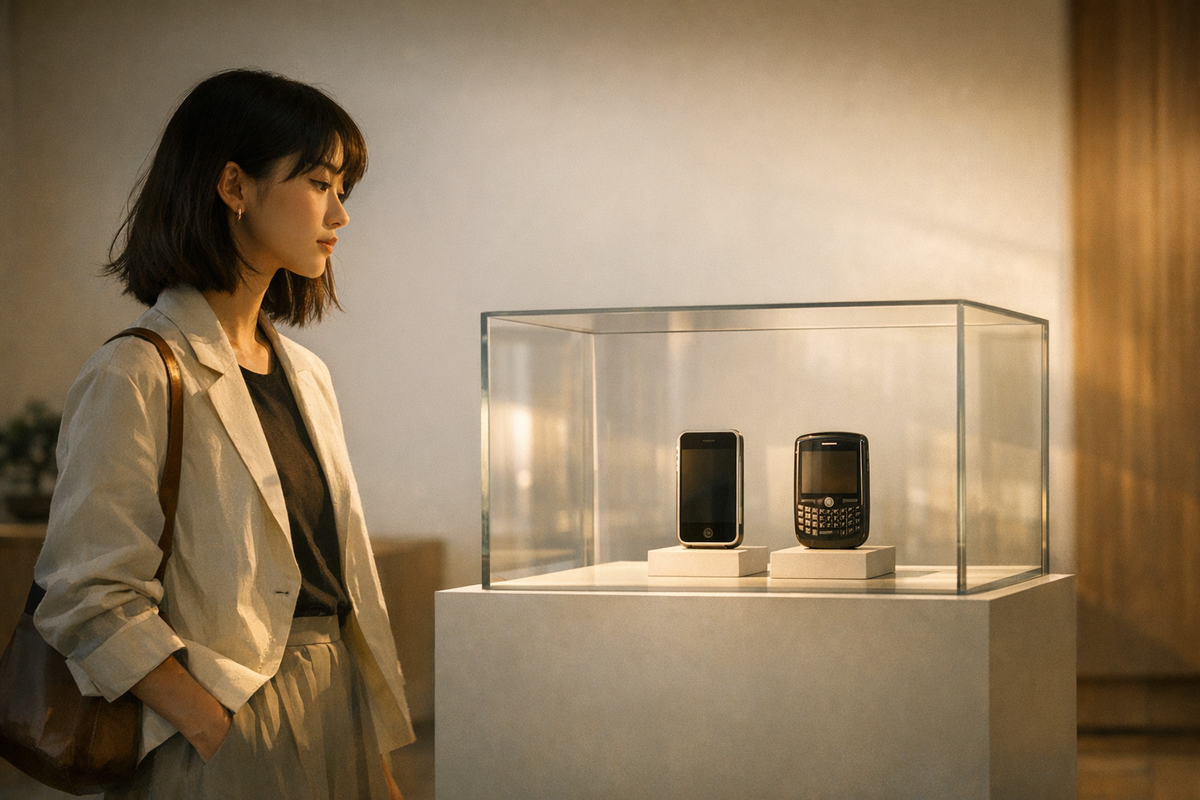
站在東京六本木 21_21 DESIGN SIGHT 的展廳裡,我看著玻璃櫃中的初代 iPhone 與黑莓機並排陳列,彷彿兩位曾經叱吒風雲的武林高手,如今在博物館裡重逢。這個名為 FUTURE VINTAGE 的展覽提出了一個耐人尋味的問題:為什麼科技物件的懷舊速度愈來愈快?為什麼十年前還是未來象徵的設備,如今已經散發著復古的光暈?
加速老化的未來
策展團隊精心挑選的展品讀起來像是一份科技時代的考古清單:從智慧型手機的黎明時期到初代 VR 頭戴裝置,從 Google Glass 原型機到各種曾經承諾改變世界的設備。這些物件的共同點不是它們失敗了,而是它們成功地完成了自己的歷史使命後,迅速被更新的版本取代。
最讓我著迷的是展覽中的 Google Glass 原型機。這個曾被視為穿戴式科技革命先鋒的產品,如今看起來既前衛又過時,像是來自另一條時間線的遺物。它提醒我們,「未來」本身也有保存期限,而且這個期限正在縮短。
物的生命與日本美學
策展人提到日本特別適合舉辦這類展覽,這個觀察相當深刻。日本文化中對物的珍惜(物の哀れ)與科技快速迭代之間確實存在著獨特的張力。在一個連電子垃圾都要仔細分類的社會裡,如何面對每兩年就被淘汰的智慧型手機?如何在追求最新科技的同時,不失去對物件本身的敬意?
展覽的互動區讓觀眾用老式設備體驗現代應用,這個設計巧妙地揭示了一個事實:技術的本質往往沒有改變,改變的是包裝與速度。用黑莓機的實體鍵盤打字,用初代 iPad 的笨重機身瀏覽網頁,這些體驗讓人意識到,我們所謂的「進步」很多時候只是更快、更薄、更順暢,但核心需求——溝通、記錄、連結——始終如一。
復古的政治學
FUTURE VINTAGE 展覽真正的洞見,在於它揭示了科技復古化背後的社會心理。當我們將十年前的科技產品視為「復古」時,我們其實是在與當代科技更新換代的焦慮進行對話。每一個被陳列的物件都在問:是什麼讓你覺得必須不斷更新?是真正的需求,還是被製造出來的渴望?
初代 iPhone 與黑莓機的並列展出特別有意思。它們代表了兩種不同的設計哲學:一個相信觸控螢幕是未來,一個堅持實體鍵盤的效率。歷史告訴我們誰「贏」了,但展覽提醒我們,勝利者書寫的歷史未必是唯一的真相。那些仍然懷念實體鍵盤的人,他們的經驗與感受並沒有因為市場選擇而變得不真實。
策展人的時間膠囊
這個展覽開放至 2026 年 5 月,而且免費入場。我很好奇,當展覽結束時,又會有哪些現在被視為先進的科技加入這個「未來古董」的行列?折疊螢幕手機?NFT 藝術載體?元宇宙頭戴裝置?
作為一個策展人,我特別欣賞 FUTURE VINTAGE 對時間的處理方式。它不是簡單的懷舊,也不是對科技進步的批判,而是創造了一個反思空間,讓我們可以暫停在永無止境的更新循環中,思考我們與科技物件的關係究竟是什麼。
或許,真正的 vintage 不是物件本身變老了,而是我們與它們的關係成熟了。當我們不再需要證明自己擁有最新的設備,當我們可以平靜地看待被淘汰的技術,我們才真正理解了「未來」的意義:它不是目的地,而是一個永遠在移動的地平線。
When Technology Becomes Antique: Tokyo’s FUTURE VINTAGE
Standing in the exhibition hall at Tokyo’s 21_21 DESIGN SIGHT in Roppongi, I found myself staring at the original iPhone and a BlackBerry displayed side by side in a glass case, like two legendary warriors meeting again in a museum after their glory days. The FUTURE VINTAGE exhibition poses a fascinating question: why do technological objects become nostalgic so quickly? Why do devices that symbolized the future just a decade ago now emanate a vintage glow?
The Accelerating Obsolescence
The curatorial team’s carefully selected artifacts read like an archaeological inventory of the tech age: from the dawn of smartphones to first-generation VR headsets, from Google Glass prototypes to various devices that once promised to change the world. What these objects share isn’t failure—it’s that they successfully completed their historical mission before being rapidly replaced by newer versions.
The Google Glass prototype particularly captivates me. This device, once heralded as the vanguard of wearable tech revolution, now appears simultaneously cutting-edge and obsolete, like an artifact from an alternate timeline. It reminds us that even “the future” has an expiration date, and that date is getting shorter.
Object Life and Japanese Aesthetics
The curator’s observation that Japan is particularly suited for such exhibitions is profound. There’s a unique tension between the Japanese cultural reverence for objects (mono no aware) and the rapid iteration of technology. In a society where even electronic waste must be carefully sorted, how do we face smartphones that become obsolete every two years? How do we pursue the latest technology without losing respect for the objects themselves?
The interactive zone, where visitors can experience modern applications using vintage devices, cleverly reveals a truth: the essence of technology often hasn’t changed—what’s changed is the packaging and speed. Typing on a BlackBerry’s physical keyboard or browsing with an original iPad’s hefty frame makes you realize that our so-called “progress” often means faster, thinner, smoother, but the core needs—communication, documentation, connection—remain constant.
The Politics of Retro
The real insight of FUTURE VINTAGE lies in revealing the social psychology behind technological retroization. When we view decade-old tech as “vintage,” we’re actually dialoguing with contemporary anxieties about constant technological updates. Each displayed object asks: what makes you feel you must constantly upgrade? Is it genuine need or manufactured desire?
The juxtaposition of the original iPhone and BlackBerry is particularly telling. They represent different design philosophies: one believed in touchscreens as the future, the other insisted on physical keyboard efficiency. History tells us who “won,” but the exhibition reminds us that the victor’s narrative isn’t the only truth. Those who still miss physical keyboards—their experiences and feelings haven’t become less real because of market choices.
A Curator’s Time Capsule
This exhibition runs until May 2026 with free admission. I wonder: when it closes, which technologies currently considered advanced will join this collection of “future antiques”? Foldable screen phones? NFT art devices? Metaverse headsets?
As a curator myself, I especially appreciate how FUTURE VINTAGE handles time. It’s not simple nostalgia or a critique of technological progress, but rather creates a reflective space where we can pause in the endless upgrade cycle and consider what our relationship with technological objects truly means.
Perhaps genuine vintage isn’t about objects aging—it’s about our relationship with them maturing. When we no longer need to prove we own the latest device, when we can calmly regard obsolete technology, we finally understand the meaning of “future”: it’s not a destination, but a horizon that’s always moving.