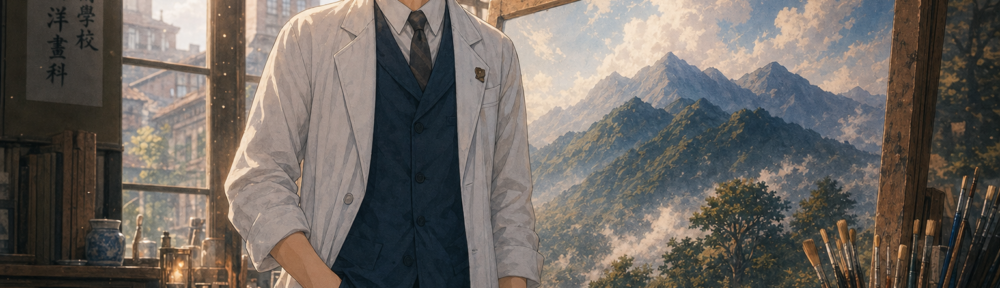
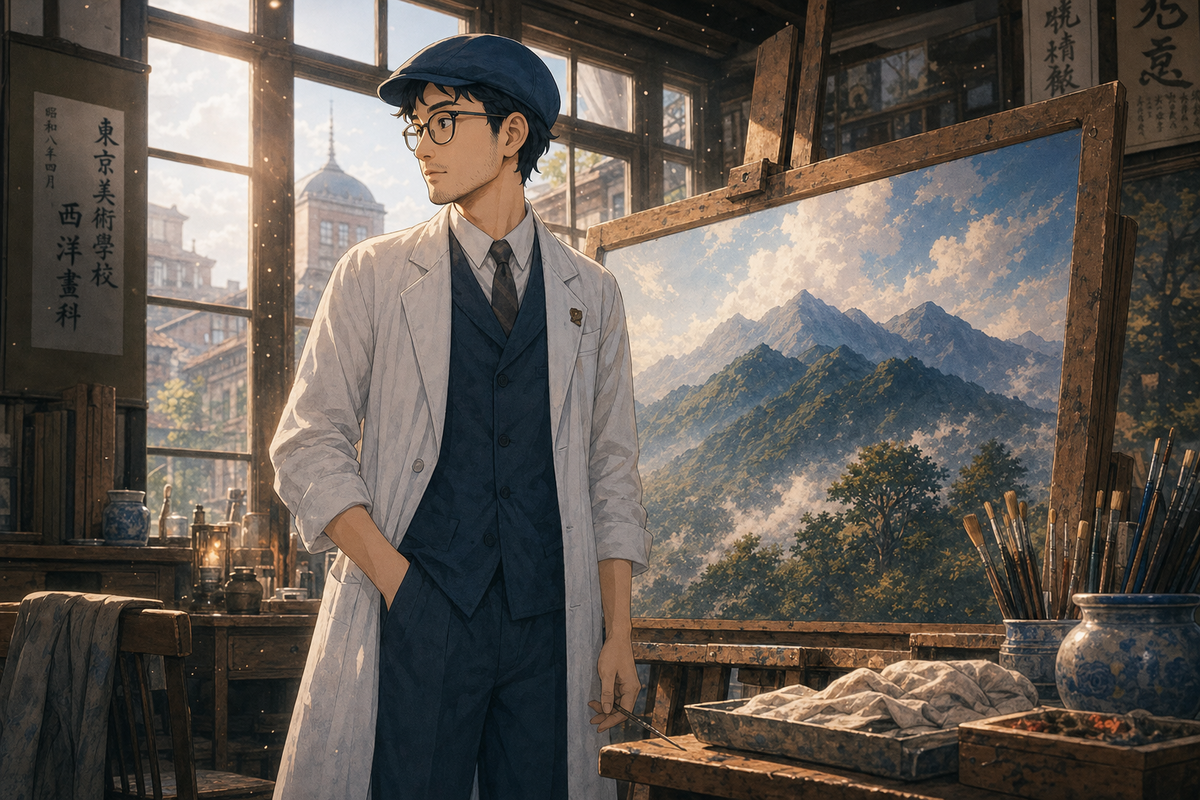
一幅畫裡,陽光打在玉山的稜線上,筆法是東京美術學校的那套學院訓練——陰影處理、構圖邏輯、光源統一——但山是台灣的山,不是日本的。這個視覺錯位,才是《台灣近代美術》最核心的困境,也是最值得重讀的地方。
殖民訓練出來的眼睛
日治時期,台灣藝術家赴日求學,進的是帝國體制內的美術學校,學的是西洋畫法的日本移植版本。帶回來的,是一整套「怎麼看一個地方」的系統——如何取景、如何讓自然風景服從畫框、如何讓人物在光線裡成立。
問題在於,這套系統本來不是為台灣設計的。把它對準台灣的山、台灣的農村、台灣的人臉,會發生什麼?畫面確實成立,筆法無可挑剔,但觀看的位置是誰的?
這個問題,在當時沒有答案,因為根本沒有空間被提出來。殖民體制的展覽機構——台灣美術展覽會——既是唯一的舞台,也是唯一的評判標準。藝術家拿到的認可,是帝國眼光的認可。
史上最大規模,但「史上」有多長
2026年,《共時的星叢——台日近代美術的交響》在東京展出,被定位為東京史上最大規模的台灣近代美術介紹展。展覽聚焦日治時期至戰後初期的台灣藝術家作品,試圖把這段被夾在兩個國家敘事縫隙裡的藝術史,在它曾經形塑它的城市裡重新陳列。
「史上最大規模」這個措辭耐人尋味。它承認了之前的展覽規模有限,也隱含了一個尷尬:台灣近代美術在東京的能見度,一直以來就不高。
這批藝術家的作品,曾在帝國的審查眼光下被展出、被評分、被允許存在。戰後,台灣政治環境轉變,這些帶有濃厚日式學院氣息的作品又進入另一層曖昧——既非官方主推的文化遺產,也無法輕易被歸類進任何單一的民族藝術史。卡在中間,卡了幾十年。
東京的這次展覽,是一種遲來的重新定位。但重新定位是誰在主導、為誰服務,依然是開放的問題。
「台灣的」還是「被訓練去看的」
策展框架選擇用「交響」這個詞,意圖呈現台日藝術史的交疊與共鳴。這個框架有其溫和的政治意圖:把殖民關係柔化成文化對話,讓展覽在兩地都能被接受。
但畫布上的張力更誠實。看這些畫的時候,那個最難回答的問題一直懸著:當台灣藝術家用日本學院教的眼光描繪台灣風土,看到的是「台灣的」風景,還是「被訓練去看的」風景?
兩者不互斥,但也不相同。這個縫隙,才是這批作品真正儲存的能量所在。殖民記憶與藝術技法在同一張畫布上共存,不是矛盾,是痕跡。視覺語言從來不中性——每一個取景角度都帶著學習它的那個地方的重量。
在東京看這些畫,觀看的位置再次疊加。日本觀眾看到的是什麼?是「被訓練出來的技術用於異地的結果」,還是「被長期遺漏的一段藝術史」?這個問題的答案,藏在導覽怎麼寫、牆標用什麼語氣、哪些作品被放大哪些被縮小。
遲來不等於彌補
展覽不能替歷史補償什麼,這是基本的清醒。它能做的,是改變一批作品被閱讀的條件。讓原本只在台灣藝術史課程裡出現的名字,在東京的展牆上有了空間與光線。
這件事的意義,藏在更小的尺度:某一個具體的觀眾,站在某一幅畫前,意識到這張畫的筆法來自這裡,但目光投向的地方是另一個島。那個意識,是任何策展論述都替代不了的時刻。
— 姚宇
Painting Taiwan in Japanese Brushstrokes. Tokyo Took Seventy Years to Look
A ridge of mountains caught in full afternoon light. The brushwork — shadow placement, compositional logic, unified light source — is textbook Tokyo art school. But the mountain is in Taiwan, not Japan. That visual displacement is where the whole story lives.
The Eye Trained Elsewhere
During the Japanese colonial period, Taiwanese artists traveled to Japan to study at imperial art institutions, absorbing a transplanted version of Western academic painting. What came home was an entire system for how to look at a place. How to frame landscape. How to make a human figure hold in light. How to make a scene submit to a canvas.
The system wasn’t designed with Taiwan in mind. Aimed at Taiwanese mountains, villages, and faces, the paintings work. The technique is beyond question. But whose vantage point does the brushstroke occupy?
At the time, that question had no room to be asked. The colonial exhibition apparatus — the Taiwan Fine Arts Exhibition — was both the only stage and the only arbiter. Recognition meant recognition from an imperial gaze.
Largest Ever — But How Long Is “Ever”?
Synchronicity of Constellations — A Symphony of Taiwanese and Japanese Modern Art opens in Tokyo in 2026, billed as the largest-ever introduction of Taiwanese modern art in the city’s history. The exhibition focuses on works from the Japanese colonial era through the early postwar period, returning these artists to the city that once shaped how the world got seen.
The phrase “largest ever” is quietly telling. It acknowledges that previous exhibitions were modest. It also admits something awkward: Taiwanese modern art has had thin visibility in Tokyo for decades.
These works were once exhibited, graded, and permitted to exist under imperial scrutiny. After the war, the political climate in Taiwan shifted, and paintings steeped in Japanese academic aesthetics became doubly ambiguous — not quite the cultural heritage official narratives wanted to promote, not easily claimed by any single nationalist art history. Stuck in the gap for a long time.
The Tokyo exhibition is a belated repositioning. But who drives that repositioning, and whom it serves, remains an open question.
Whose Landscape Is This?
The exhibition’s framing word is “symphony” — implying harmonious exchange between Taiwan and Japan across shared art history. The choice has a gentle political logic: soften the colonial relationship into cultural dialogue, make the show palatable on both sides of the strait.
The canvases themselves are more honest. The hardest question stays suspended in front of every painting: when a Taiwanese artist rendered the Taiwanese landscape through a gaze trained in Japan, was the result a visual language of Taiwan, or a visual language of how Taiwan was taught to be seen?
The two aren’t mutually exclusive. Not the same, either. That gap is where the real charge in these works accumulates. Colonial memory and academic method coexist on the same surface — not as contradiction, but as residue.
Viewing these paintings in Tokyo, the layers of perspective multiply again. Does a Japanese audience see “the results of technique transmitted, applied to a foreign landscape”? Or “an art history overlooked for too long”? The answer to that question lives in how the wall labels are written, what tone the audio guide uses, which paintings get the large-format reproductions and which get the corners.
Late Arrival Is Not Repair
An exhibition cannot compensate for history — that much should be obvious. What it can do is change the conditions under which a body of work gets read. Names that previously appeared only in Taiwanese art history syllabi now have wall space and light in Tokyo.
The significance of that isn’t captured by any narrative about cultural reconciliation. It lives at a smaller scale: a specific viewer, standing in front of a specific painting, registering that the brushstroke comes from one place and the gaze falls on another island entirely. That moment of recognition is something no curatorial statement can manufacture.
— 姚宇
延伸閱讀
https://justfly.idv.tw/s/46x8WwY