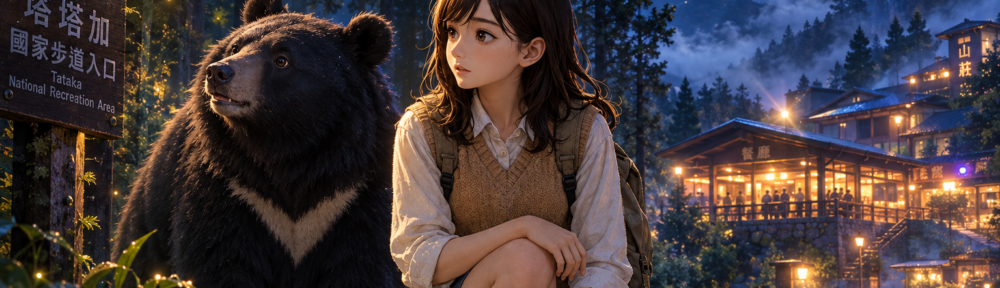

西勢山林道入口,一段熊的影像
2026年9月29日,林業及自然保育署台中分署發布了一段影像:台灣黑熊出現在大雪山國家森林遊樂區49K小雪山資訊站旁的西勢山林道入口。拍下牠的不是登山客的手機,是一套AI防熊預警系統。據中央社報導,這是目前監測紀錄中,第一次在較接近遊客活動密集區的地方看到黑熊。
過去這套系統也拍過黑熊,多次。只是位置都在外圍,離遊客走動的範圍還有一段距離。這次的畫面往人的方向挪了一步。
AI在這裡不推薦商品,只看路口
談到AI,畫面多半是對話框、生成圖片、客服機器人。大雪山的這一套長得完全不同:自113年起,監測點分別設在遊客中心、餐廳、住宿區和49K小雪山資訊站周邊。鏡頭對著的,是廚餘和食物氣味可能引來動物的地方。
當影像辨識判定有熊接近,管理單位可以提早知道、提早動作。農業部林保署也說過,台東的嘉明湖山屋、向陽山屋,同樣導入了這類AI影像辨識與預警。名單上全是「人與熊最可能撞見」的地點。紀錄片拍久了會明白,最有力的畫面往往不在深山,在邊界:一邊是餐廳的燈,一邊是林道的黑。
熊記得哪裡有食物
林保署9月中旬首度公開野放黑熊的追蹤影片。熊「達古阿里」翻找垃圾,吃山區工作人員留下的便當殘渣,在工寮周邊活動;另一隻「阿里曼」野放後,在越冬期間進入洞穴蟄居長達70天。同一場記者會上,研究者提到熊會學習、記得食物來源,趕走幾次,牠可能還是回來,有時隔天,有時隔年。
所以大雪山的重點不在拍到熊,而在拍到之後做什麼。台中分署已在各步道入口立了熊出沒警告牌,高風險區域周邊有解說告示牌,遊客進收費站時,會領到一張友善黑熊宣導小卡。接下來,現場設施與不同情境的人熊遭遇處置演練,依「人熊衝突應變指引」進行。該指引把遭遇分成目擊、侵擾、傷害三類,再配上四級應變,從紀錄追蹤到主動驅離及誘捕。
別把筆數當成熊數
熊變多了嗎?網路上很容易看到一串漂亮的對比數字。森林署報告(第15頁)比較的是兩個時期的黑熊紀錄筆數:2011至2017年,和2018年以後,後期明顯增加。那是紀錄筆數。鏡頭變多、監測變密,筆數就會往上走;它不是活動點位,也不是族群數量。拿它當熊口普查,等於拿監視器數量推算路上有幾個人。
這一段影像能確定的只有一件事:熊在人的設施附近出現過,而且是被機器先看見的。往後的畫面是什麼,取決於廚餘有沒有帶下山、垃圾桶有沒有蓋緊,以及演練是不是真的做完。台中分署說的時間是「近期」,還沒有確切的日子。
— 鄭佩玲
The Bear Reached the Dining Hall Road, and the Camera Saw It First
A bear at the Xishi forest road entrance
On September 29, 2026, the Taichung Branch of the Forestry and Nature Conservation Agency released footage of a Formosan black bear at the entrance to the Xishi forest road, next to the 49K Xiaoxueshan information station in Dasyueshan National Forest Recreation Area. No hiker’s phone shot it. An AI bear early-warning system did. According to CNA’s report, it is the first time a bear has been recorded this close to the area where visitors gather.
The system has caught bears on camera several times before, but always on the outer edges, some distance from where visitors walk. This time the image stepped toward them.
This AI does not recommend products. It watches a junction.
AI usually brings to mind a chat window, an image generator, a customer-service bot. The Dasyueshan system looks nothing like that. Since 2024 (ROC year 113), monitoring points have been placed at the visitor center, the restaurant, the lodging area and around the 49K station, the places where food waste and cooking smells can draw an animal in.
When image recognition flags an approaching bear, managers can know early and act early. The national forestry agency has also said similar AI recognition and warning is installed at the Jiaming Lake and Xiangyang mountain huts in Taitung. Every site on that list is a place where humans and bears are most likely to meet. A documentary maker learns quickly that the strongest frames are rarely deep in the wilderness. They sit on the border: a dining hall’s lights on one side, the dark of a forest road on the other.
Bears remember where the food is
In mid-September the agency publicly released tracking footage of released bears for the first time. One bear, Dagu Ali, rummaged through trash, ate lunchbox leftovers left by mountain workers and moved around work sheds. Another, Aliman, spent 70 days in a den during its first winter after release. At the same press event, researchers said bears learn and remember food sources. Chase one off a few times and it may still return, sometimes the next day, sometimes the next year.
So the point at Dasyueshan is less about catching a bear on camera than what happens afterward. The Taichung Branch has posted bear warning signs at trail entrances, put up explanatory signs around high-risk areas, and hands every visitor a friendly-bear information card at the toll booth. Soon the branch will run encounter drills and scenario simulations on site, following the agency’s bear-human conflict response guidelines. Those guidelines sort encounters into sighting, disturbance and injury, with four response levels running from record tracking to active hazing and trapping.
Do not mistake record counts for bear counts
Are there more bears? A neat before-and-after number is easy to find online. The forestry agency’s report (page 15) compares the number of black bear records across two periods, 2011 to 2017 and 2018 onward, and the later period shows clearly more. Those are record counts. They are not activity sites and not a population figure. More cameras and denser monitoring push record counts up on their own. Reading them as a bear census is like estimating how many pedestrians are on a street from the number of CCTV cameras.
What this clip does establish is narrower: a bear appeared near human facilities, and a machine saw it first. What the next frames show depends on whether food waste goes back down the mountain, whether bins are sealed, and whether the drills actually get done. The Taichung Branch’s timetable for them is “soon.” There is no date yet.
— 鄭佩玲
延伸閱讀
https://justfly.idv.tw/s/1e1k4UN