高雄駁二,五月的某個雨天
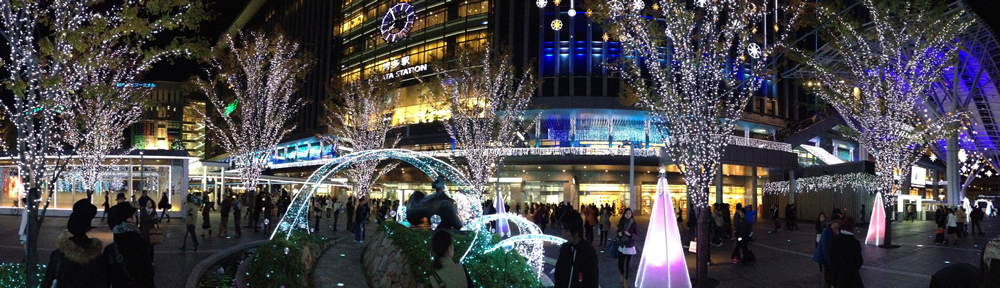
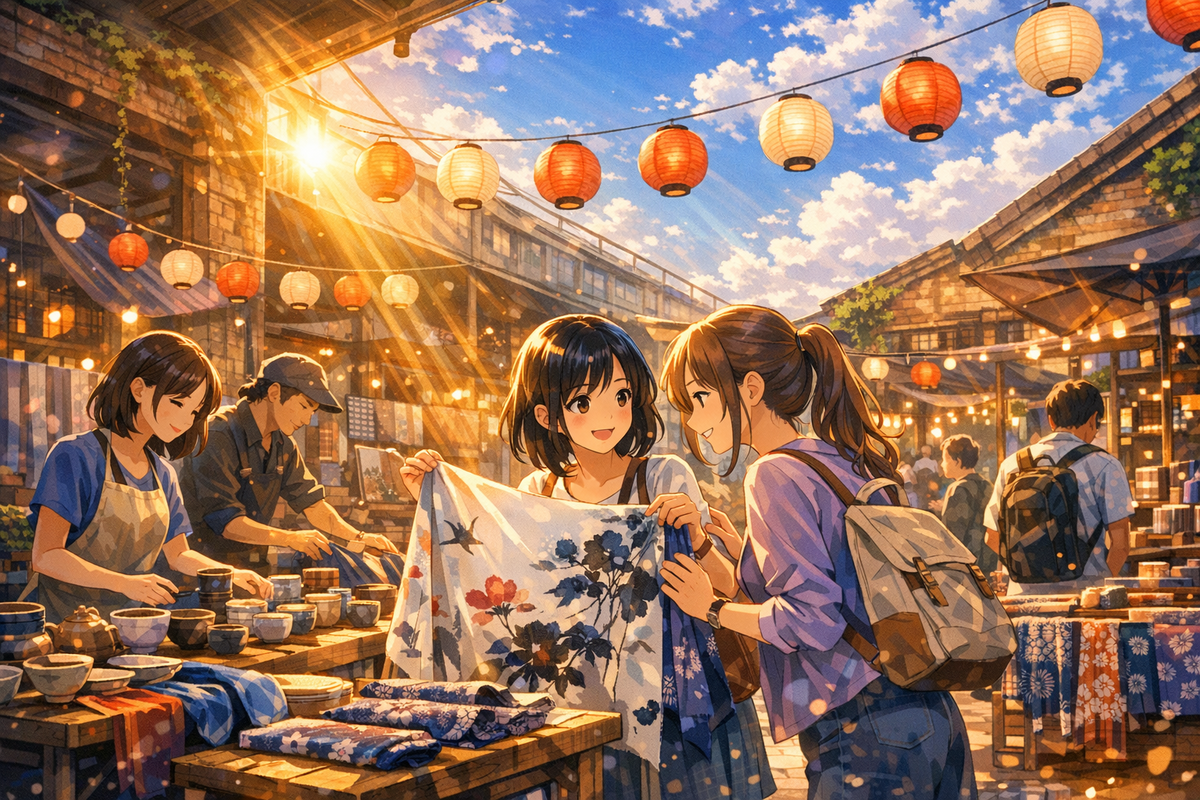
5月16日,高雄駁二藝術特區,170家台日品牌並排擺攤,50家來自日本九州的職人品牌第一次站在台灣的地盤上賣東西。兩天下來,5萬人次進場,現場產值達300萬元。這是「台浮緣日」市集第三屆,也是首度移師台灣主場。
同一週,台灣設計師品牌UUIN正在準備5月22日至24日於東京原宿的第二次快閃展。展出的是2026年春夏系列「Beautiful People|美人」——靈感來源是1927年入選日本帝展的台灣首位女性畫家陳進。她的《罌粟花》《合奏》《婦女圖》,在快一百年後,以布料的形式出現在原宿的選物架上。
還是同一週,創立於160年前的日本加賀友禪工藝糕點品牌KEISHINDO(桂新堂)選擇台灣作為亞洲第一個海外市場首登舞台。政府主導的Taiwan in Design 2026日本拓銷團也在這週落地日本渠道。
這四件事同時發生,結構使然。
陳進與那個被遺忘的句子
陳進,1907年生於新竹,師承鄉原古統,長於膠彩畫。1927年,她以19歲之齡入選日本帝展,成為台灣第一位獲此殊榮的女性畫家。她的畫裡有花,有女人,有台灣日常生活的肌理。她在1998年離世,留下的畫作現在是台灣美術史的重要典藏。
但「大多數台灣人不認識陳進,東京買手卻選中了她。」這句話不是在說台灣人健忘。它在說的是另一件事:台灣還有一整個被自己低估的文化庫存,而東京的眼光有時比我們自己更早看見它的市場價值。
UUIN三位台灣設計師做的,就是把這個庫存轉譯成當代服裝語言,然後透過A*COLLECTIVE JAPAN線上通路和原宿實體快閃,讓日本消費者買單。這個公式值得記下來:台灣被遺忘的藝術史人物→當代服裝轉譯→日本選物通路落地。不複雜,但需要一種自信——相信台灣自己的東西有人要。
日本160年品牌為什麼選台灣
KEISHINDO首次選台灣為亞洲海外市場,這個決策背後有一個值得拆解的邏輯。台灣不是東南亞市場裡體量最大的,不是消費力最高的,但它有一個其他市場很難複製的條件:對日本工藝美學有文化底蘊的接受能力,同時又有足夠的品牌識別力去分辨160年老牌和一般伴手禮的差距。台灣,對日本品牌來說,是一個「亞洲接受度測試場」。
台浮緣日的結構說明了同樣的邏輯。這個市集起源於高雄美濃與福岡浮羽市的地方創生交流,美濃與浮羽的緣分已走入第四年。2026年它回到台灣主場,50家日本品牌帶著名片來找台灣合作夥伴。市集旁邊,高雄市青年局同步舉辦台日商業交流會,協助青創品牌從現場人氣轉化為跨境合作。這不是文化節,這是產業媒合平台。「先市集驗市場、再常設店面」,這個路徑已經有模型了。
雙向道的那個瞬間
「台灣學日本」這個句子在過去幾十年裡幾乎是一個不需要論證的預設。台灣去日本進修,台灣引進日本品牌,台灣複製日本職人文化的展示邏輯。這個方向有它的合理性,也產生了真實的學習成果。
但2026年5月這一週說明的是:這個句子現在說到一半就說不下去,因為另一半是「日本也在台灣找答案」。KEISHINDO找的是海外市場的第一個錨點,日本九州職人找的是台灣消費者的反應,東京買手找的是陳進筆下那種台灣女性的日常感。
Taiwan in Design以「場域策展、實地考察、精準媒合」三位一體的模式帶台灣品牌進軍日本市場,北市府也籌組臺北主題館參加2026日本台灣形象展。政府的動作通常是最慢跟上結構變化的,當政府開始系統化操作這件事,代表這條雙向道不是臨時的。
陳進的畫在1927年入選帝展,是台灣作品被日本體制認可的一刻。快一百年後,她的圖像轉化成布料,在原宿被日本消費者購買。這兩件事之間隔著將近一個世紀,中間還夾著台灣人自己幾乎忘了她的那段時間。
文化自信落地的方式,是一個設計師決定把陳進畫進衣服裡、然後帶去東京的那個決定。
— 蘇凡恩
The One-Way Street Just Got a Second Lane
Same Week, Four Events, One Structural Shift
On May 16th, 170 Taiwanese and Japanese brands set up side by side at Kaohsiung’s Pier-2 Art Center. Fifty of those brands came from Kyushu — their first time selling on Taiwanese soil. Two days, 50,000 visitors, NT$3 million in on-site sales. This was the third edition of the Taiwan-Ukiha market, and the first held in Taiwan.
In the same week, Taiwanese designer brand UUIN was preparing its second Tokyo pop-up in Harajuku. The 2026 Spring/Summer collection, titled “Beautiful People,” draws from the paintings of Chen Chin — born in 1907, the first Taiwanese woman to be selected for Japan’s Imperial Art Exhibition in 1927. Her florals and domestic scenes, rendered nearly a century ago, were about to appear on clothing racks in Harajuku.
Also that week: KEISHINDO, a 160-year-old Japanese brand specializing in Kaga Yuzen confectionery craftsmanship, chose Taiwan as its first Asian overseas market. The government-led Taiwan in Design 2026 delegation landed in Japanese retail channels.
Four events. One week. Not coincidence — structure.
Chen Chin and the Inventory Taiwan Forgot
Chen Chin was born in Hsinchu in 1907, trained under Kyuhara Kotoh, and mastered Japanese-style ink and mineral pigment painting. At 19, she became the first Taiwanese woman accepted into Japan’s Imperial Art Exhibition. Her paintings — Poppies, Ensemble, Women — documented Taiwanese women’s daily life in intimate detail. She died in 1998. Her work is now held in major Taiwanese museum collections.
The telling detail is this: most Taiwanese people don’t know her name, but Tokyo buyers chose her. That’s not just cultural amnesia — it’s a price signal. UUIN’s three designers converted her visual language into contemporary garments and placed them in A*COLLECTIVE JAPAN’s online channel and an Harajuku pop-up. The formula is straightforward: forgotten Taiwanese art historical figure → contemporary clothing translation → Japanese retail placement. It requires one thing Taiwan hasn’t always supplied: the assumption that its own material is worth something.
Why a 160-Year-Old Japanese Brand Picked Taiwan First
KEISHINDO’s decision to enter Taiwan before any other Asian market has a logic worth examining. Taiwan isn’t the largest Southeast Asian market by volume. But it offers something harder to replicate: a consumer base with the cultural literacy to distinguish a 160-year craft heritage from generic souvenir packaging. For Japanese brands testing Asian receptivity, Taiwan functions as a calibration market.
The Taiwan-Ukiha market runs on a similar logic. It grew from a local exchange between Kaohsiung’s Meinong district and Fukuoka’s Ukiha city — a relationship now in its fourth year. The 50 Japanese brands at Pier-2 arrived with business cards and a mandate to find Taiwanese partners. Kaohsiung’s Bureau of Youth Affairs ran a parallel cross-border business matching session. The model: test the market at the pop-up, build toward permanent retail. That path now has a working template.
The Second Lane Opens
“Taiwan learns from Japan” operated for decades as a near-automatic assumption — Taiwanese designers training in Tokyo, Japanese brands entering Taiwan, Taiwanese craft culture borrowing Japanese presentation logic. The direction made sense and produced real outcomes.
But the same week in May 2026 makes the sentence hard to finish. Japanese craft brands are using Taiwan to test Asia. Japanese buyers are sourcing Taiwanese art history. Taiwan in Design is moving a structured delegation of Taiwanese brands into Japanese retail through a “venue curation, site visits, precision matching” framework. When government operations catch up to a structural shift, the shift is no longer temporary.
Chen Chin entered the Imperial Exhibition in 1927 — Taiwanese work recognized by a Japanese institution. Nearly one hundred years later, her paintings exist as fabric in Harajuku. Between those two moments sits the long period when Taiwan nearly forgot her entirely.
Cultural confidence lands like this: a designer puts Chen Chin on a piece of clothing and takes it to Tokyo.
— 蘇凡恩
延伸閱讀
https://justfly.idv.tw/s/KfSPZfT