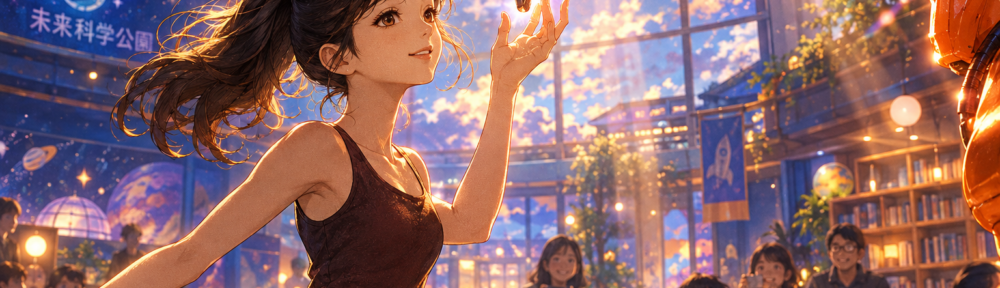
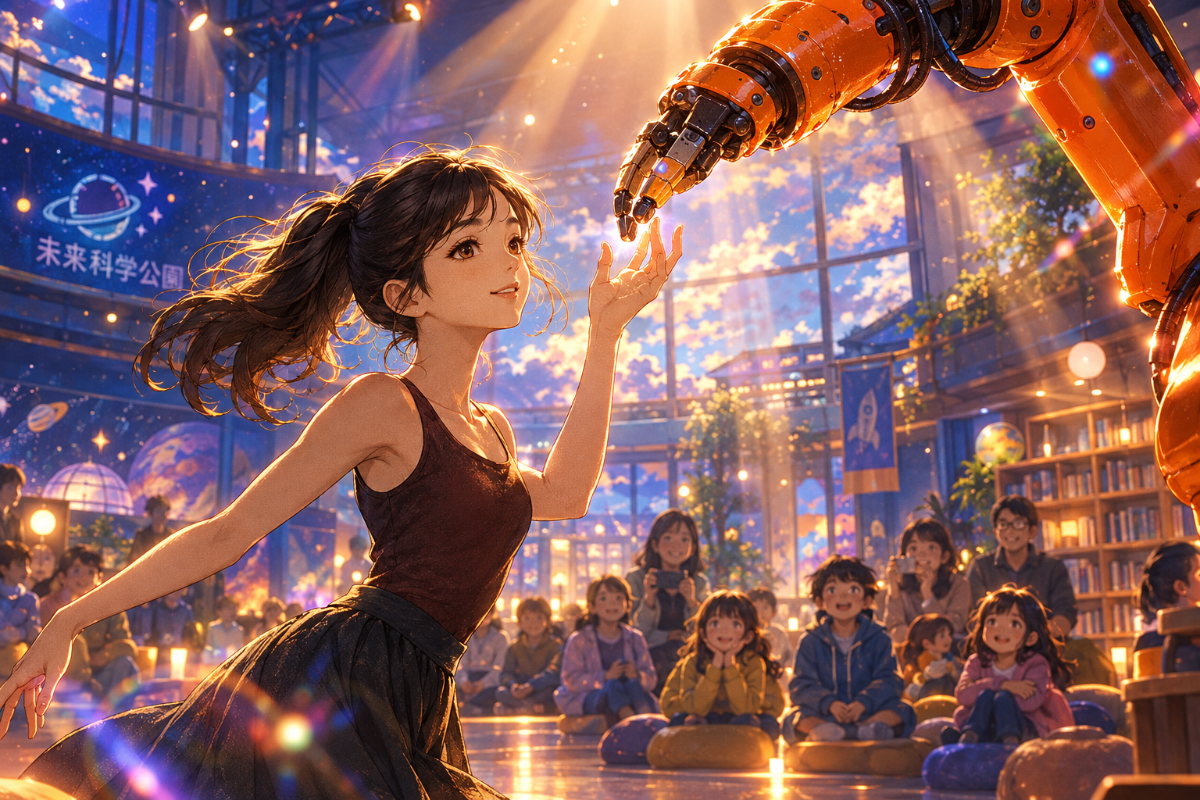
一條手臂在工廠裡的日子,大多是同一條軌跡走上一整班:抓、轉、放,回到原點,再來一次。《黃翊與庫卡》把這樣的手臂請上舞台,旁邊站著一位舞者。11月7日、8日,「黃翊工作室+」帶著30分鐘的親子特別版到竹科尼尼生活館,掛在《文化,在我們回家的路上》底下;依文化部公告,兩天各排14:30與16:30兩場。檔期已經過去,這篇是事後回頭看這個作品。
手臂沒有呼吸,編舞要從這裡算起
人類舞者的動作靠呼吸起落,一個停頓裡藏著吸氣,一次落地之前先有預備。工業機器人沒有這些。一般來說,它的動作是預先寫好的程式,同一條路徑可以一再重複。對編舞者來說,這是一個奇怪的合作對象:永遠準時,永遠不會臨時改變感覺。
文化部11月5日的新聞稿這樣介紹這支作品:「作品從編舞家黃翊兒時對機器人陪伴的想像出發,透過精密程式設計,將機械動作轉化為細膩的舞蹈語言」。同一段接著寫:「舞者與工業機器人『庫卡』彼此模仿、回應與共舞,讓冰冷的機械展現出溫暖的生命感」。至於動作怎麼編、程式怎麼寫,公告沒有細說。能確定的是起點:一個孩子希望有機器人作伴的想像。
工廠機械的動作,換個舞台就換了意思
同一個彎折,在焊接線上是效率,上了舞台就可能被讀成姿態。機器沒有改變,改變的是旁邊多了一個會呼吸的身體。公告用的詞是「模仿、回應與共舞」,三個詞都需要對象;手臂在生產線上沒有對象,上了台才有。
這也是親子版容易進入的地方。孩子不需要知道什麼是關節自由度,只要看見一條原本該去搬東西的手臂,和一個人一起跳舞。演出之外,公告還提到搭配的「黃翊與庫卡x親子共創工作坊」,「邀請大小朋友利用貼紙、積木等素材共同打造未來城市」。
同一個週末,還有什麼在旁邊
同場另有HTC團隊的多人走動式VR《海之召喚-海洋生靈祈願旅程》,與現流冊店策劃的書展市集,算是這場演出所在的空間背景。VR裡的白海豚搜救是互動情境,不是實際救援的成果,這點分清楚比較不會看岔。書市則讓一個以機械為主角的下午,旁邊擺著一排紙本書,對比有點好笑,也有點恰到好處。活動檔期到11月8日為止,報名已不再適用;當時的場次與活動內容,可以回頭查文化部11月5日的公告。
庫卡(KUKA)是工業機器人的知名品牌,名字常出現在生產線上,很少出現在節目單裡。11月的那個週末,竹科把它放進去了。表定兩天、四場、每場30分鐘,台上是一條手臂和一個人。
— 張可薇
參考來源:https://www.moc.gov.tw/News_Content.aspx?n=105&s=264762
Huang Yi and KUKA: An Arm Learns to Wait
On a factory floor, an industrial arm spends a shift on one path: grab, turn, release, back to start, again. Huang Yi and KUKA (《黃翊與庫卡》) invites that arm onto a stage next to a dancer. On 7 and 8 November, Huang Yi Studio+ (黃翊工作室+) brought a 30-minute parent-child special edition to 竹科尼尼生活館 under the program 《文化,在我們回家的路上》; the Ministry of Culture announcement listed shows at 14:30 and 16:30 each day. The run is over, and this piece looks back at the work.
The arm has no breath, so choreography starts there
A human dancer moves on breath: a pause holds an inhale, a landing is preceded by preparation. An industrial robot has none of that. In general its motion is programmed in advance, and the same path can be repeated again and again. For a choreographer this is a strange partner: always on time, never changing its mind about how it feels.
The Ministry of Culture’s 5 November press release, written in Chinese, introduces the piece this way: 「作品從編舞家黃翊兒時對機器人陪伴的想像出發,透過精密程式設計,將機械動作轉化為細膩的舞蹈語言」 (in our translation: the work starts from choreographer Huang Yi’s childhood imagining of a robot companion and, through precise programming, turns mechanical motion into a delicate dance language). The same passage continues: 「舞者與工業機器人『庫卡』彼此模仿、回應與共舞,讓冰冷的機械展現出溫暖的生命感」 (the dancer and the industrial robot KUKA imitate, respond to and dance with each other, so that a cold machine shows a warm sense of life). The release does not go into how the movement was choreographed or programmed. What it does give is the starting point: a child who wished for a robot to keep him company.
Factory motion changes meaning on a stage
The same bend is efficiency on a welding line and can be read as posture on a stage. The machine has not changed. What changed is a breathing body beside it. The release’s words are imitate, respond and dance together, and all three need a partner. On a production line the arm has none; on stage it does.
That is what makes the family edition easy to enter. A child does not need the term degrees of freedom. A child only needs to see an arm that was built to carry things dancing with a person. Alongside the show, the release also lists a parent-child co-creation workshop, where families were invited to build a future city together out of stickers and building blocks.
What else sat nearby that weekend
The same venue also had a multi-user walk-through VR work by an HTC team, 《海之召喚-海洋生靈祈願旅程》, and a book fair curated by the bookstore 現流冊店, part of the surrounding space. The white dolphin search-and-rescue in the VR is an interactive scenario, not a rescue result. Keep that distinction straight. The event ran through 8 November and registration no longer applies; the sessions and program as announced are in the Ministry of Culture’s 5 November announcement.
KUKA is a well-known industrial robot brand whose name usually appears on production lines, rarely on a program sheet. Hsinchu Science Park put it on one that weekend in November. The schedule: two days, four shows, 30 minutes each, with one arm and one person on stage.
— 張可薇
Sources: https://www.moc.gov.tw/News_Content.aspx?n=105&s=264762
延伸閱讀
- 阿里山山椒魚的育幼影像,是在零度以下熬出來的
- 飛鼠咖啡的一粒豆子,如何在旅展擺出一座山
- 木頭不會說謊:八斗阿美族學生的十日木構課
- 花蓮狐蝠的宵夜時間,開進了百貨公司一樓
- 寶可夢工藝展 台北:屬性是材料,不是貼紙
https://justfly.idv.tw/s/7Di3UgH