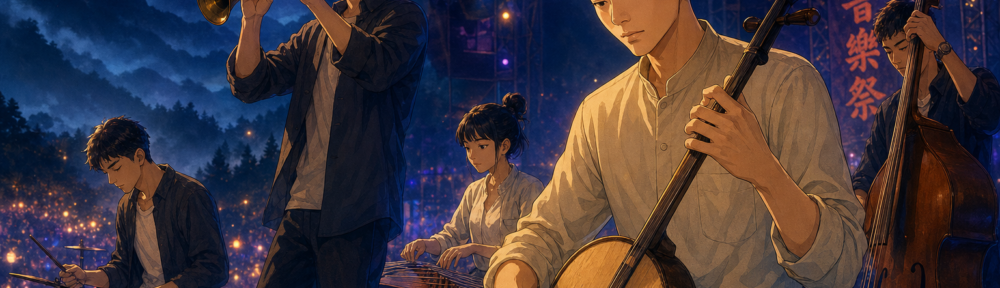
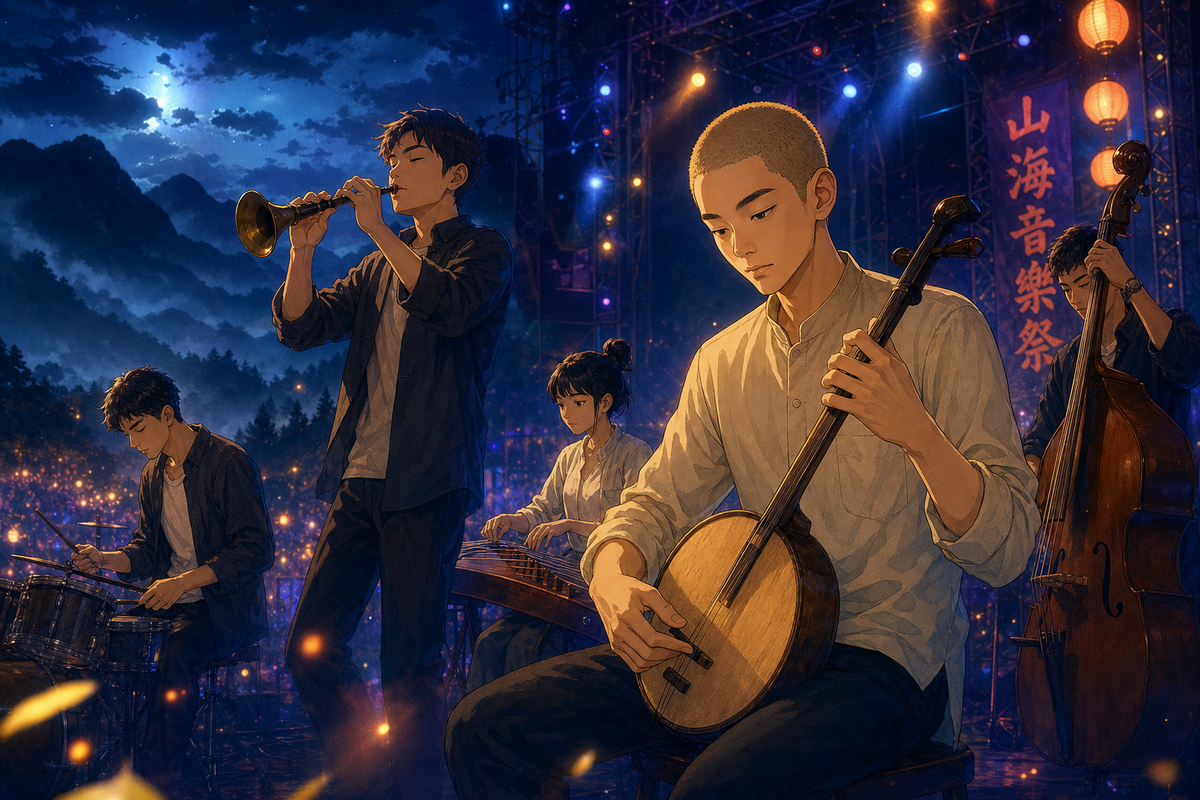
2026年7月25日晚間十點,日本新潟縣苗場滑雪場的ROOKIE A GO-GO舞台,五個來自台灣的樂手走上去。笙、柳琴、月琴、阮,加上鍵盤、貝斯、鍵。三十分鐘。
這不是什麼「走向國際」的宣傳稿場景。富士搖滾音樂祭的ROOKIE A GO-GO舞台,向來是日本最挑剔的樂迷在黑暗裡發現下一個聲音的地方。A_Root同根生能站上去,跟市場規模無關,跟台灣的串流數字無關,跟官方補助拿了多少無關。
聲音本身就是身份證
A_Root同根生的五人編制裡,笙手(兼人聲)楊智博和柳琴/月琴/阮手林琬婷,把幾樣在台灣廟口、婚喪喜慶裡被用爛的器樂,拉進搖滾與電子的語境。歌詞在台語、華語、客語、英語之間切換——這個島上長大的人本來說話就是這樣,沒有特別設計過。
這種聲音的稠密度,在日本的獨立音樂場景幾乎找不到對應物。正因為如此,能在ROOKIE舞台上被聽見。日本樂迷不需要讀懂客語歌詞,也能感受到笙音裡那種不屬於任何單一流行框架的張力。樂團曾獲第34屆金曲獎最佳專輯製作人獎,並在巴黎文化奧運、墨西哥塞萬提斯國際藝術節、泰國清邁Labb Fest等場合演出過。拿到這些場合的門票靠的都是同一件事:聲音本身足夠陌生又足夠完整。
浮現音樂在搭的是系統
站在A_Root同根生背後的是台中的獨立音樂廠牌浮現音樂,1999年成立,從前身唱片發行「GAMAA MUSIC」和台中第一間常態Live House「老諾」走過來,現在主辦浮現祭、搖滾台中、赤聲躁動等音樂節,並在2024至2026年間擴大為跨國音樂人媒合平台EMERGE & RISE。
2024年,搖滾台中首次與FUJI ROCK合作,在現場複刻了一座ROOKIE A GO-GO舞台。那是雙向媒合機制的起點:台灣樂團走向富士搖滾,日本樂團走進台灣音樂節。這種結構性的交換,跟「送一個樂團出國比賽」是完全不同量級的事。
對比2022年,滅火器Fire EX.和大象體操同時登上FUJI ROCK——那是二十多年累積換來的White Stage和Red Marquee位置。A_Root同根生走的是另一條線:更早被看見,在ROOKIE舞台從零建立國際樂迷。兩條路都成立,只是時間軸不同。
ROOKIE舞台的邏輯
FUJI ROCK的ROOKIE A GO-GO舞台存在的理由,正是為了發掘那些還沒有國際知名度、但聲音語言足夠清晰的樂團。這個舞台的選角邏輯從來不是「在哪個市場賣得好」,而是「聲音是不是現場裡還沒出現過的那種」。
台灣的獨立音樂能在這個舞台被選中,部分原因在於台灣音樂生態裡有一批廠牌和樂手,長期在玩一件日本主流音樂市場沒有在玩的事:把亞洲傳統器樂的音色接進當代搖滾的電路,不做世界音樂,不做新世紀,做一種叫不出名字的東西。這種東西在ROOKIE舞台上就是優勢。
同一時間,另一組台灣女子樂團格式塔少女也宣布了台日四場發片專場巡演。兩件事同時發生,說明某種可見度正在發生結構性的移動——從串流平台的演算法,往實體音樂節的黑暗場館。
22:00,苗場的燈暗下去。笙的聲音不等觀眾準備好就進來了。
— 吳承翰
Why Taiwan’s Traditional Instruments Belong at Fuji Rock
At 10 p.m. on July 25, 2026, five musicians from Taiwan walked onto the ROOKIE A GO-GO stage at Naeba Ski Resort in Niigata, Japan. Sheng, liuqin, yueqin, ruan, keyboard, bass, keys. Thirty minutes.
Fuji Rock Festival‘s ROOKIE A GO-GO stage has always been the place where Japan’s most discerning festival crowds find the next sound in the dark. A_Root getting on that stage has nothing to do with Taiwan’s market size, streaming numbers, or government grants.
The Instrument Is the Argument
In A_Root’s five-member lineup, sheng player and vocalist Yang Chih-po and liuqin/yueqin/ruan player Lin Wan-ting take instruments long associated with temple ceremonies and village funerals and drag them into rock and electronic territory. Lyrics shift between Taiwanese, Mandarin, Hakka, and English — not as a designed display of cultural diversity, but as the actual texture of how speech happens for those who grew up on this island.
That density is nearly impossible to find an equivalent for in the Japanese indie scene. That’s exactly why it registers at ROOKIE. Japanese audiences don’t need to understand Hakka lyrics to feel the tension in sheng phrasing that refuses to fit any single pop framework. The band took home the Best Album Producer award at the 34th Golden Melody Awards and has performed at the Paris Cultural Olympiad, Mexico’s Festival Internacional Cervantino, and Labb Fest in Chiang Mai, Thailand. Every one of those slots was earned the same way: a sound that is both genuinely strange and internally complete.
A System, Not an Export
Behind A_Root stands Taichung-based label Emerge Music, founded in 1999 — originally a record distributor called GAMAA MUSIC, then the operator of central Taiwan’s first permanent live house “老諾,” and now the organizer of multiple festivals including Rock in Taichung and the expanding cross-border platform EMERGE & RISE.
In 2024, Rock in Taichung partnered with Fuji Rock for the first time, building a replica ROOKIE A GO-GO stage on-site. That wasn’t a tribute gesture. It was the start of a bilateral exchange mechanism: Taiwanese bands toward Fuji Rock, Japanese bands toward Taiwan’s festival circuit. Building that kind of structural swap is a categorically different operation than sending a single act abroad to compete.
Compare the 2022 moment when Fire EX. and 大象體操 both appeared at Fuji Rock — those were White Stage and Red Marquee slots earned across more than two decades of work. A_Root is running a different timeline: get seen earlier, build international listeners from a ROOKIE stage baseline. Both routes work. The clocks just run differently.
What ROOKIE Actually Selects For
The ROOKIE A GO-GO stage exists to find bands with no international profile but a sound clear enough to stand on its own. The selection logic has never been “where does this sell well.” It is “does this sound introduce something this crowd hasn’t heard yet.”
Part of why Taiwanese independent music can get selected here is that a cluster of labels and musicians in Taiwan has spent years doing something the Japanese mainstream market isn’t: wiring traditional Asian instrument timbres into contemporary rock circuitry — not world music, not new age, but something that resists easy categorization. On a ROOKIE stage, that resistance is the asset.
Concurrently, Taiwanese girl band 格式塔少女 announced a four-show Taiwan-Japan album release tour. Two announcements, same moment. This suggests something structural rather than coincidental — a shift in visibility moving from streaming algorithm surfaces toward the physical darkness of festival venues.
At 22:00, the lights at Naeba go down. The sheng doesn’t wait for the audience to be ready.
— 吳承翰
延伸閱讀
https://justfly.idv.tw/s/yQLavJB