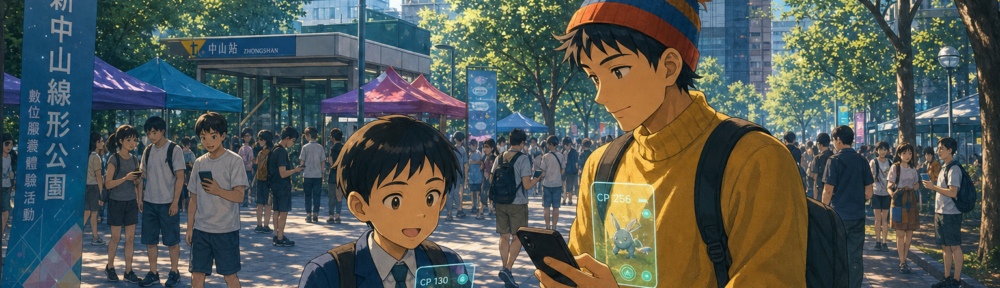
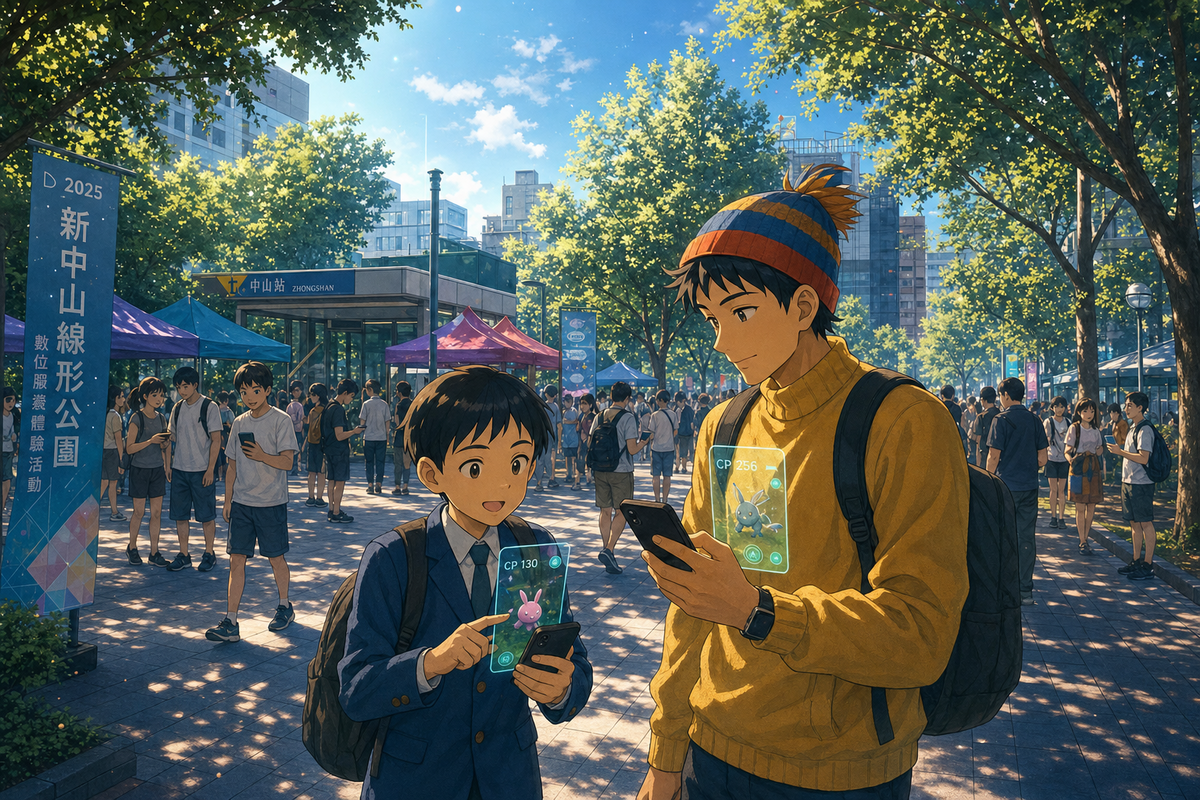
7月11日,台北捷運中山站出口,心中山線形公園的人行步道上,玩家舉著手機緩慢移動,盯著螢幕找寶可夢,不是在找路。Pokémon GO Fest 2026 全球挑戰的實體快閃活動落在這裡,兩天,戶外,免費。遮陽帳篷、打卡熱點、毛絨玩具贈獎——這些是活動的零件,但選在這條街發生,才是值得拆解的決定。
三個「亞洲首選」同週發生
同一週,另外兩個選址決策安靜地在消息流裡滑過。文化部揭示2026台灣文博會主視覺,將AI指令類比為當代魔法咒語,策展命題叫「第零位元」,這是國家級展覽首次大規模將AI創作過程本身視覺化,路線選擇是創作者主體性,而非結果展示。高美館KSPACE的《2041:臨繋未來的界隅》走的是AI時代社群連結的策展方向。三個案例,規模不同,IP屬性不同,卻同樣發生在台灣,同樣帶著某種「亞洲首站」的氣味。
湊在一起看才有意思。單一案例可以歸因於偶然,三個可以開始問結構性問題。
心中山線形公園能撐住這件事
Niantic 把 Pokémon GO Fest 的實體連動選在心中山線形公園,有一個很基本的前提:這條公園本來就能容納大量行人緩慢移動,不妨礙,不危險。台北的線形公園設計讓步行者有理由停留,而不只是穿越,這對一個需要玩家走走停停、盯著螢幕的AR遊戲來說,是真實的空間條件。捷運站出口就在旁邊,人流密度足夠,周邊商圈承接得住溢出的人群。
驅動這個決定的是城市硬體。但並不是所有城市都同時具備這幾個條件:可步行的公共空間、高密度的大眾運輸連接、以及願意把街道讓給非消費性活動的管理彈性。
同期,Pokémon GO 10週年的台北捷運合作把中山站與小巨蛋站轉為限定打卡點,必勝客聯名在全台門市同步推進——這是覆蓋式的城市佔領,不是一個點的快閃。IP 在城市裡的移動路線,從地鐵站到街道公園到餐廳,台北的基礎設施讓這個迴路跑得起來。
文博會的賭注在創作者,不在奇觀
文博會的選擇比較難解釋。把AI指令類比為魔法咒語,定格的是創作者靈感觸發的瞬間,而不是AI產出的視覺奇景。這個決定意味著策展方認為台灣的觀眾能夠對「過程」本身產生興趣,而不需要用結果來誘引。
這跟東京 TeamLab 的沉浸式路徑是兩條不同的賭注。TeamLab 讓觀眾成為景觀的一部分;文博會的命題是讓觀眾理解創作者如何跟工具對話。前者需要壯觀,後者需要觀眾願意停下來想一下。台灣的策展選擇把觀眾的認知耐性當成資源在使用,這個判斷對不對,要等展後數據說話——社群討論的質量、國際媒體的報導角度、文化部後續的補助方向,都是指標。
被選中的條件是複數的
南韓藝術家 Haydonna 的角色 Sachiket 選台北 Contemporary by U 畫廊做全球首展,是更早發生的另一個訊號。創作者自己做的決定,沒有政府協調,也沒有統一的推廣論述。台北作為「亞洲首發舞台」這個敘事框架,已經在幾個不同的文化產業裡被獨立選用,沒有協調,沒有統一的推廣論述。
這說明的不是台灣特別厲害。選址邏輯從來都是複數的:市場成熟度、消費力、觀眾對數位文化的接受速度、法規環境、與東亞其他主要市場的距離。台北往往同時滿足夠多的條件,讓它出現在優先名單前段,但不同案例強調的條件不一樣——Pokémon GO 要的是城市硬體,Sachiket 要的是買家品味,文博會要的是政策支撐力。
把三件事合併成「台灣被選中」的單一敘事,會壓平這些差異。比較準確的說法是:台灣目前在幾個不同的選址邏輯裡,各有各的理由剛好出現在前排。這個位置不穩定,也不保證持續,但它現在確實存在,而且三個案例同週出現這件事,本身就是一個值得記錄的時間座標。
— 張誠書
Why Taiwan Gets Picked First
On July 11, players moved slowly along the pedestrian path of Xinzhongshan Linear Park near Zhongshan MRT Station, phones raised — not navigating, hunting. Pokémon GO Fest 2026’s physical pop-up landed here: two days, outdoors, free entry. The shade tents and plush giveaways were props. The real decision was choosing this street.
Three “Asia-First” Choices in One Week
The same week carried two quieter signals. The Ministry of Culture unveiled the 2026 Taiwan Cultural Creativity Expo’s lead concept, framing AI prompts as contemporary magic spells — “Bit Zero” — the first time a national-scale exhibition has made the AI creative process itself the visual subject, not the output. Separately, Kaohsiung Museum of Fine Arts’ KSPACE mounted its exhibition around AI-era community connection. Three cases, different scales, different IP origins, all landing in Taiwan with the same faint smell of “Asian premiere.”
One case is a coincidence. Three open a structural question.
The Park Had to Hold It
Niantic’s choice of AR activation at Xinzhongshan Linear Park rested on a basic precondition: a street already designed for pedestrians who linger rather than commute. An AR game that requires players to walk slowly while watching a screen needs public space that doesn’t punish that behavior. The MRT exit is adjacent. Density is high enough. The surrounding commercial strip absorbs the overflow.
That’s not cultural mystique — it’s urban hardware. Not every city simultaneously offers walkable public space, dense transit connectivity, and administrative flexibility to hand a street over to non-commercial activation. The same week, the Pokémon GO 10th anniversary partnership turned Zhongshan and Xiaojudan MRT stations into limited-time photo spots, while a Pizza Hut co-promotion ran across locations nationwide. The infrastructure loop — subway to linear park to restaurant — completed itself in Taipei without requiring workarounds.
The Cultural Creativity Expo Bet on Process
The expo’s curatorial bet is harder to explain. Framing AI prompts as magic spells, and centering the moment of creative ignition rather than the finished image, implies a judgment that Taiwanese audiences will find the process interesting on its own terms. No spectacle required to pull them in.
That’s a different wager than the teamLab model, where visitors become part of an immersive visual event. The expo’s premise is that audiences will slow down and think about how creators talk to their tools. Whether that judgment holds will show in the post-exhibition data — the quality of social discourse, international media framing, the Ministry of Culture’s subsequent grant directions.
The Selection Criteria Are Always Plural
Earlier this year, Korean artist Haydonna chose a Taipei gallery for Sachiket’s global debut — a creator’s own decision, no government coordination, no unified pitch. The “Asian premiere” framing has been independently adopted across multiple cultural sectors, by different actors, for different reasons.
What that describes is not a single competitive advantage. Site selection is always multi-factor: market maturity, consumer spending patterns, audience receptivity to digital culture, regulatory environment, proximity to other major East Asian markets. Taipei tends to satisfy enough of these simultaneously to appear near the top of different shortlists — but the criteria that put it there vary by case. Pokémon GO needed urban hardware. Sachiket needed taste-making buyers. The expo needed policy backbone.
Collapsing all three into a single “Taiwan gets chosen” narrative flattens those differences. The more accurate read: Taiwan currently shows up near the front of several distinct selection logics, each for its own reason. That position is neither guaranteed nor permanent. But three cases converging in the same week is itself a coordinate worth marking.
— 張誠書
延伸閱讀
https://justfly.idv.tw/s/kUgMZir