
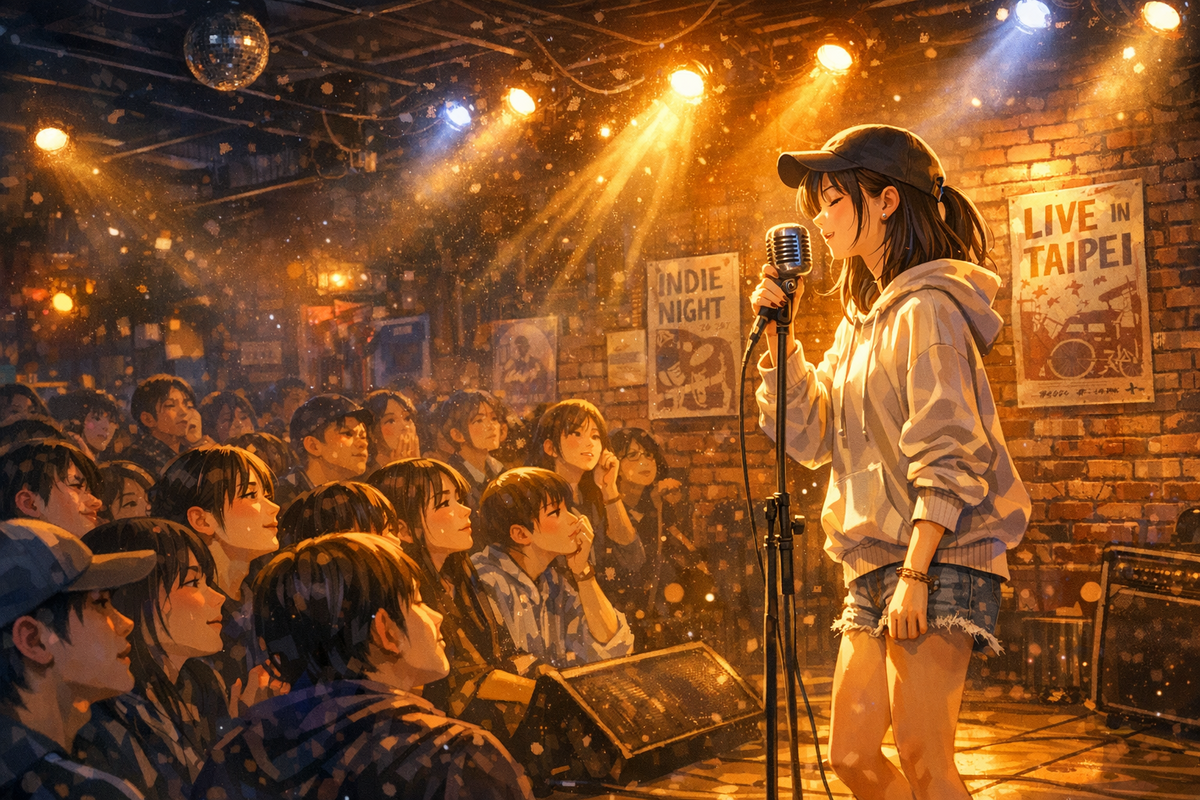
1999年,台灣唱片市場規模約150億台幣。六年後,盜版與P2P把這個數字砍到不足50億。整個產業在沒有任何預警的情況下,損失了三分之二以上的規模。那段時間,台灣剩下的音樂人到底靠什麼撐著?很多時候是女巫店這樣的地方——1996年創立,容量只有50人的小酒吧。五月天在那裡唱過,蘇打綠在那裡唱過。因為那裡有人願意聽。
我講這段歷史,是因為它說明了一件事:台灣音樂的根,從來不長在有錢的土裡。
K-pop贏的是制度,不是天分
韓國政府自2012年起,每年投入文化輸出預算逾1兆韓元。BTS所屬的HYBE,市值最高超過100億美元。K-pop的全球化不是偶然爆發的流行——它是國家機器配置出來的結果:系統訓練、政府資本、粉絲社群從頭到尾被設計好。追韓劇、買韓妝、學韓語、吃韓食,這條消費鏈的每一個節點都不是意外,都是戰略。
台灣偶像面對的是什麼?多數自籌資金,沒有系統訓練機制,沒有國家品牌行銷的整合支撐。這不是競爭,這是結構性不平等。用同樣的標準去比,台灣輸在起跑線的三公里之前。
但台灣還有另一條路,有人正在走。
「世界聽不懂,但台灣人會哭的東西」
台語歌曾經是「阿伯歌」,是戒嚴時代被邊緣化的語言。1987年戒嚴解除後,台灣的年輕文化場景才開始有空間喘氣,濁水溪公社1989年成立,骨肉皮等獨立樂團在缺資源的環境裡硬撐出一個場景。後來KKBOX在2005年創辦,成為全球最早的合法訂閱串流服務之一——比Spotify還早——證明台灣不是沒有創新能力,只是從來沒有把文化輸出當成國家戰略去做。
現在,有一批本土偶像選擇把台語、閩南韻律、巷弄美學當成武器。他們做世界聽不懂但台灣人會哭的東西,不打算複製K-pop那套訓練體系。這個定位看起來很小,但它的邏輯是:與其在別人設計的賽場上輸,不如在自己畫的地圖上站穩。
這不是退守,這是另一種攻勢。
「台灣的自己人」作為文化宣言
有人會說,這個市場太小了,撐不起一個產業。我理解這個擔憂,但它誤解了這件事的性質。台灣的音樂人從女巫店50人容量的年代就知道市場小——他們還是唱了。2005年唱片市場剩不到50億的時候,他們還是做了。這一批人的選擇,從來都不是等條件成熟才出發。
做「台灣的自己人」才聽得懂的音樂,表面上是市場定位,實際上是一個關於語言、記憶、身份的宣告。台語的閩南韻律能承載的情感,不需要全球聽眾認識;珍珠奶茶可以爆紅全球卻帶不動任何一條消費鏈,但一首讓宜蘭人哭出來的台語歌,可能做到珍珠奶茶做不到的事——它讓人記起自己是誰。
台灣的問題,從來不是缺乏文化內涵。缺的是有人相信這些內涵值得被認真對待,然後真的去做。
女巫店50個座位,當年就夠了。
— 曾婉柔
They Know They Can’t Beat K-pop. They’re Doing It Anyway
In 1999, Taiwan’s music market was worth roughly NT$15 billion. By 2005, P2P piracy had slashed that figure to under NT$5 billion — more than two-thirds of the industry, gone. What kept musicians alive through those years? Often it was places like 女巫店 (Witch House), a bar founded in 1996 with a capacity of 50 people. Mayday played there. Sodagreen played there. Not because the resources were good, but because someone was willing to listen.
That history matters because it says something structural: Taiwan’s music never grew in fertile soil.
K-pop Won With Infrastructure, Not Talent
South Korea’s government has invested over 1 trillion Korean won per year in cultural export budgets since 2012. HYBE, the company behind BTS, reached a peak valuation exceeding $10 billion USD. K-Wave wasn’t a spontaneous cultural explosion — it was engineered: systematic training, state capital, fan communities designed from the ground up. The chain from K-drama to K-beauty to Korean food isn’t accidental. It’s strategic.
Taiwan’s idol scene operates under completely different conditions. Most acts self-fund. There is no systematic training infrastructure, no integrated national branding machine behind them. Calling this a competition misnames it. The structural inequality begins well before the starting line.
Songs the World Won’t Understand, But Taiwanese People Will Cry To
Taiwanese (台語) was once the language of the margins — suppressed during the authoritarian era, dismissed as old-fashioned afterward. The lifting of martial law in 1987 slowly opened space for a younger cultural scene. Indie bands emerged in the early 1990s with almost nothing. Then in 2005, KKBOX launched as one of the world’s first legal music streaming subscription services — years before Spotify. Taiwan could innovate. It just never treated cultural export as national strategy.
Now a new wave of local acts is using Taiwanese language, Minnan rhythms, and everyday aesthetics as their differentiator. They are making something the world won’t immediately understand and Taiwanese audiences will feel in their bones — and they have no interest in copying K-pop’s training model to do it. The logic isn’t surrender — it’s a different kind of offense. Draw your own map instead of losing on someone else’s course.
Claiming “台灣的自己人” Is Already a Declaration
The obvious objection: the market is too small to sustain an industry. I understand the concern. But it misreads what’s actually happening. These artists already knew the market was small — they grew up in it. They watched the industry crater in the early 2000s and kept going. Mayday and Sodagreen didn’t wait for conditions to improve before playing 50-seat venues.
Making music specifically for people who grew up speaking Taiwanese, who recognize the alleyways in a song’s imagery, who feel a particular weight in those Minnan vowels — that’s not just a positioning strategy. It’s a statement about language, memory, and identity. Bubble tea went globally viral and still couldn’t anchor a cultural consumption chain. A Taiwanese-language song that makes someone from Yilan cry might do something bubble tea couldn’t: remind people who they are.
Taiwan’s problem has never been a shortage of cultural depth. The shortage is in people who believe that depth is worth taking seriously — and then actually doing something about it.
Fifty seats at 女巫店 was enough, once.
— 曾婉柔
延伸閱讀
https://justfly.idv.tw/s/XLCaWBz